
The Art of Creation: A Chorus of Bright Color
Artist Alma Thomas used dabs of bright paint to bring into being a world of playful joy.
When Alma Thomas was 15, her family moved from Columbus, Georgia to Washington DC, largely because of the 1906 Atlanta Race Riots in which white mobs randomly attacked Black residents and destroyed their businesses. They also moved so that Alma and her siblings could receive secondary education, which was nonexistent for Blacks in Georgia, but available in Washington DC (though still segregated there).
After moving with her family, Thomas lived the rest of her 72 years in that same family house, which is now on the historical register. From this house she earned the first fine arts degree ever granted from Howard University and from there she taught for 35 years at Shaw Junior High School and helped form the first successful Black-owned private gallery in the United States. A few steps away from that house was St. Luke's Episcopal Church where she was a member and established a Sunday Afternoon Beauty Club to encourage the appreciation of art. She retired from teaching at 69 and from her artist studio in the house, developed a painting style known as "Alma's Stripes," which led her to fame and eventually her first major solo art exhibition at the age of 80.
She placed that house at the center of her aesthetic development. It was while sitting in that living room that she decided to paint something different from anything she had ever done or seen up to that point.
Thomas described the development of her unique style in this way: I sat down right in that chair, that red chair here in my living room, and I looked at the window. And you can see exactly what I saw, right before my eyes, from where I was sitting in the chair. Why, the tree! The holly tree! I looked at the tree in the window, and that became my inspiration. There are six patterns in there right now that I can see. And every morning since then, the wind has given me new colors through the windowpanes. I got some watercolors and some crayons, and I began dabbling. And that's how it all began. The works have changed in many ways, but they are still all little dabs of paint that spread out very free. So that tree changed my whole career, my whole way of thinking.
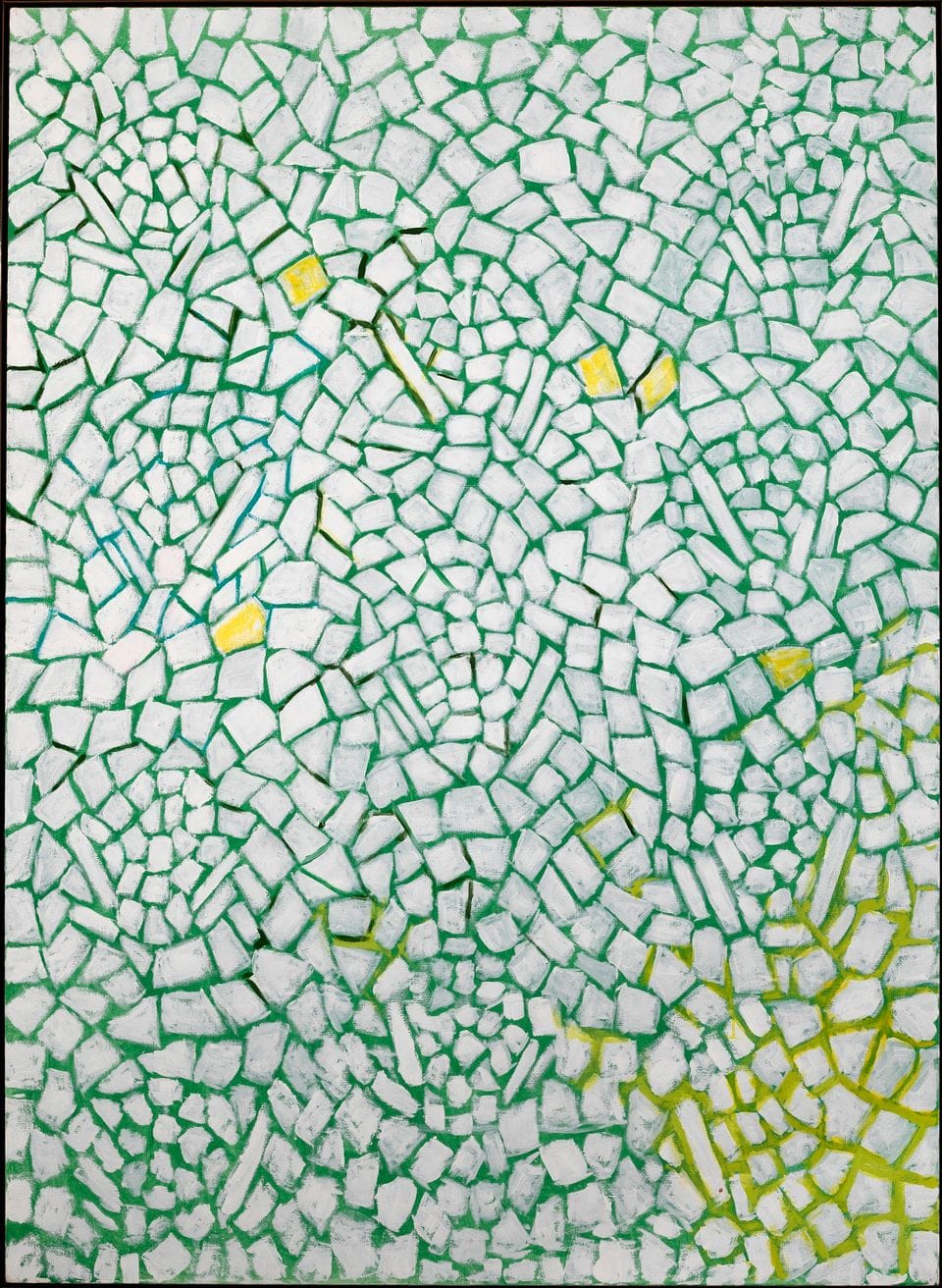
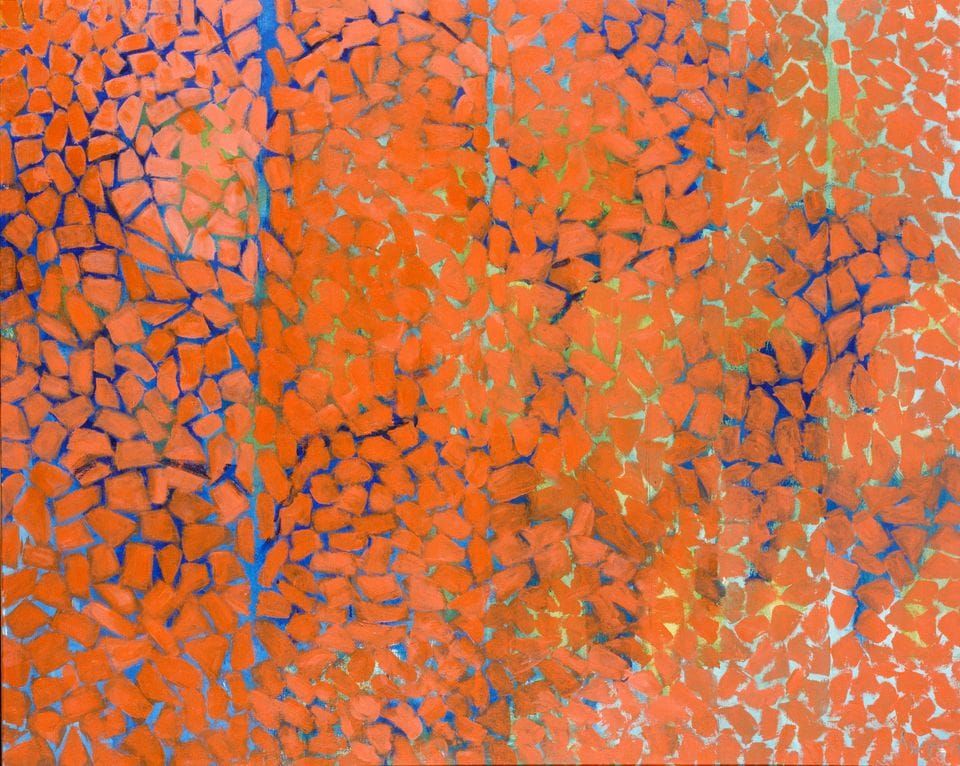
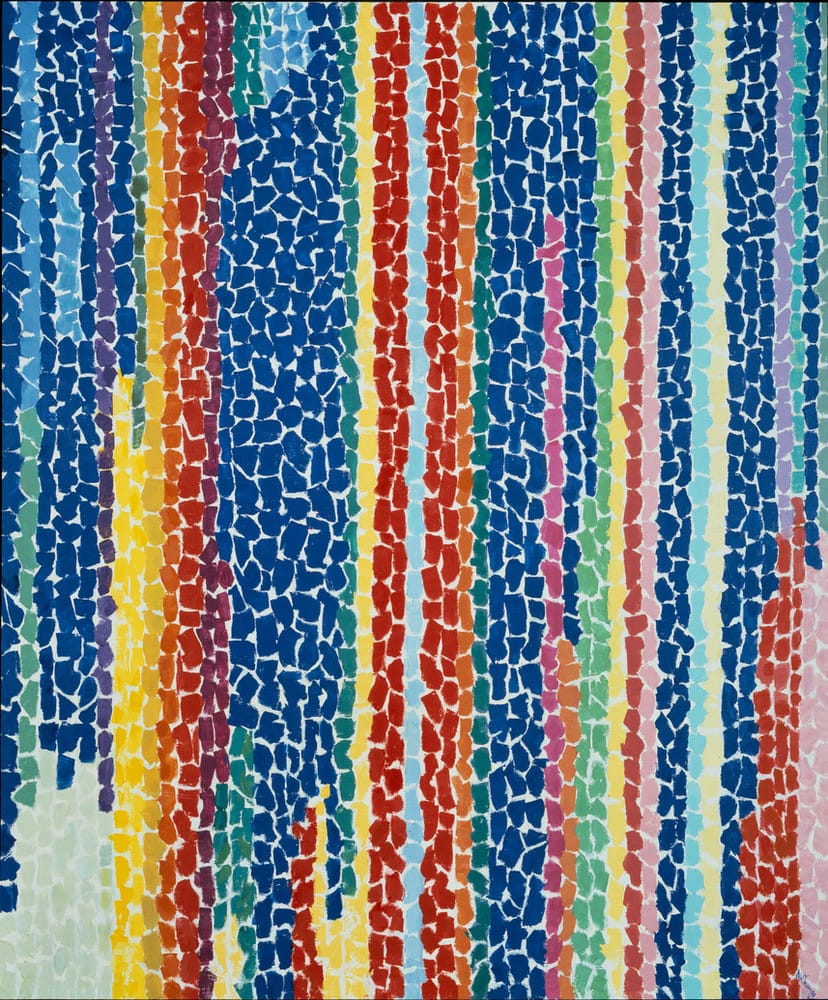
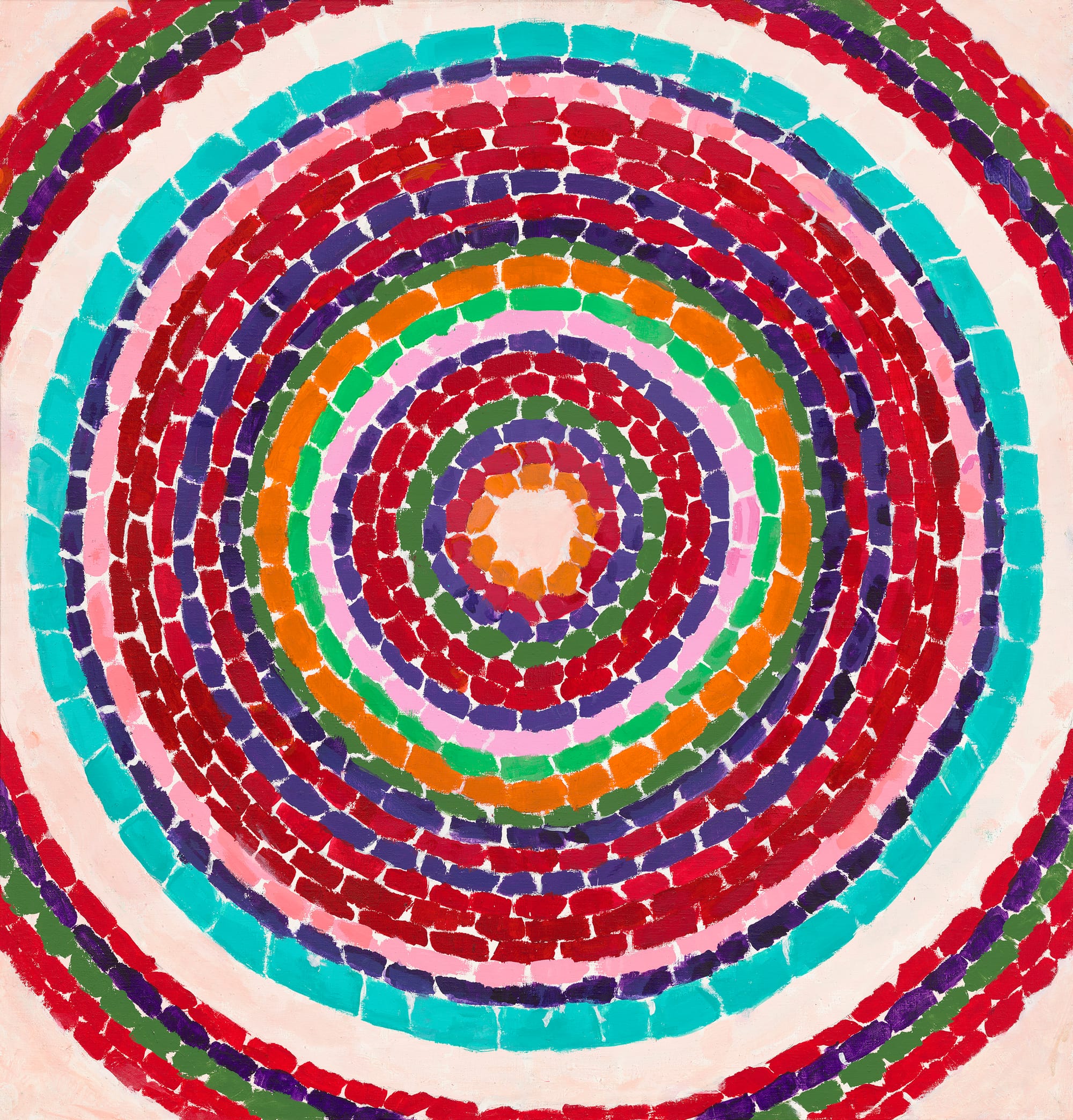
The colors and lights of flowers and gardens that moved across windows and changed into different patterns fascinated and inspired her. Her abstractions of the natural world created from pats of paints arranged in circles and columns put into image a world full of joy and vibrancy.
Her paintings are often very large (over 60 inches tall), giving a feeling of expanse. Most commonly, her patterns of colors were meant to be an abstract aerial view of flower beds or nurseries. “I began to think about what I would see if I were in an airplane,” she said. “You streak through the clouds so fast you...only see streaks of color.”
Her titles often include words suggesting music, such as "rhapsody," "cantata," "symphony" or "singing," and she would often listen to music as she painted. Her paintings give a view in which the world comes together through combinations of color and movement in a way that the parts of a song come together to create a harmonious whole that evokes beauty and joy.
The love of beauty is what drove her art and her activities. She concentrated her work on seeing and helping others see the good of the world. “Through color, I have sought to concentrate on beauty and happiness, rather than on man’s inhumanity to man,” Thomas said in 1970.
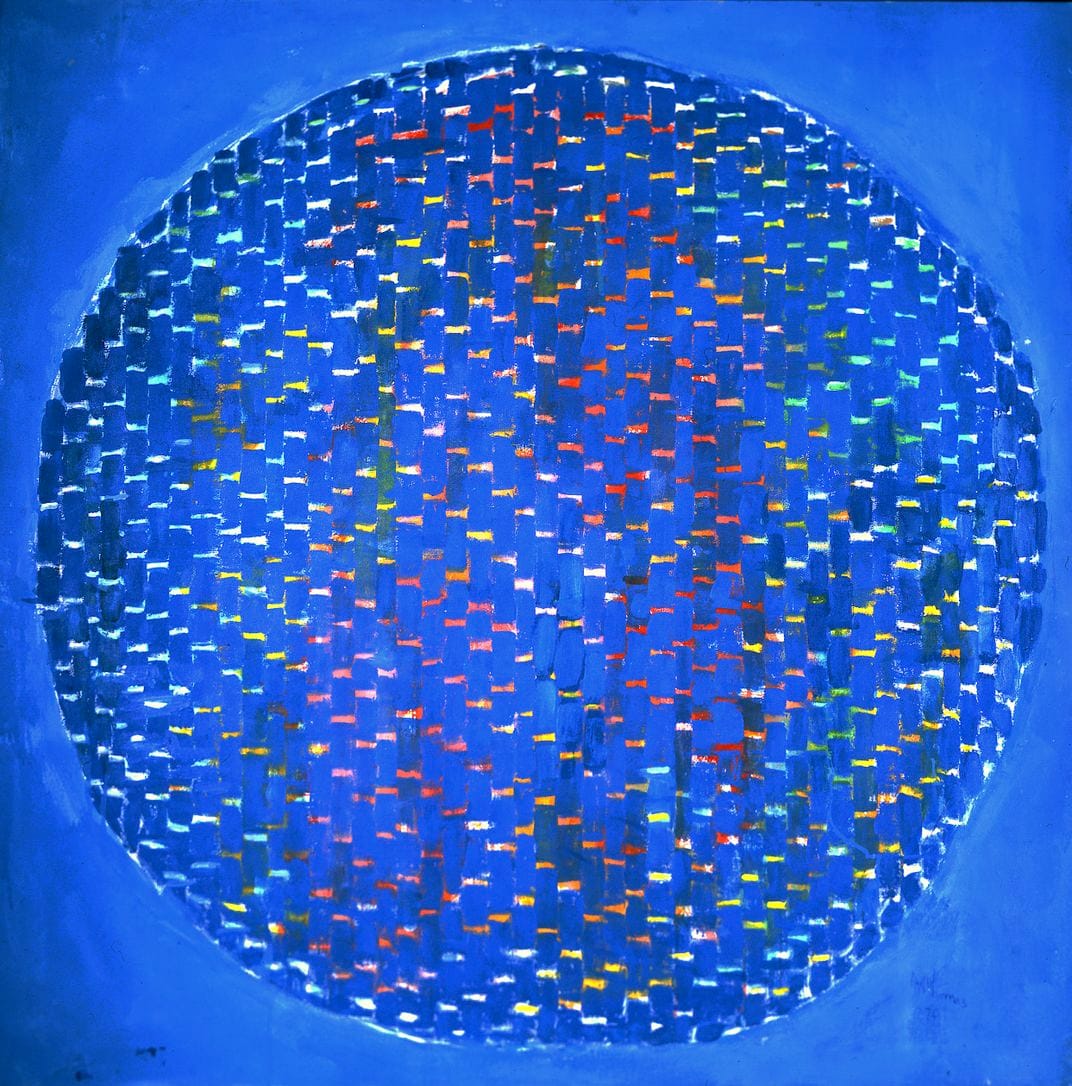
When the Space Age began, she embraced it with enthusiasm, especially how it opened up new vistas to see and marvel over. Space and humankind's entry into it became a central theme in her work. Her series of "Snoopy" pictures (Snoopy being a nickname for the Apollo 10 lunar module sent around the moon to snoop out a landing spot) exults in the vista of space opened up by the space missions. Joy and awe permeate these paintings.
This exuberance sometimes caused a strain with the more political, activist elements of the Black community. She did work to advance the Black community throughout her career, but not often in confrontational ways. Along with the art gallery she helped establish, she spent years of encouraging Black youth in her classroom to find their voices, inspiring and encouraging them. She participated in the 1963 March on Washington for Jobs and Freedom and created several paintings of that march, but her work was usually less overtly political.
She led by her example, primarily seeing herself as an artist, rather than a Black artist. She was quoted as saying, “Some of us may be black, but that’s not the important thing. The important thing is for us to create, to give form to what we have inside us."

Among her accomplishments, she was the first African American woman to have a piece of work adopted into the White House permanent collection (added during Barack Obama's presidency for Black History Month).
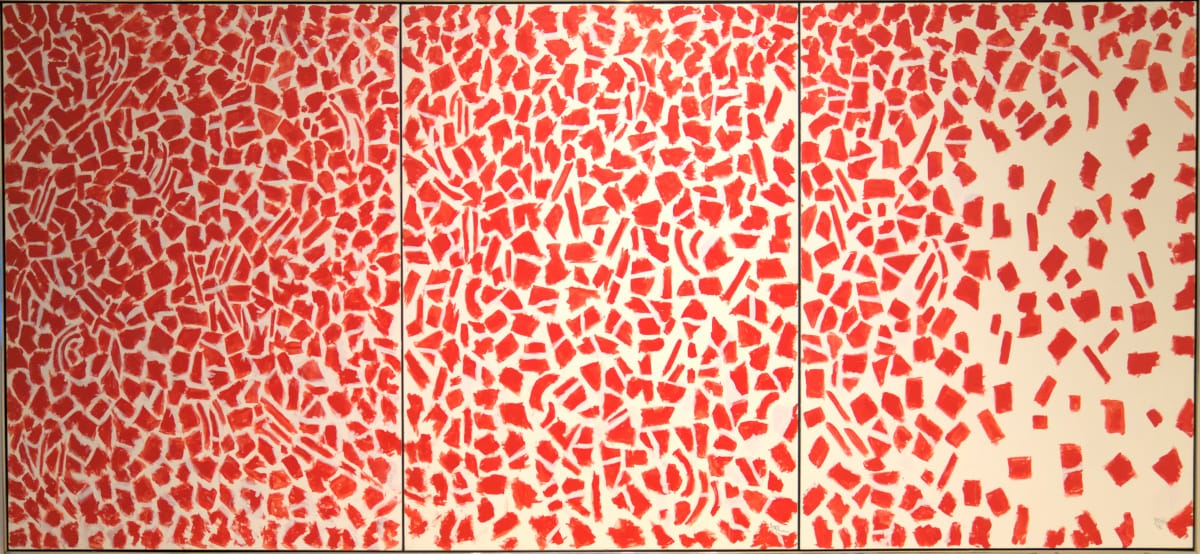
Thomas suffered from severe arthritis and a broken hip late in life along with severe pain as a result. Instead of allowing health issues to turn her away from painting, she just did more extensive preparation that enabled her to continue creating work that satisfied her. Although her work might give the impression of unplanned spontaneity, she did meticulous pre-work, taping sheets of paper to the wall to carefully plan out paintings. She also often created multiple versions of the same painting with different colors in order to see how such changes affected the final work.
She experimented with shapes and spaces, using curved edges to suggest movement and freedom and more uniform rectangles to suggest stability. Often there is a sense of light peeping through the layers in her art—reminiscent of the original inspiration she found, watching the light coming through windows and move around the room. Together, light and color are what give life to the paintings of Alma Thomas.
Try sitting in a spot you are familiar with for an extended period of time over several days. Do you see patterns that move and change? As you watch, do your perceptions grow? Do you begin to see beauty you might have missed at the beginning? The paintings of Alma Thomas are often used in classrooms as inspiration for art projects. Perhaps you want to try creating one yourself.
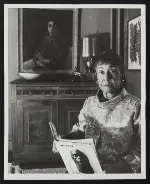
Alma Woodsey Thomas
If you are interested in learning more about Alma Thomas and seeing more of her work, Life is Beautiful is a resource you might want to check out.
I would love to hear your thoughts in response to this. Feel free to leave a comment below (you can sign in through your email) or contact me directly at louise.conner@circlewood.online. We also encourage you to share this piece with your friends using the share button provided.
Louise
IF YOU LIKED THIS, HERE'S ANOTHER TO TRY...
 Louise Conner, Editor
TO LEARN ABOUT OUR PARENT ORGANIZATION, GO HERE...


The Ecological Disciple is part of Circlewood, an organization committed to "accelerating the greening of humanity."
Comments ()