
The Art of Creation: Hue and Grain
Intricate pieces of woodworking translate the beauty of wildlife into wood.
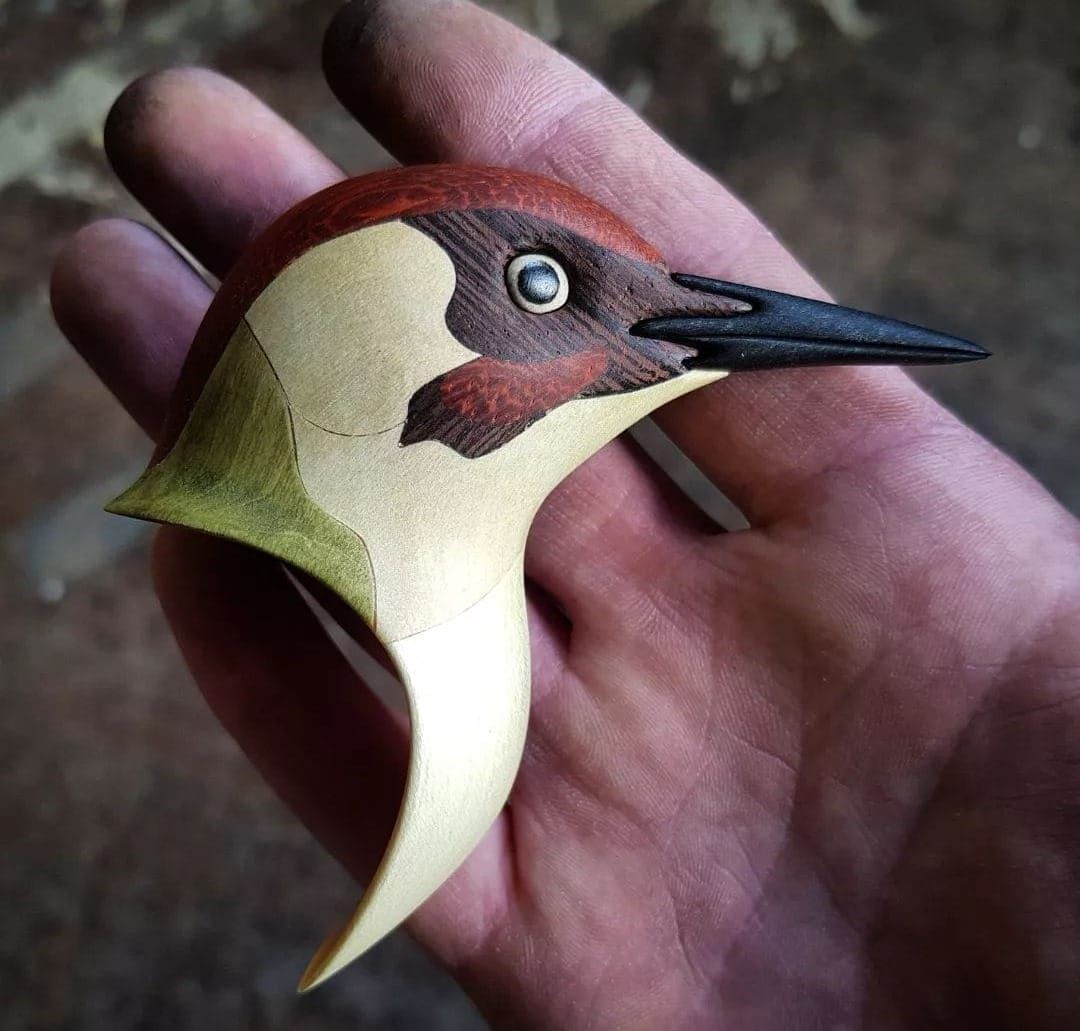
There is nothing, in my mind, quite like beautiful woodwork. I learned early to appreciate the natural beauty of wood—its grain, hue, and texture. Skillfully-done woodwork, like the deeply fissured bark of a tree, seems to call for touch as well as sight to be fully experienced. The wood art of T. (Tom) A.G. Smith, a Nottinghamshire, UK self-taught artist, combines skilled and creative woodwork with two other things I have deep affection for—puzzles and birds.
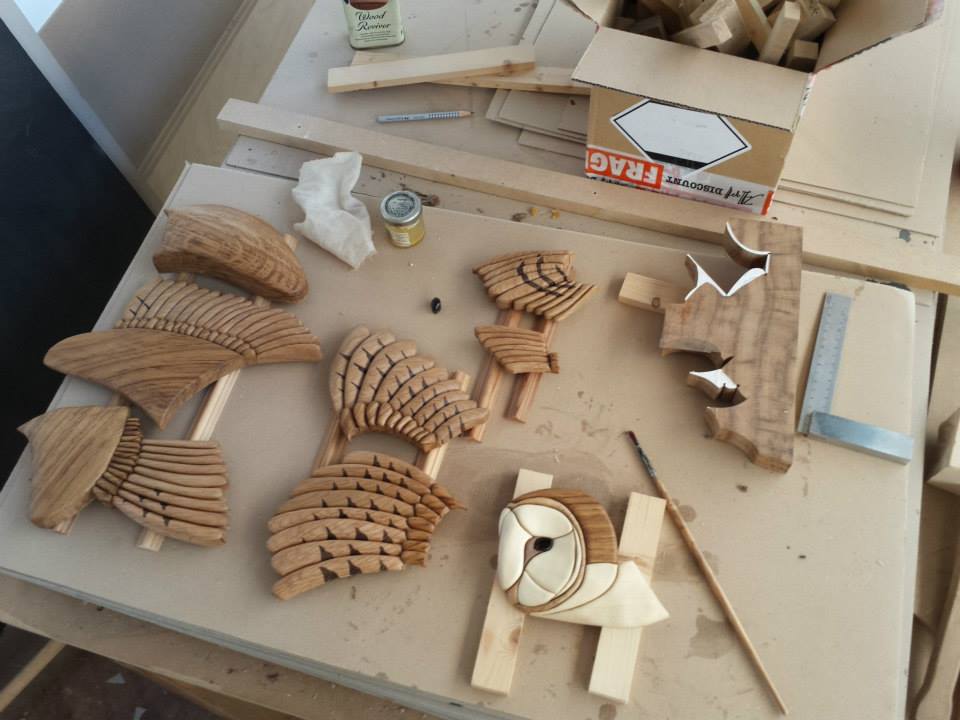
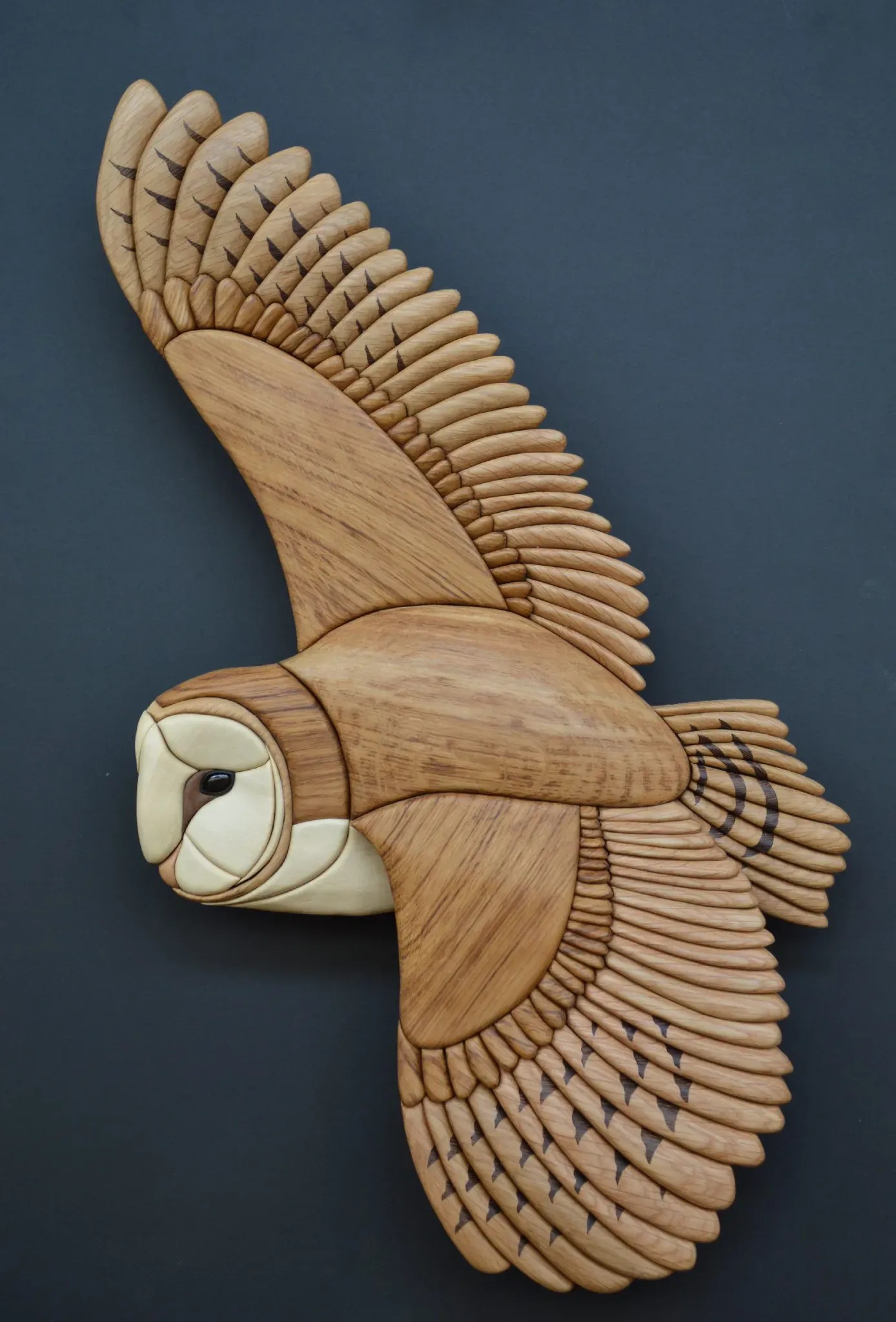
Barn Owl: (left) in production and (right) completed
Smith began studies in forensic science but left that field and found a vocation in intarsia, a long-standing hobby he has been learning since he was 14. Intarsia is thought to be derived from the Latin word "interserere," which means "to set between." It involves carving, sanding, and fitting together different sizes, shapes and species of wood like a puzzle to create a mosaic-like picture. Unlike other crafts such as marquetry, which involves gluing wood veneers onto a flat surface, intarsia has thicker pieces and a texture that creates a sense of three dimensionality.
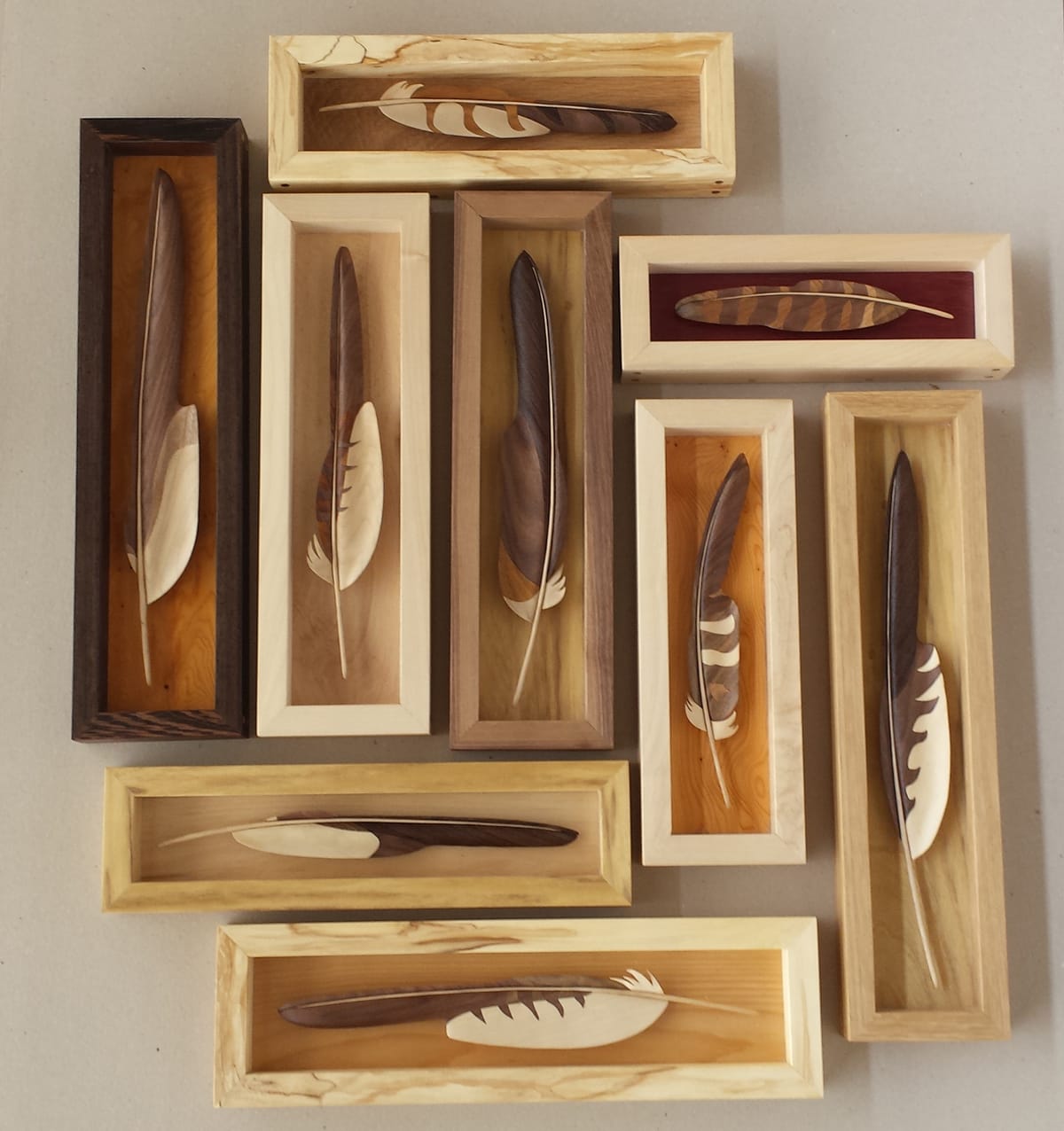
In addition to wood, Smith also has a passion for birds, particularly birds of prey, which has led him to focus his craft on birds and their feathers. The realistic wooden feathers he creates, which generally measure about 6 1/2 inches by 17 inches, are created from close observation of actual bird feathers which he finds in the wild. (Laws regarding the collection of feathers vary by country. In the US, any collecting of a native bird feathers is illegal and, in the UK, there are special protections around the feathers of birds of prey).
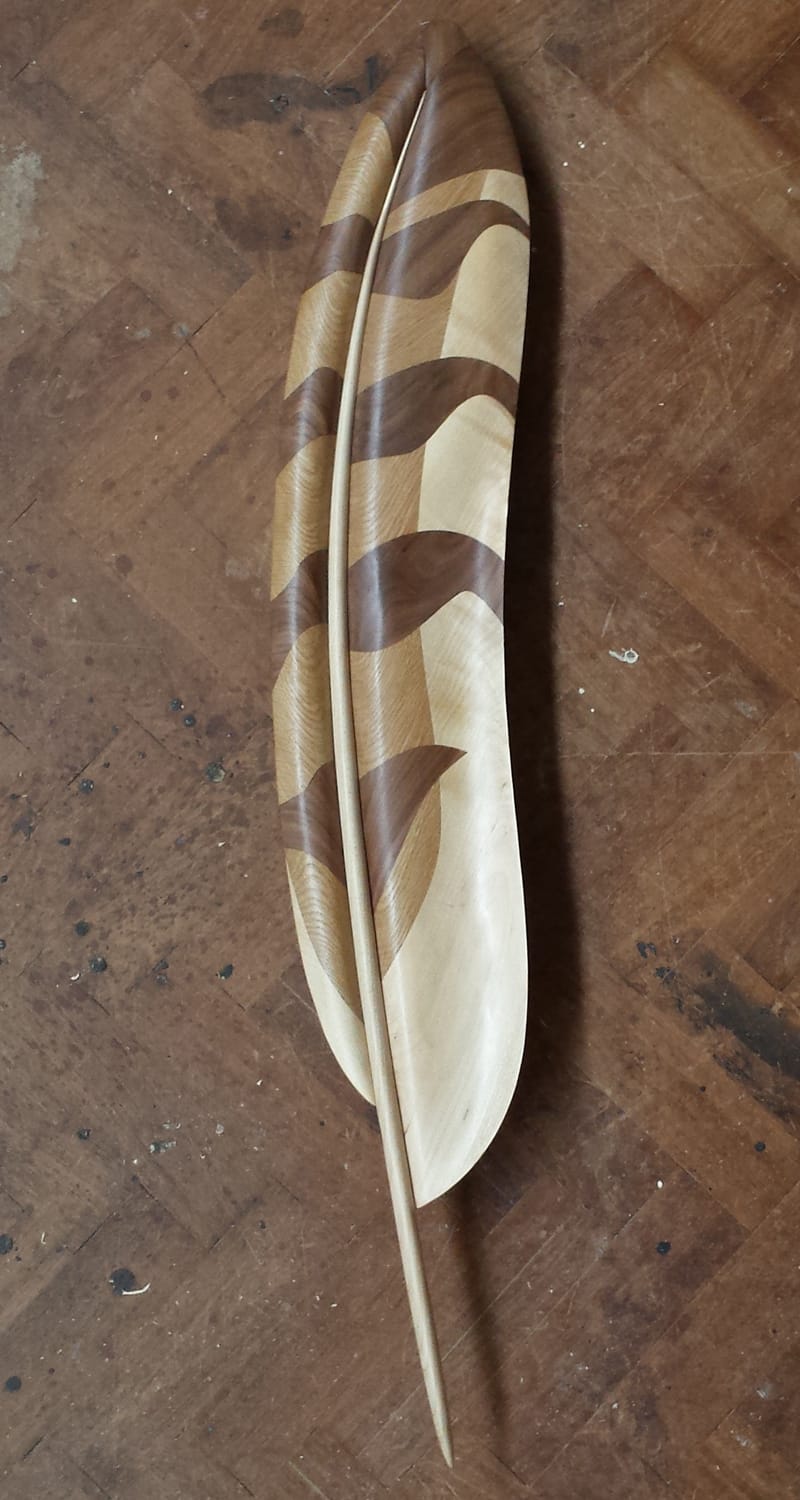
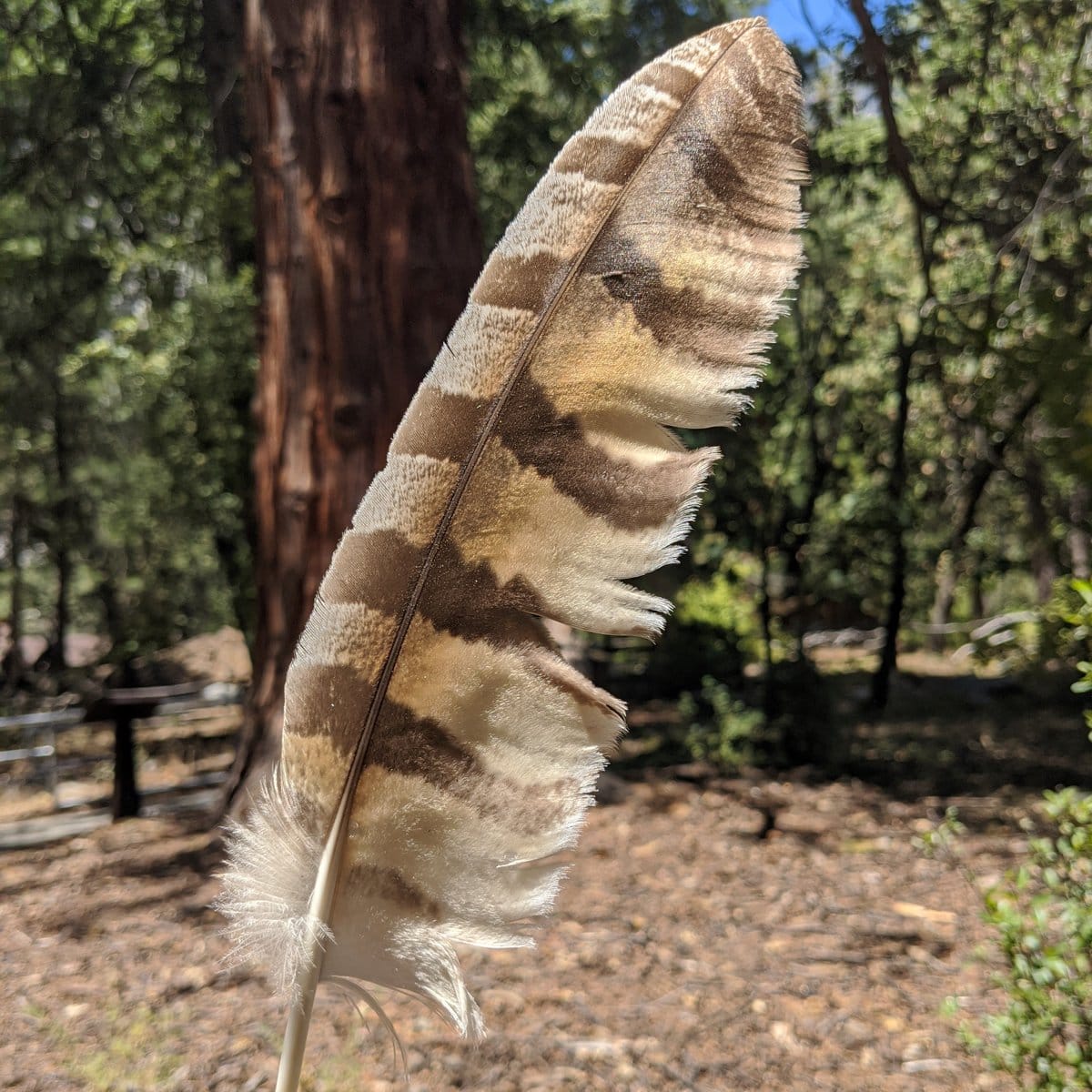
Smith's wooden Large Barn Owl Feather (left), actual barn owl feather (right)
Smith takes photos of the feathers and then translates them into wood. He uses the grain of the wood to mimic the direction of the feathers' growth (felt in the tactile flow of a feather) and also makes use of the wood grain to create the sense of forward movement in a bird, such as the direction of flight.
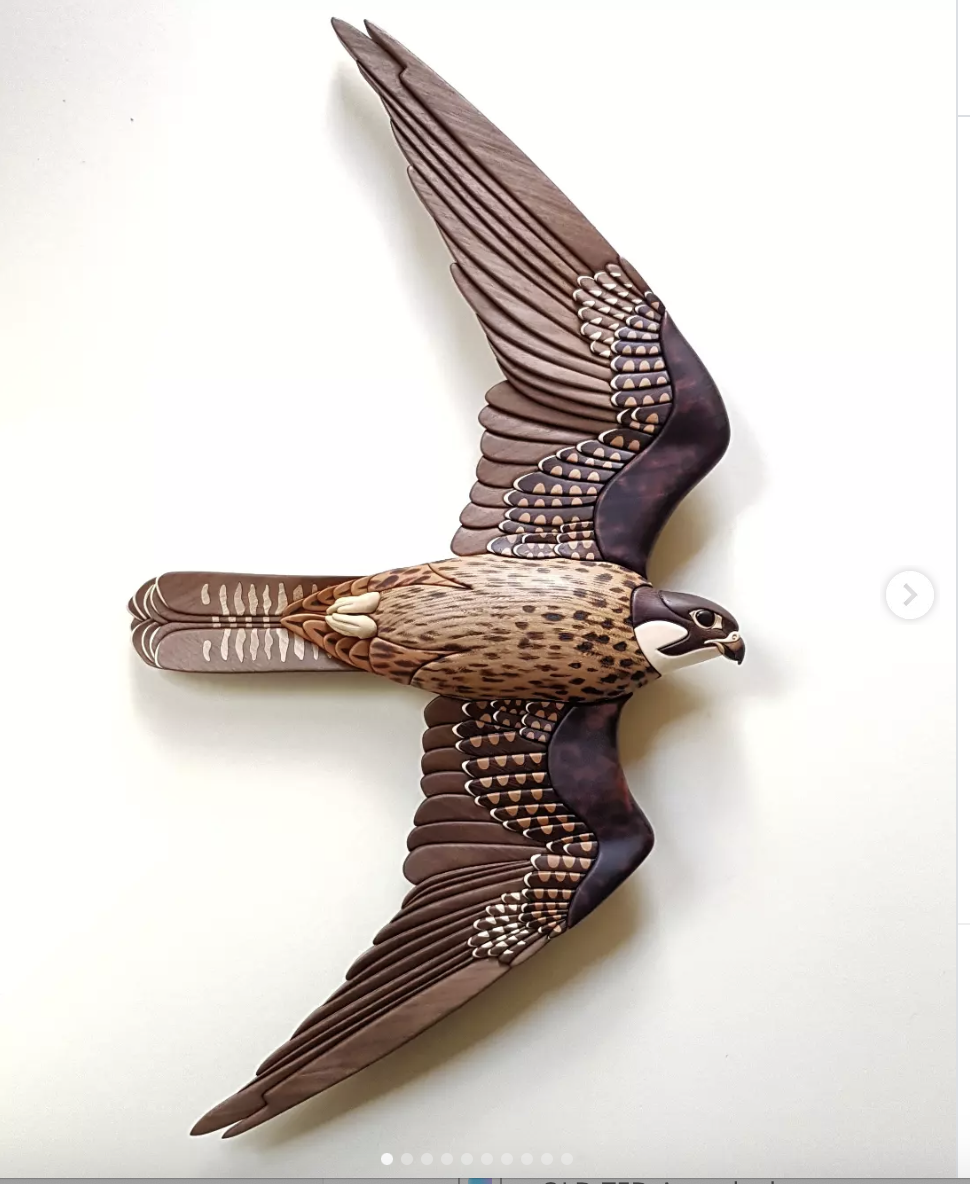
His birds, like the large one pictured above named Elenora's Falcon, are even more intricate than the feathers. His process begins by drawing his subjects on paper, marking each part with the wood type he plans to use. Then he carves each piece using a scroll saw, adding details into the piece using a rotary carving tool and chisels. Each individual segment needs to be perfectly formed so that it will fit smoothly into the others when they are assembled into the final piece. Details such as eyes are added by burning into the wood. After gluing all the parts onto a piece of wood, he carves the piece and then sands it. Elenora's Falcon was composed of more than 400 pieces of wood and took three months for him to complete.
As he says, "My work combines my two great loves: wood and wildlife. It is all about mimicking the beauty of the natural world by using its natural resources ...Wood is my palette, like an artist would have a palette of paints - the rich chocolate brown of wenge, the blood red of padauk, the pale gold of tree of heaven ..."
You can feel the affection for the wood in his description of his work. You can also see that affection in his completed works in the way they demonstrates an attention to detail both in noticing the details and respecting those details highly enough to represent them accurately.
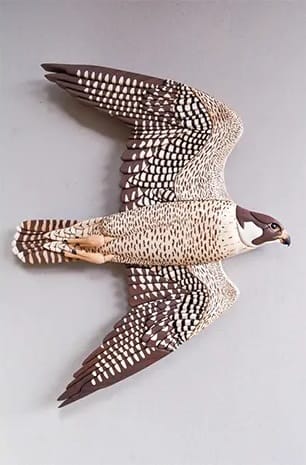
His work displays the subtle and yet distinct differences one can see in nature. Each feather type and each bird species displays a set of unique characteristics that can be identified in its particularity through its coloring, shape, and patterns. Through this careful and accurate reproduction into wood, the artist models that there is value in paying close attention to what lies upon the ground and what flies up in the air. There is a beauty and diversity to be savored in each feather and bird, belying the old phrase, "If you've seen one, you've seen them all." The world is full of variety, but to notice and appreciate that, we must make the effort to pay attention.
You can find a video of T.A.G. Smith creating a wooden feather on his Instagram page here and can find his work for sale here.
I would love to hear your thoughts in response to this. Feel free to leave a comment below (you can sign in through your email) or contact me directly at louise.conner@circlewood.online. We also encourage you to share this piece with your friends using the share button provided.
Louise
IF YOU LIKED THIS, HERE'S ANOTHER TO TRY...
 Louise Conner, Editor
TO LEARN ABOUT OUR PARENT ORGANIZATION, GO HERE...


The Ecological Disciple is part of Circlewood, an organization committed to "accelerating the greening of humanity."
Comments ()