
The Art of Creation: Cedar Bark
The bark of a downed cedar tree provides more than just raw material for a project.
A couple of months ago, we had to take down a cedar tree on the Circlewood land because it was too close to the building we have recently completed. I was invited to help myself to the tree parts that were piled up around the building and, as I am always interested in finding ways to use what the land generates, I jumped at the chance.
Although I know that nothing really goes to waste even if it merely rots back into the soil, I wanted to create pieces that might honor and recall the 45+ year-old-cedar tree. On my first collection foray, I loaded tree boughs, branches, and a couple of short lengths of tree trunk into the back of my car. Back home, I started experimenting.
Having grown up in northwest Washington State, I have read signs and heard lectures about things that could be made from cedar bark for as long as I could remember. I had also seen cedar baskets, clothing, and mats created by the area's native tribes. But I had never seen or participated in the process of turning a piece of tree into a household item and was curious to find out how difficult it was and to try my own hand at it.
Because it was the holiday season, after bringing home my first trunkful, I tried bending small branches into a wreath ring but didn’t make a lot of headway. I also started reading and watching videos about stripping bark.
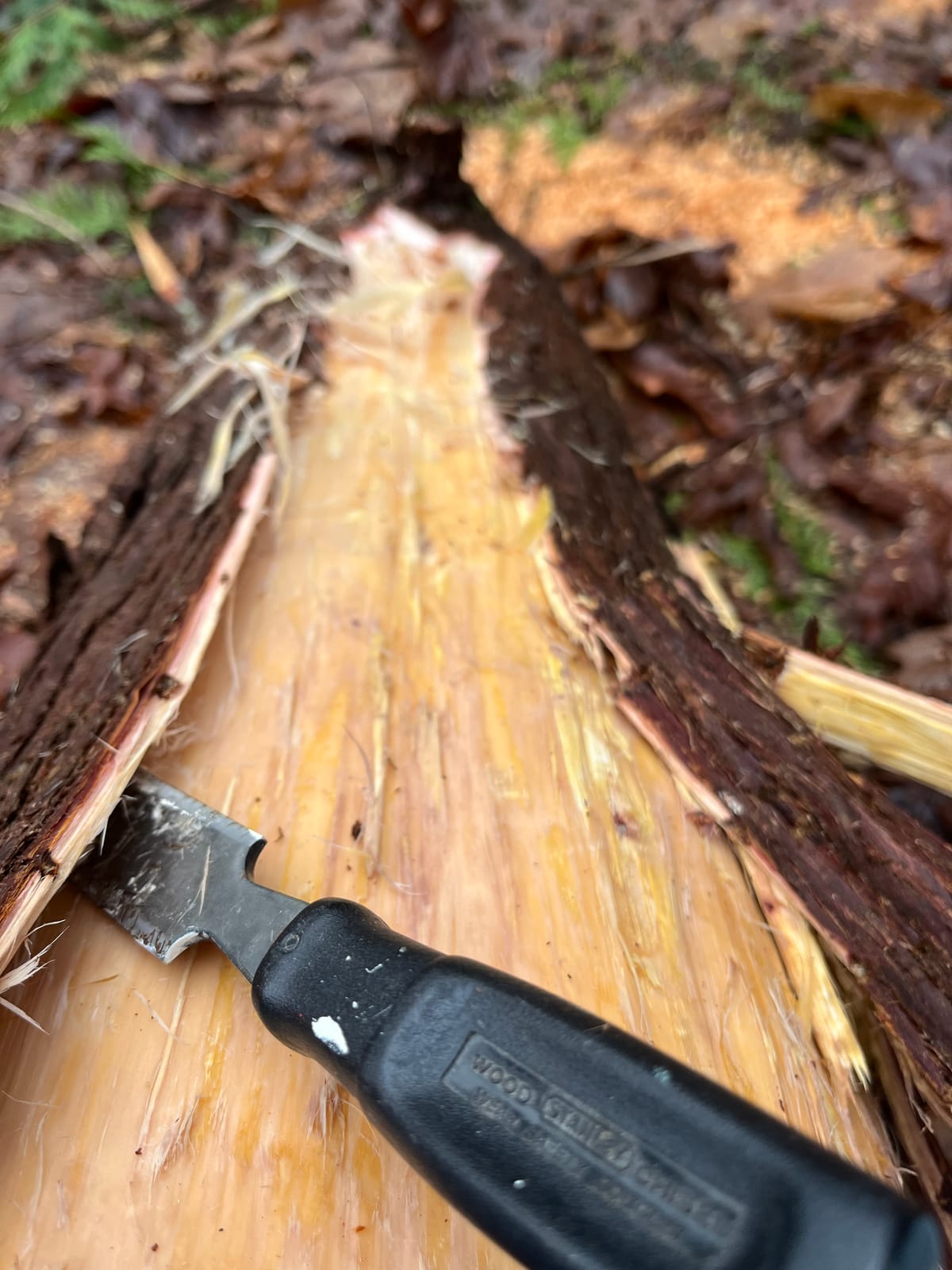
Instead of buying specialty tools, I used what we already had in our garage, settling on a chisel, screwdriver, and hammer to strip the bark. I found that by placing the chisel or screwdriver between the inner bark (the cambium) and the sapwood (the newest ring of wood) and then tapping the chisel with the hammer, it was pretty easy to slide the chisel down the length of the log, prying the bark away from the inner wood of the tree. There was something deeply satisfying in successfully peeling the bark away from the tree trunk.
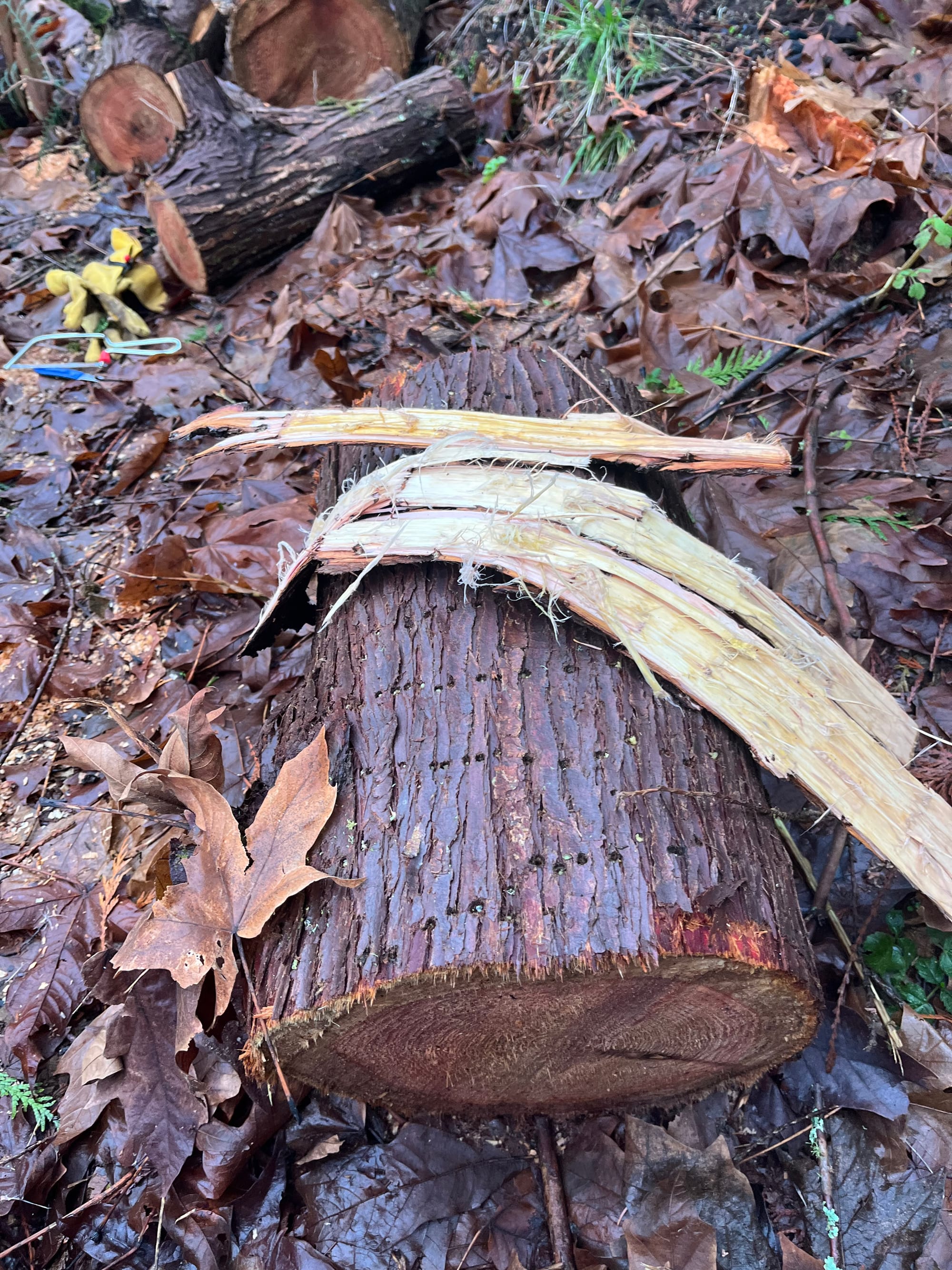
As I worked on the tree, I noticed the scars left by insects and birds on the surface of the bark and the stumps of branches that complicated my task. Each of those places were irregular spots that the tree had compensated for with folds and bumps. I found myself paying attention to the tree in a way that was different from how I had paid attention to a tree before. Usually, I am only aware of the outside life of the tree—branches, cones, scales, the dark bark protecting the tree; now I was privy to the inner workings, the core that had kept the life and history of the tree safe and intact.
I read instructions and watched videos about what people did with the bark once they had stripped it from the tree. I learned you could make cording out of cedar bark and had fun learning how to do that.
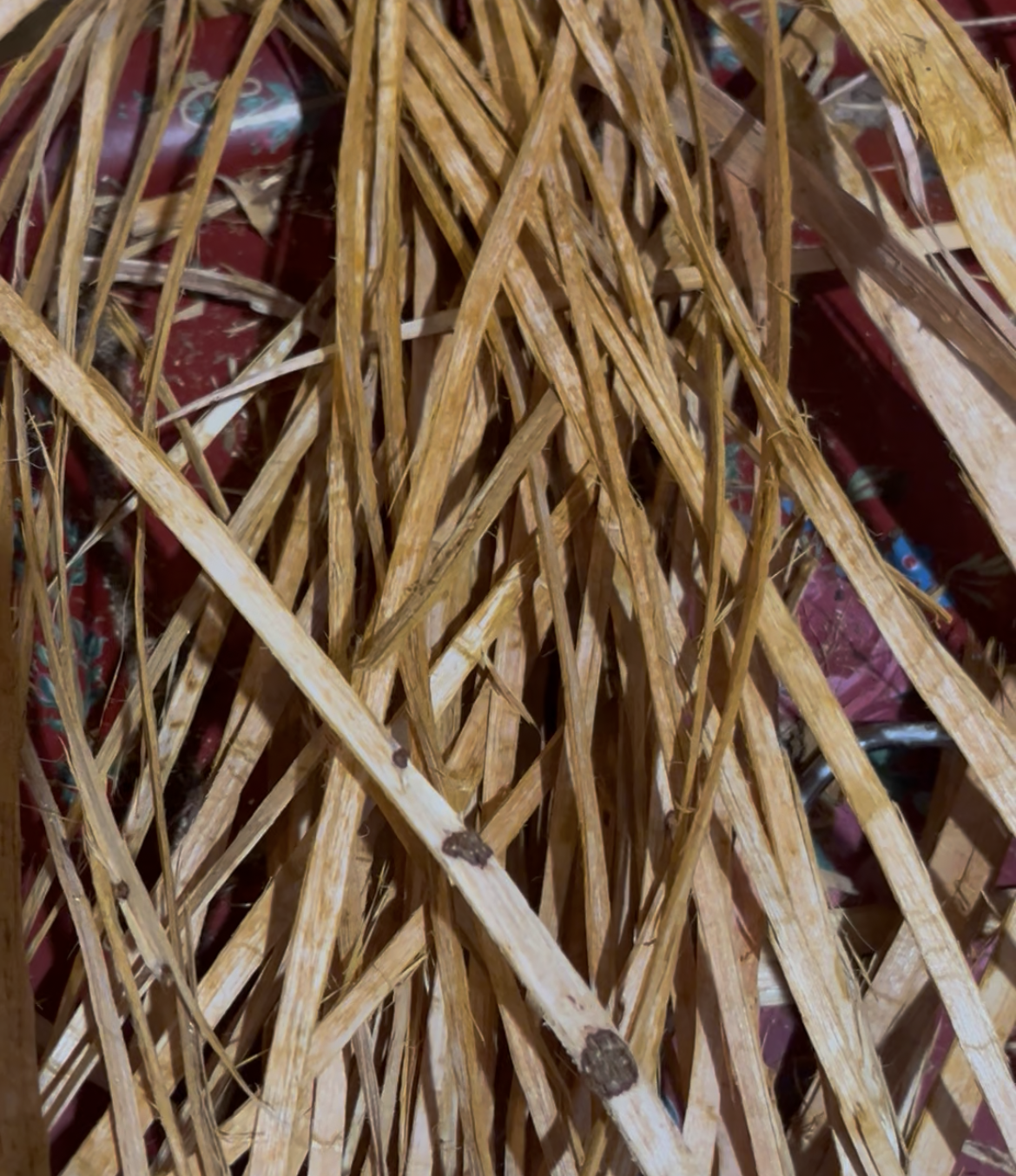
As I expanded my projects, I added a short sharp knife from the kitchen drawer to my tool set. I used the knife to scrape away the rough outer bark from the smooth inner bark. As I began to weave the bark, I added a pair of scissors to cut the cedar strips into the length and width I wanted, a tape measure to make the right lengths, and tweezers to pull the strips through tight places.
If the bark was thick enough, I could often separate one layer into multiple layers, sometimes getting four strips out of one thick length of bark. In addition to satisfying my frugal bent, the thinner bark was also easier to use. It was more flexible, lay flatter, and was easier to weave under and over other strips into a weave. Through my experimentation, I also found very thin strips (1/8 inch) were harder to work with than slightly larger ones.
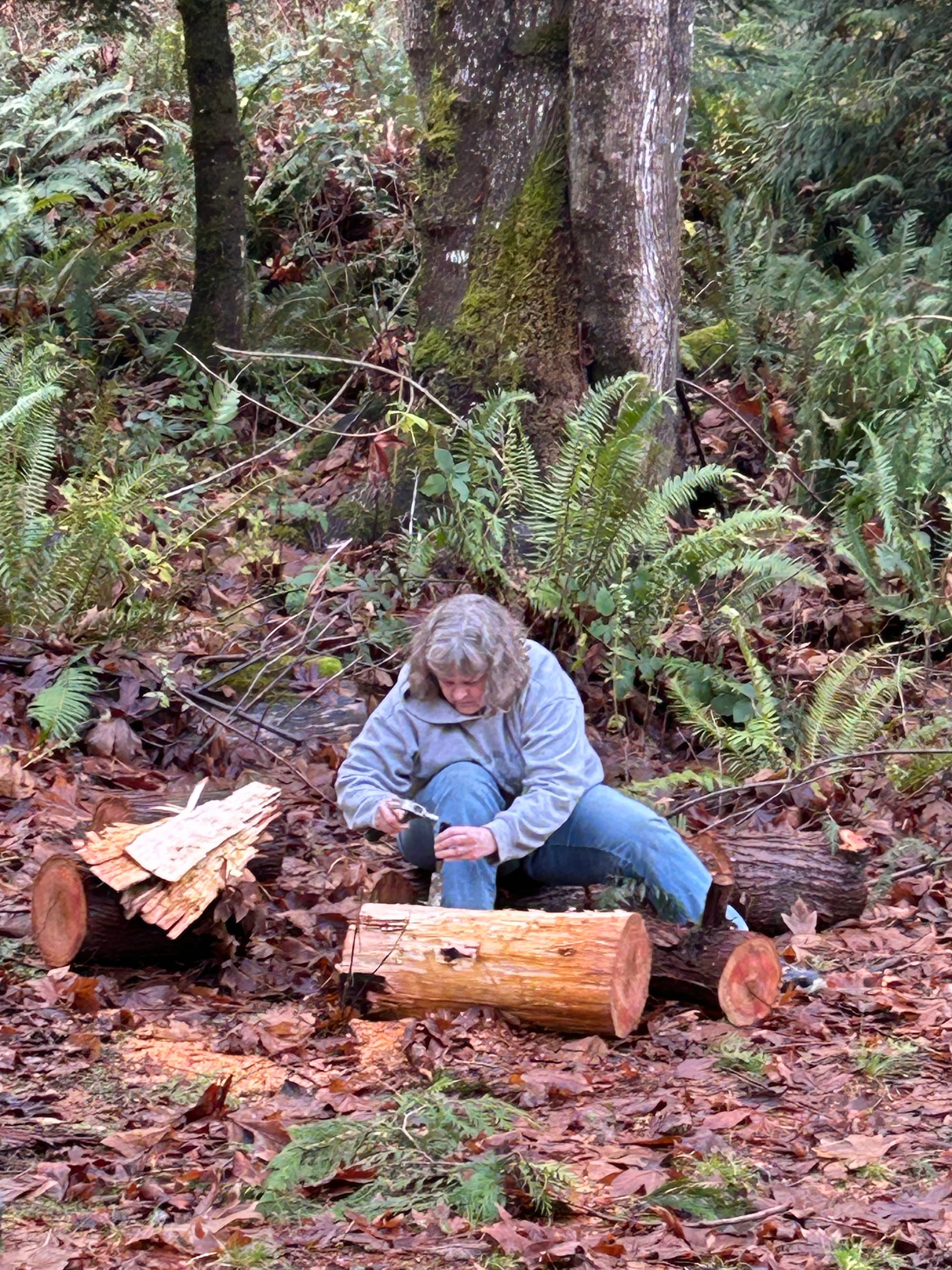
The lengths of tree trunk I had picked up were short, so I returned to the land to strip away bark from some longer lengths which I could use for larger projects.
I tried substituting bark for paper in some projects, with some attempts being successful and others being less so. Now matter how hard I tried to make a bark German star, for example, I couldn't manage it as the bark just wasn't thin enough. I think only a thinner, more paper-like bark such as birch would work for that.
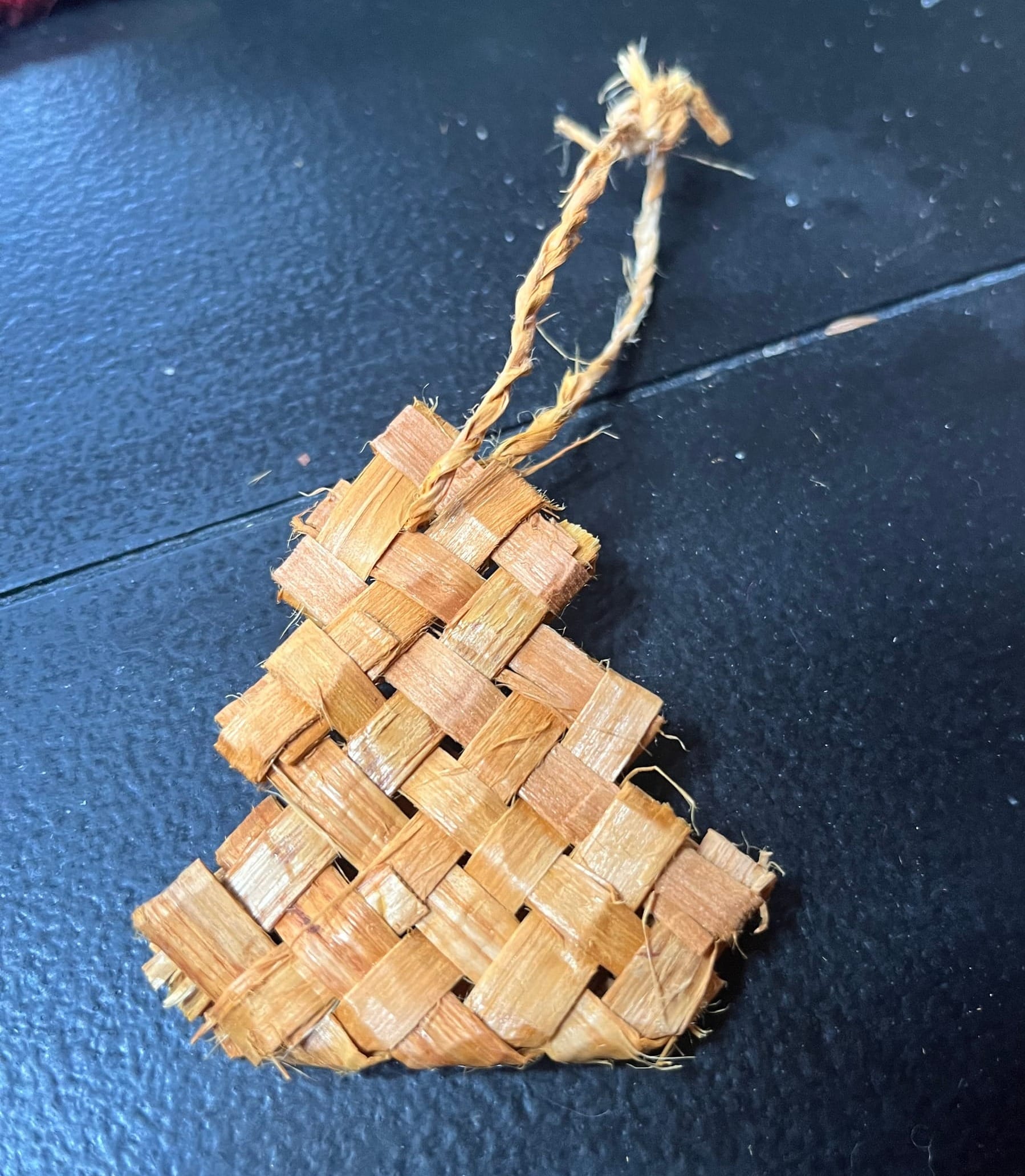
Perhaps my favorite project was making tree ornaments to give away for Christmas. I hung them by a loop of cedar cording, made from the same bark as the ornament itself.
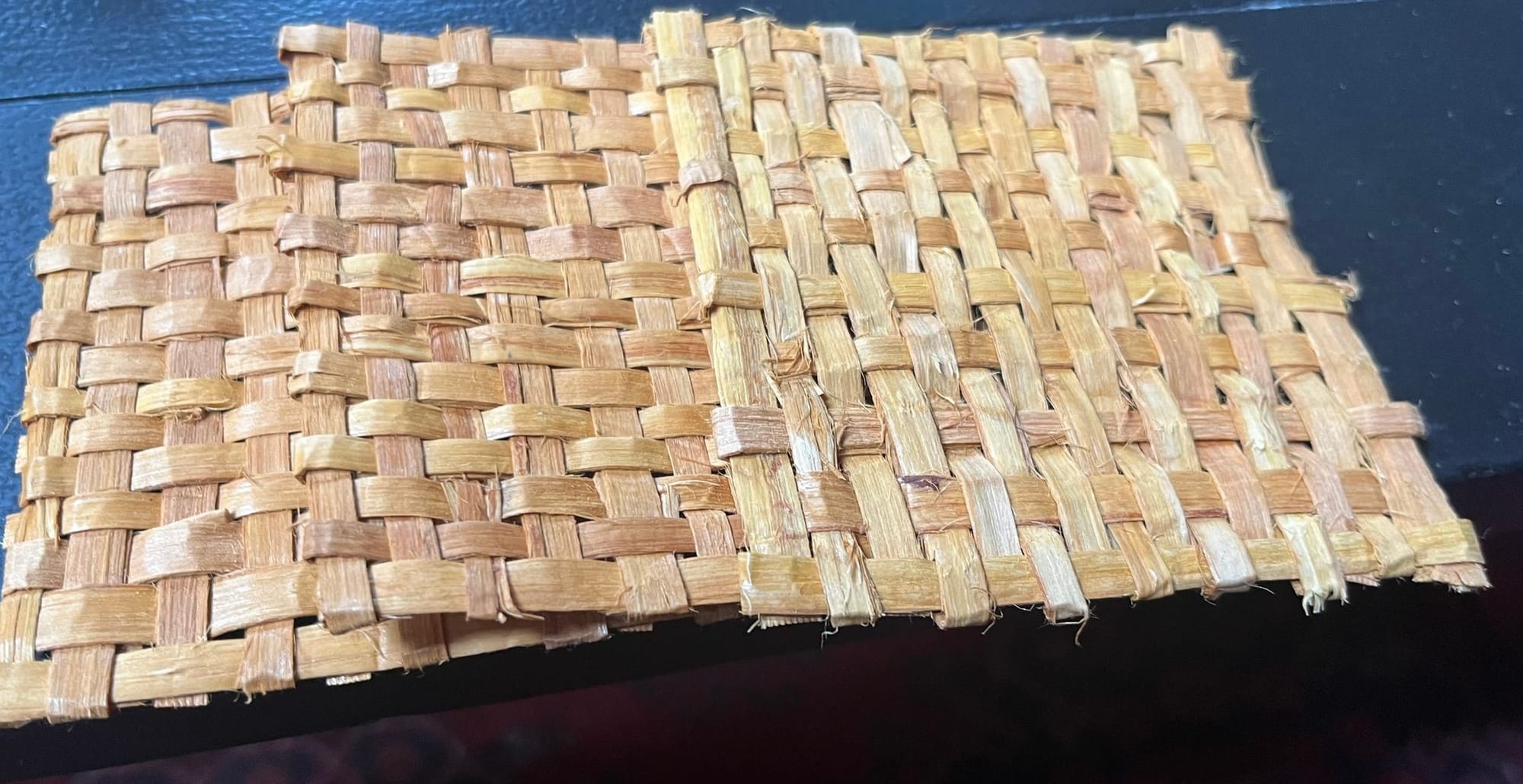
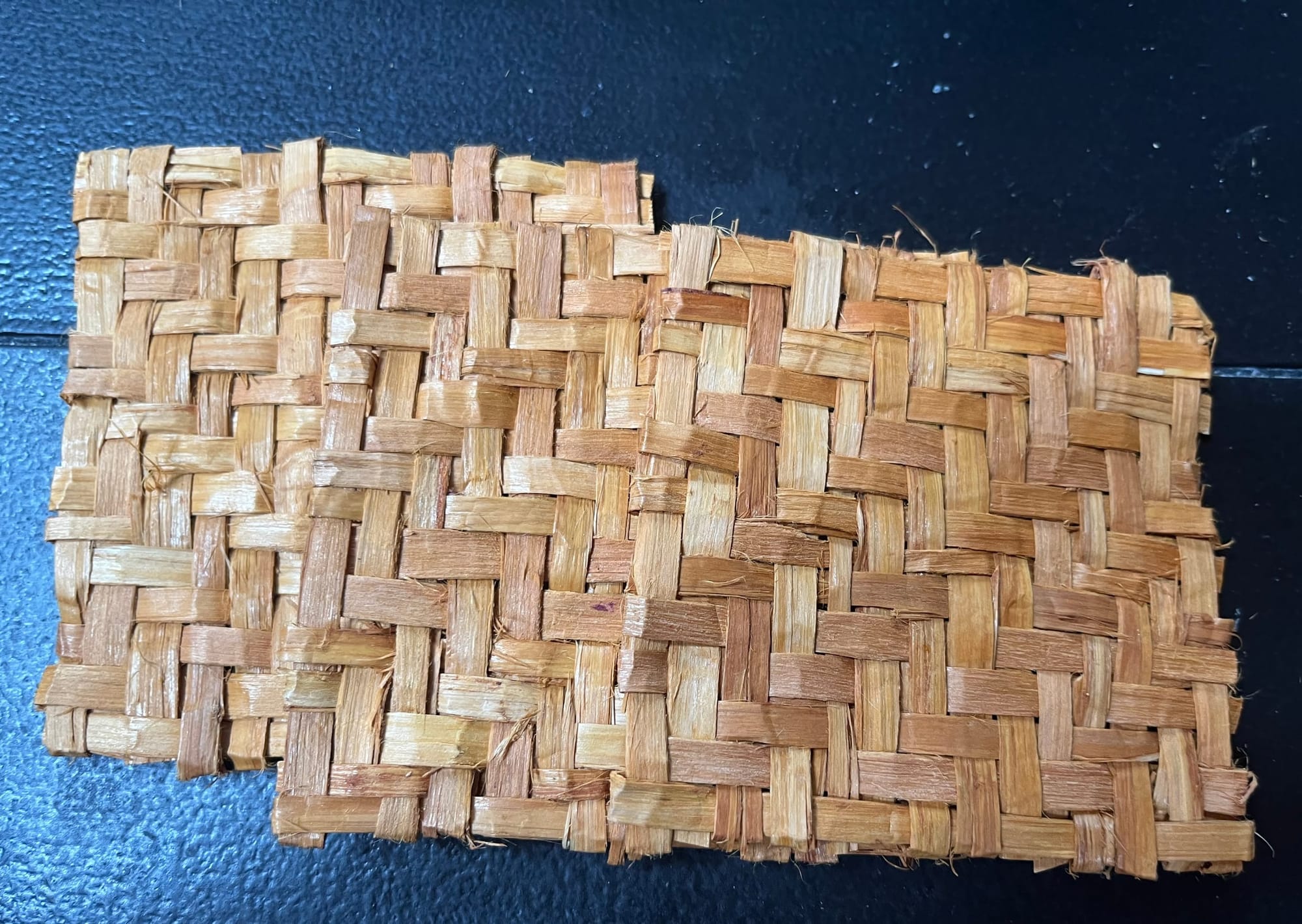
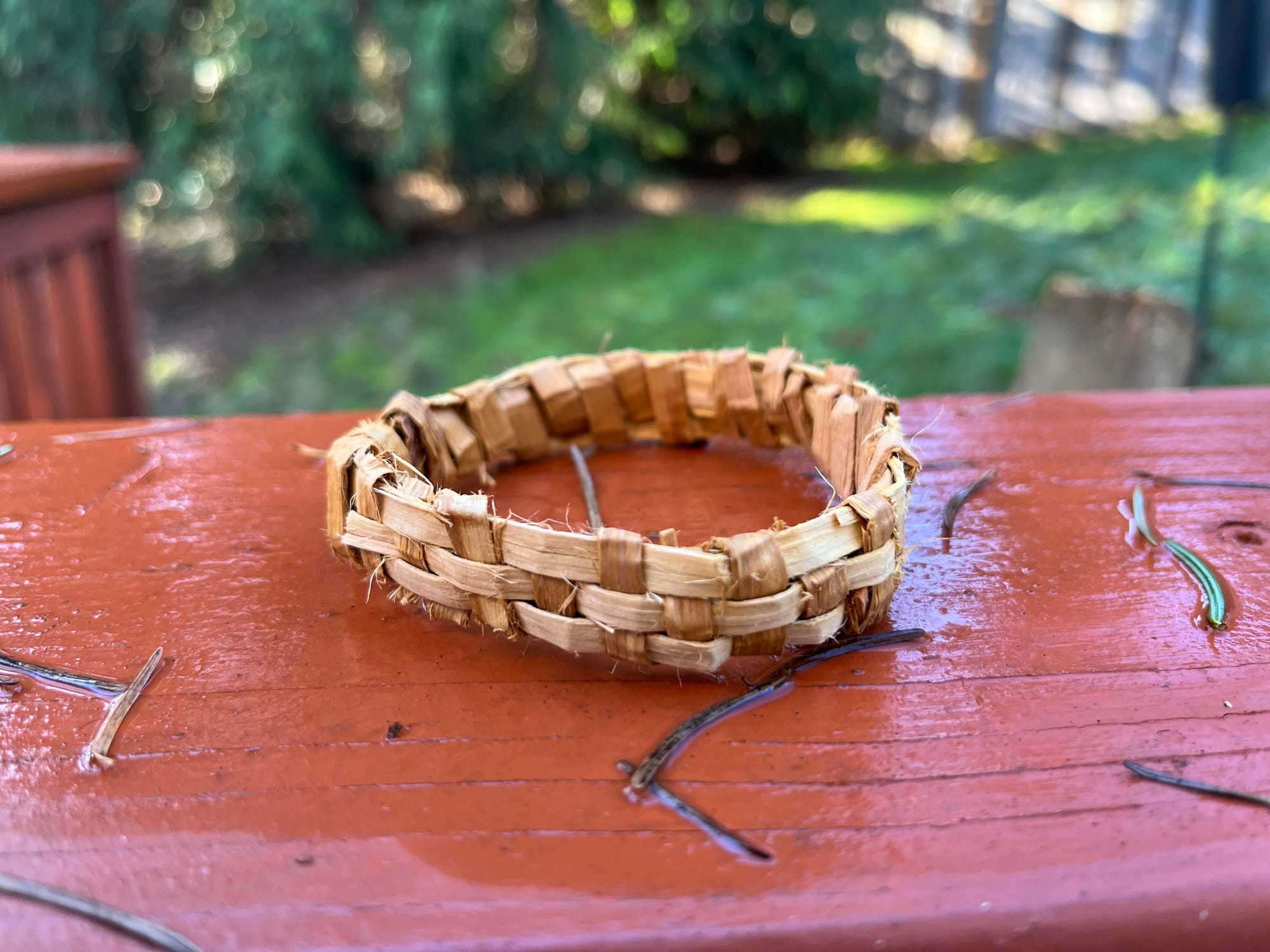
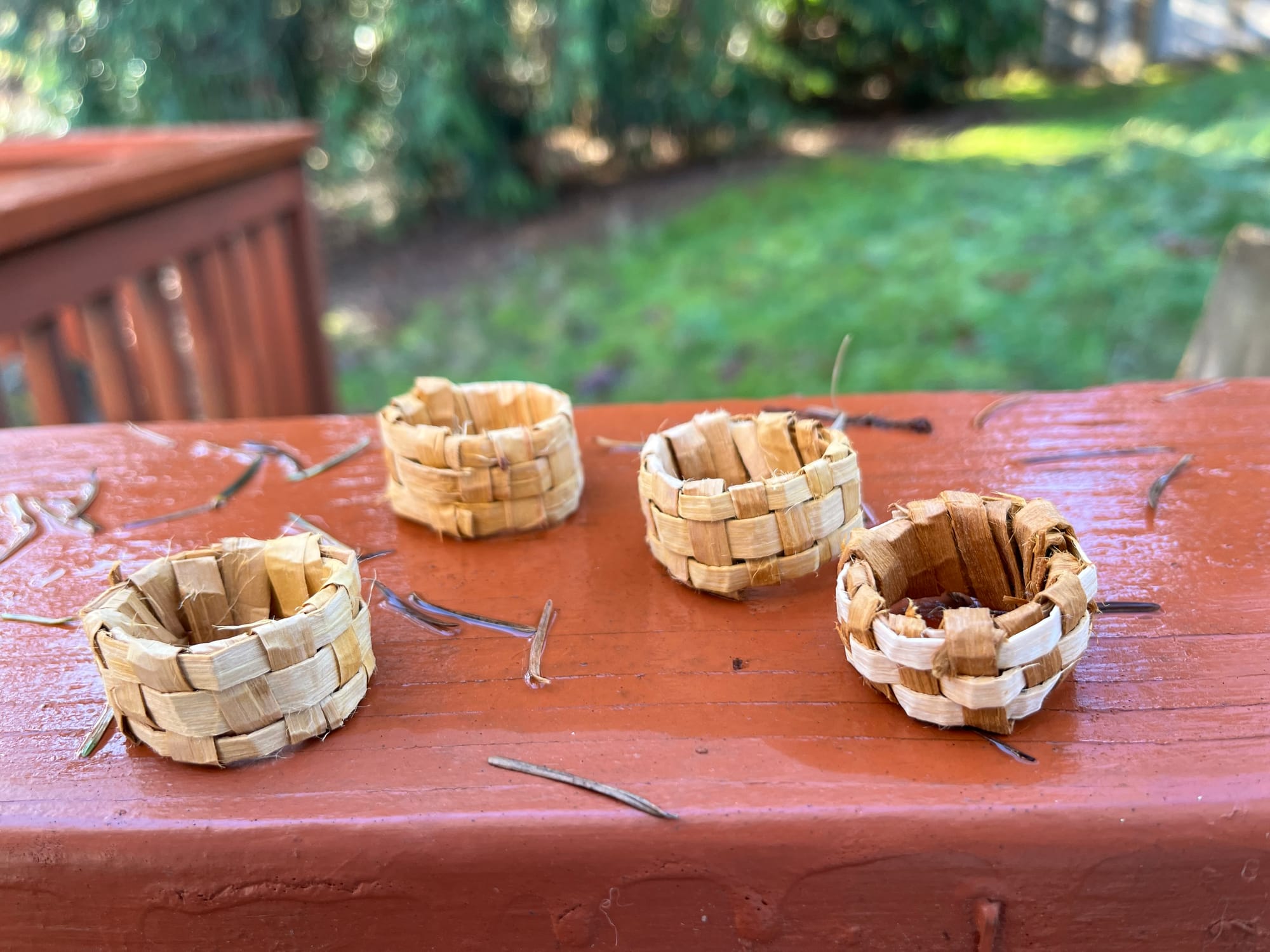
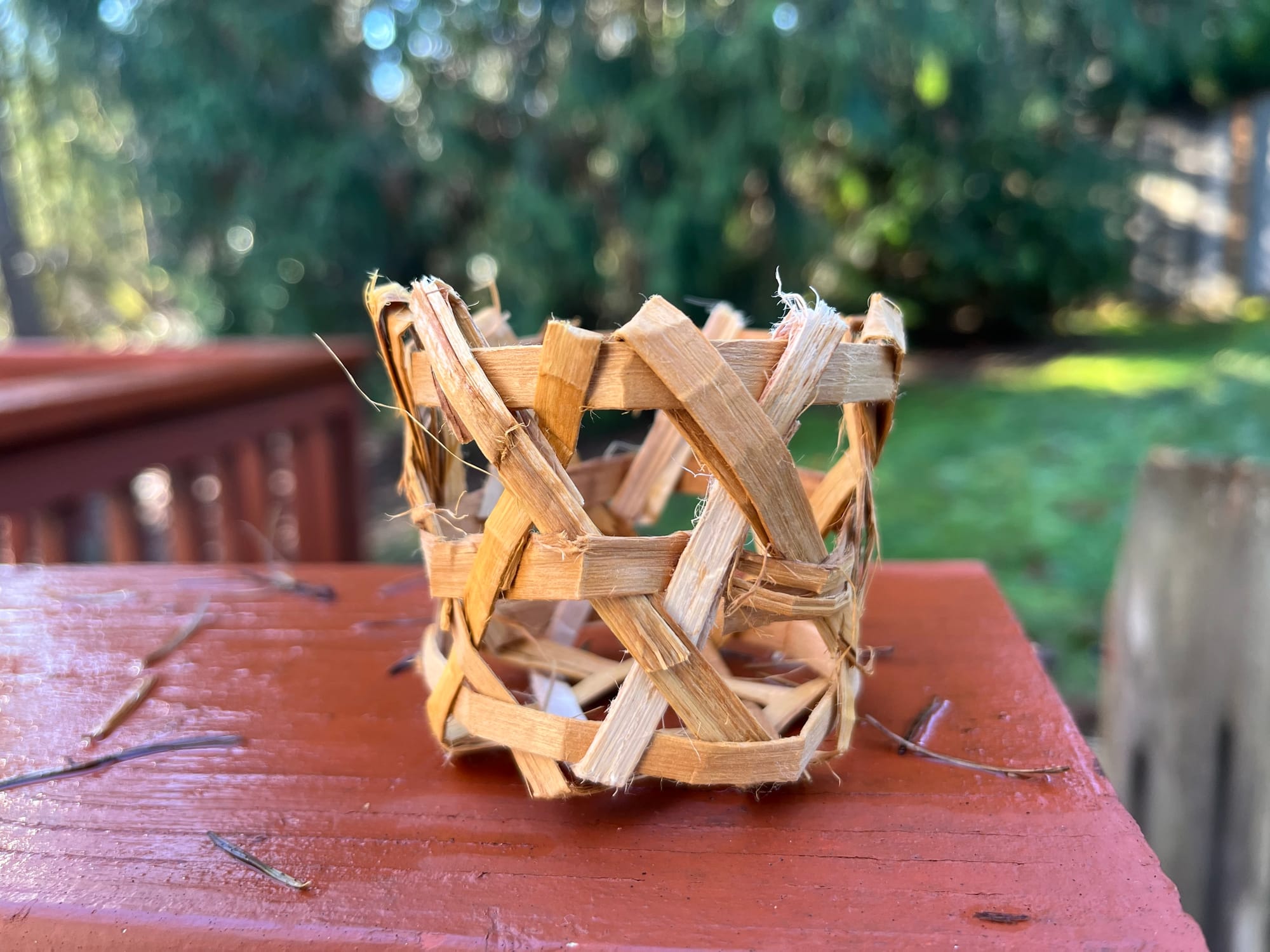
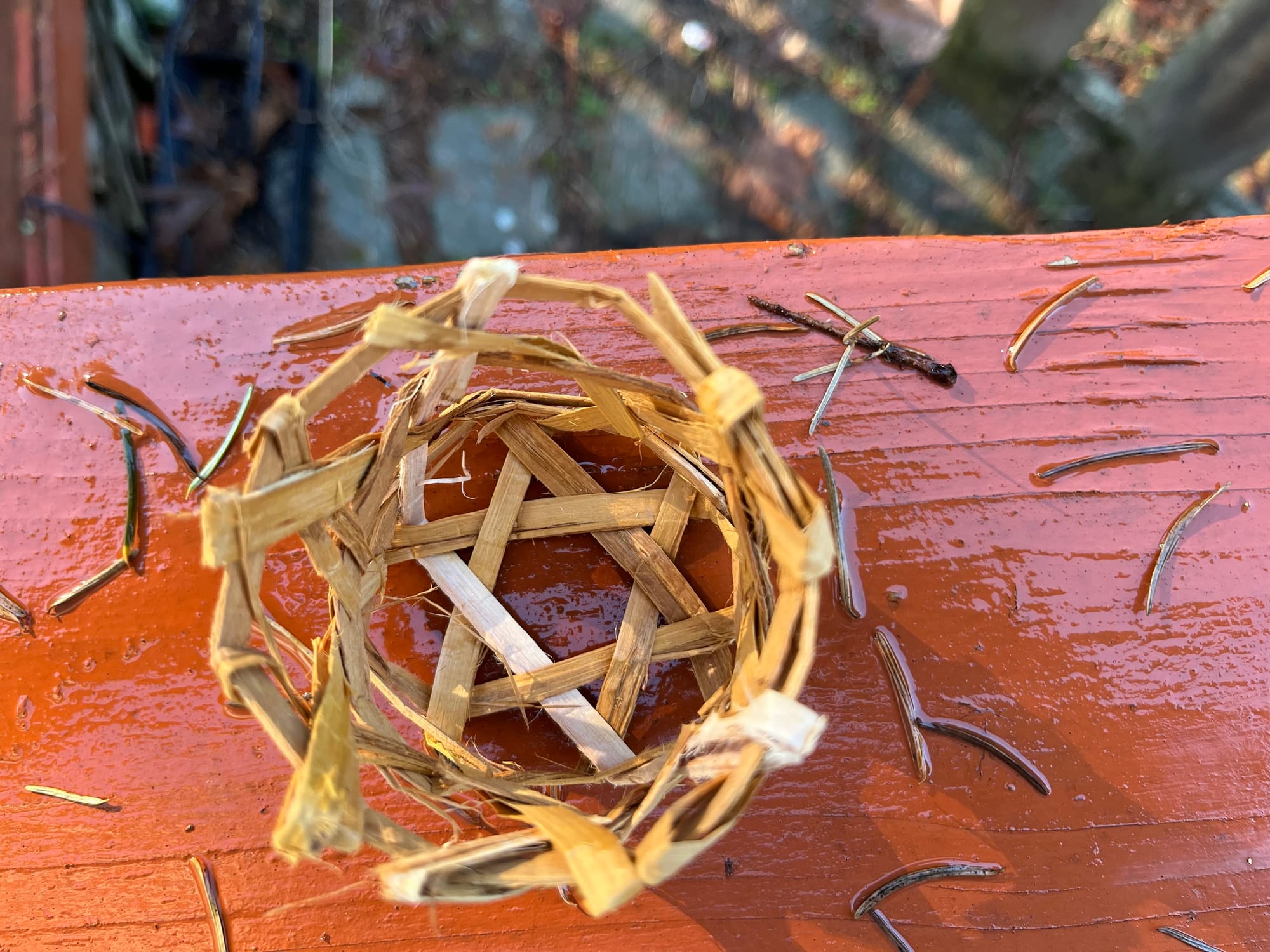
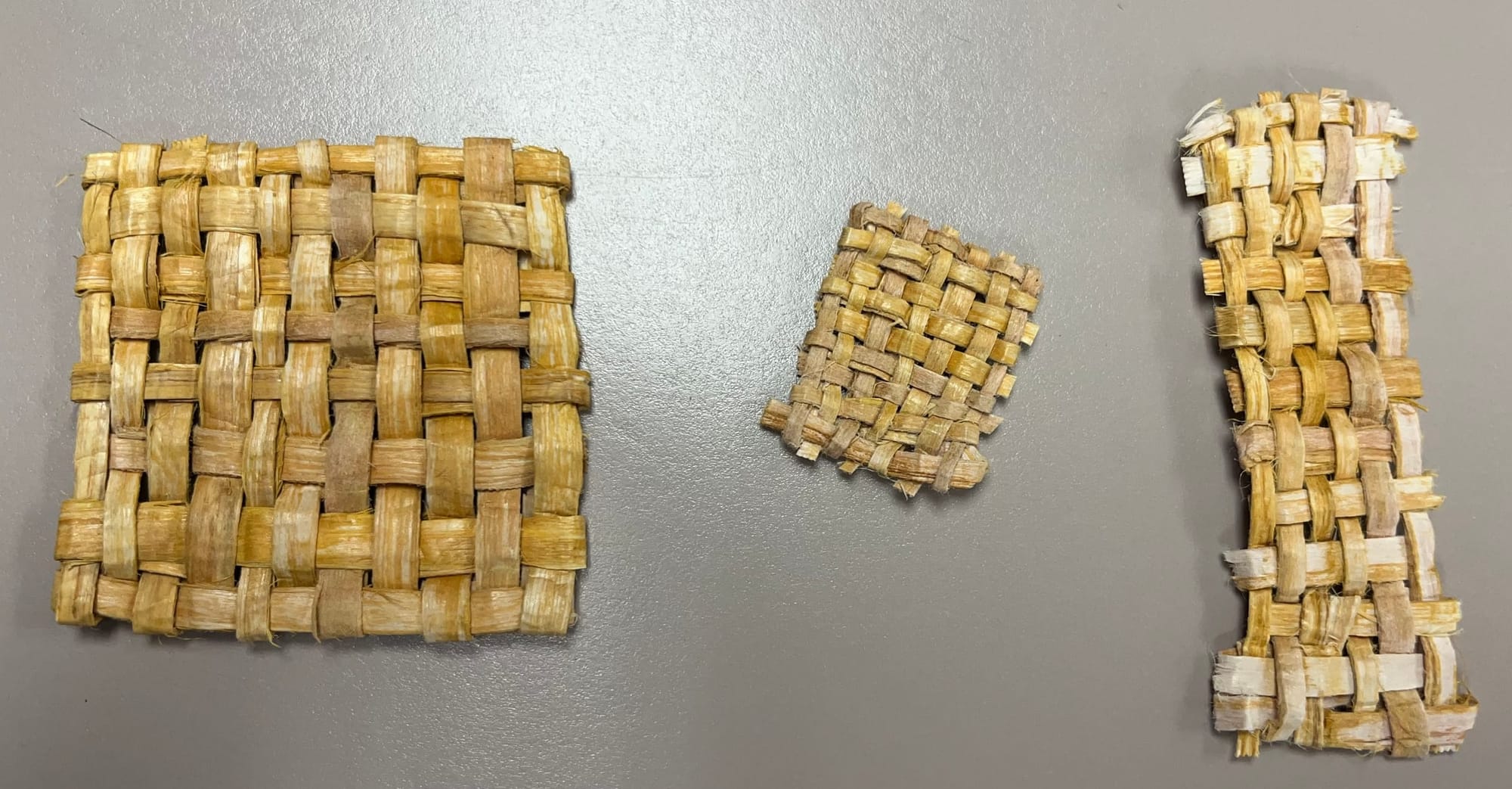
Coasters, bracelet, napkin rings, basket made from cedar bark. Photos by Louise Conner
I continue to have fun experimenting with different weaves, making a set of coasters for the Circlewood building, bracelets (and smaller versions that are napkin rings) and a very small basket which I created using a hexagon weave.
I'm still looking for uses for the outer bark beyond turning it into wood chips. So far, I've created a few fire starters (with wax from used candles) and mouse-repellent sachets.
Although I am a novice, the process and results have been deeply rewarding to me. The work required to create even a coaster feels like a way of calling attention to the tree that spent its life providing shelter, food and shade to the ecosystem it was part of. When I strip, peel, dry, soak, and weave the bark into a useful form, it means that the tree had and still has a value worthy of my time and effort. My work is not as a beautiful as the tree itself, but it is a small reminder of its beauty and worth.
Feel free to leave a comment below (you can sign in through your email) or contact me directly at louise.conner@circlewood.online. We also encourage you to forward this post an anyone you think might benefit from it.
Louise

Comments ()