
The Art of Creation: Beyond the Surface
A woman in India sees value in a bird that was once seen primarily as a pest.
I heard a sermon several years ago in which we were exhorted to “love everything God made…including the cockroach.” I struggle with loving cockroaches. When I lived in the San Jose area, my husband learned to recognize my cockroach scream which would burst out whenever I came upon one unexpectedly. The worst was the time I woke in the middle of the night with one on my face!
As a scavenger, the cockroach is one of the earth's "sanitation workers," breaking down decaying plants and animals and returning nutrients to the soil—meaning it hangs around things that are rotting. This is a valuable ecological role, but it also tends to elicit repulsion instead of attraction from most people. To quote the Old Testament, "People look at the outward appearance, but the Lord looks at the heart" (1 Samuel 16:7b).
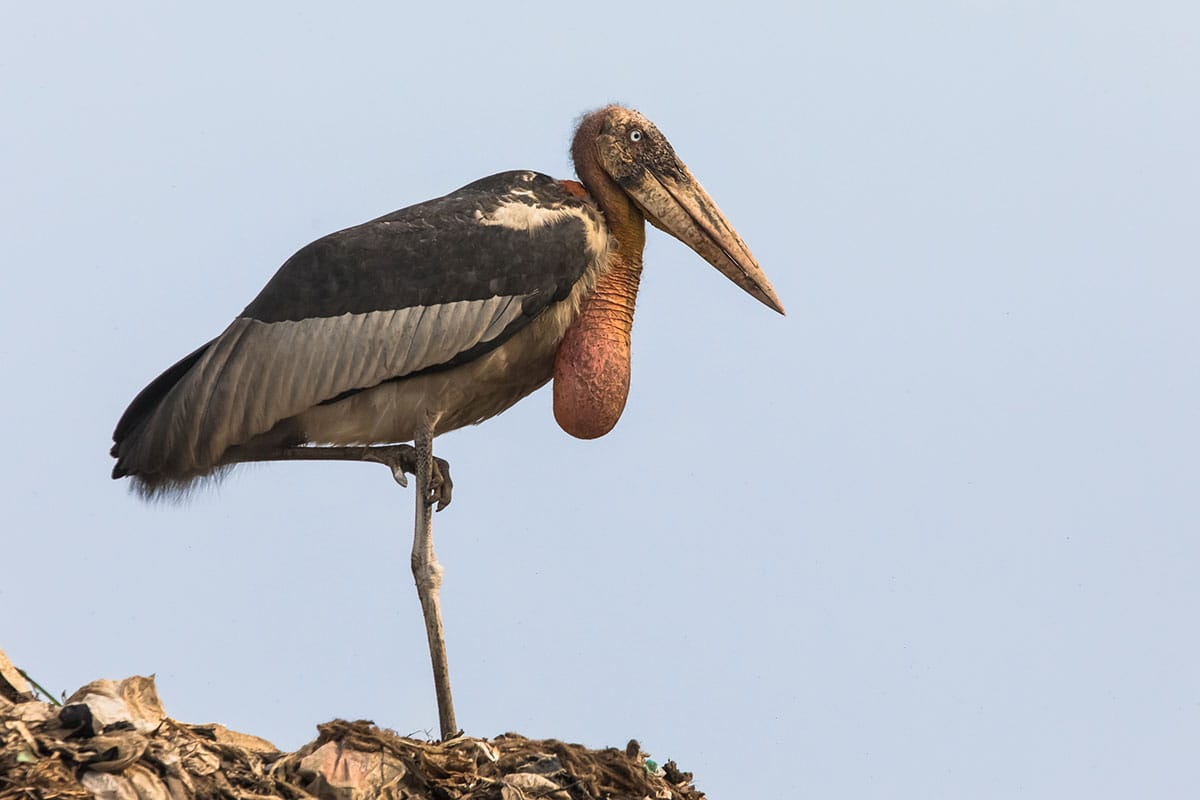
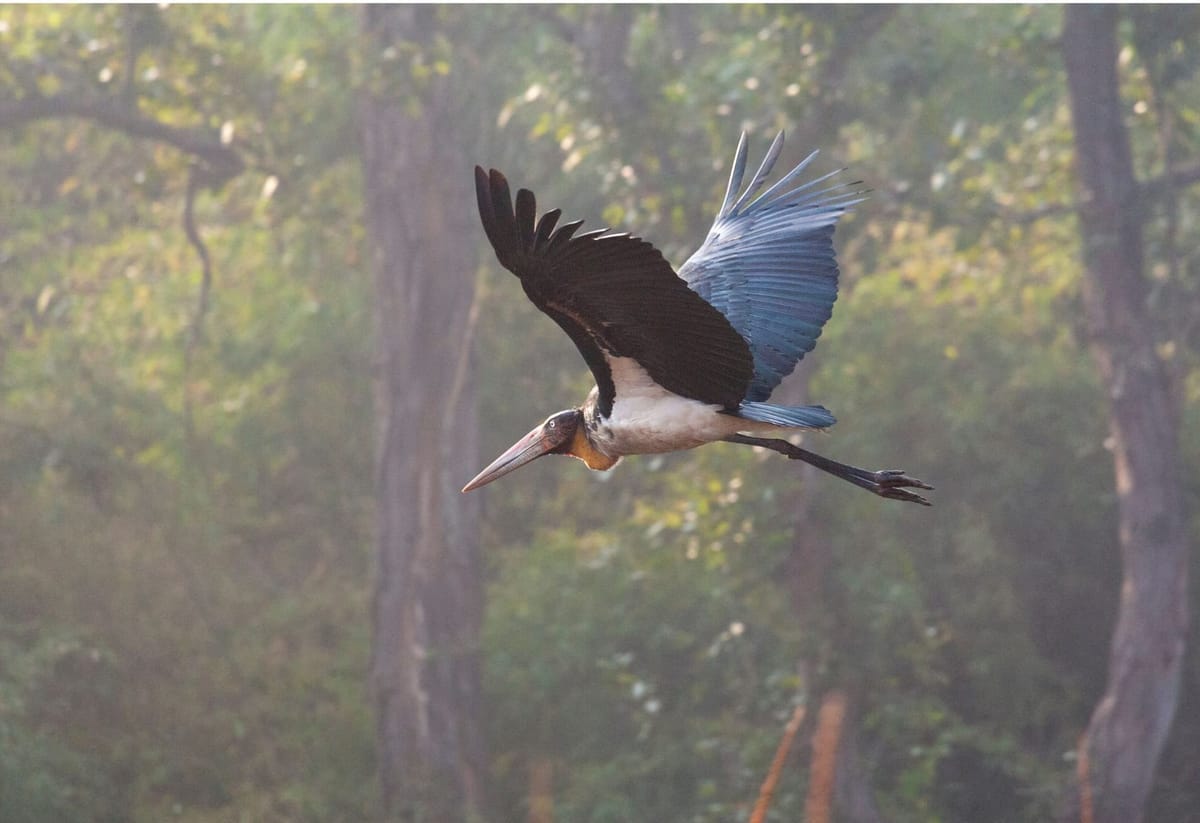
The greater adjutant stork, known locally as “hargila” or "bone-swallower" in Sanskrit, is another of these sanitation workers, quickly consuming feces and carrion and spreading it quickly through defecation, which leads to its rapid decomposition. Once abundant throughout southeast Asia, it was listed as endangered and dipped to a population of 1,000 birds in 2008. It is considered extinct in Bangladesh, Laos, Myanmar, Nepal, Pakistan, Thailand, and Vietnam. The only two countries with known nesting populations are Cambodia and India.
While the population in Cambodia is on land protected by the government, the nesting colonies in India are built in treetops on privately owned land in the Assam and Bihar states. Because the locals are often antagonistic and even afraid of the huge, almost 5-foot birds, they have contributed to the birds' decline by hunting them, eating their eggs, and by cutting down their nesting trees to eliminate their noise and guano.
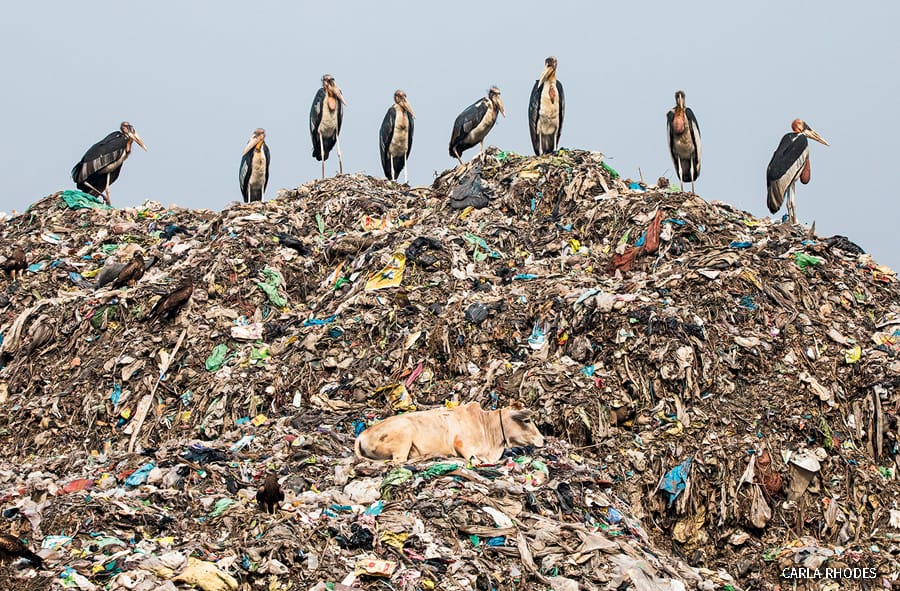
Because of the loss of wetland habitat, the greater adjutant stork in India has turned to landfills for its food, alongside people and other animals searching for their own sustenance. This has contributed to the idea that the birds are messy, unhygienic, and creatures of ill omen, making people more apt to cut down trees that hold their nests.
One woman who has brought about a sea change for the bird's survival tells of a traumatizing experience that set her on this road. Wildlife biologist Purnima Devi Barnum of the Assam state in India, was studying the greater adjutant stork for her PhD when she saw a man cutting down a tree that contained several nests. When the tree fell, the nests and birds tumbled down, including nine nesting chicks. She questioned the landowner on his reasons, explaining that the storks were endangered, but he and other neighbors responded by mocking and taunting her for her concern.
Having just given birth to twins, she saw the experience from a maternal point of view, grieving as some of the chicks died in her hands. That experience moved her from a more academic posture toward the birds to active protection of them. She has said she will conserve the greater adjutant storks "until my last breath." Having grown up in a rural area with greater adjutant storks all around, she was always fond of them, but after the tree-felling experience, she became passionate to do whatever she could to change people's perspective on the birds so that they could be saved.
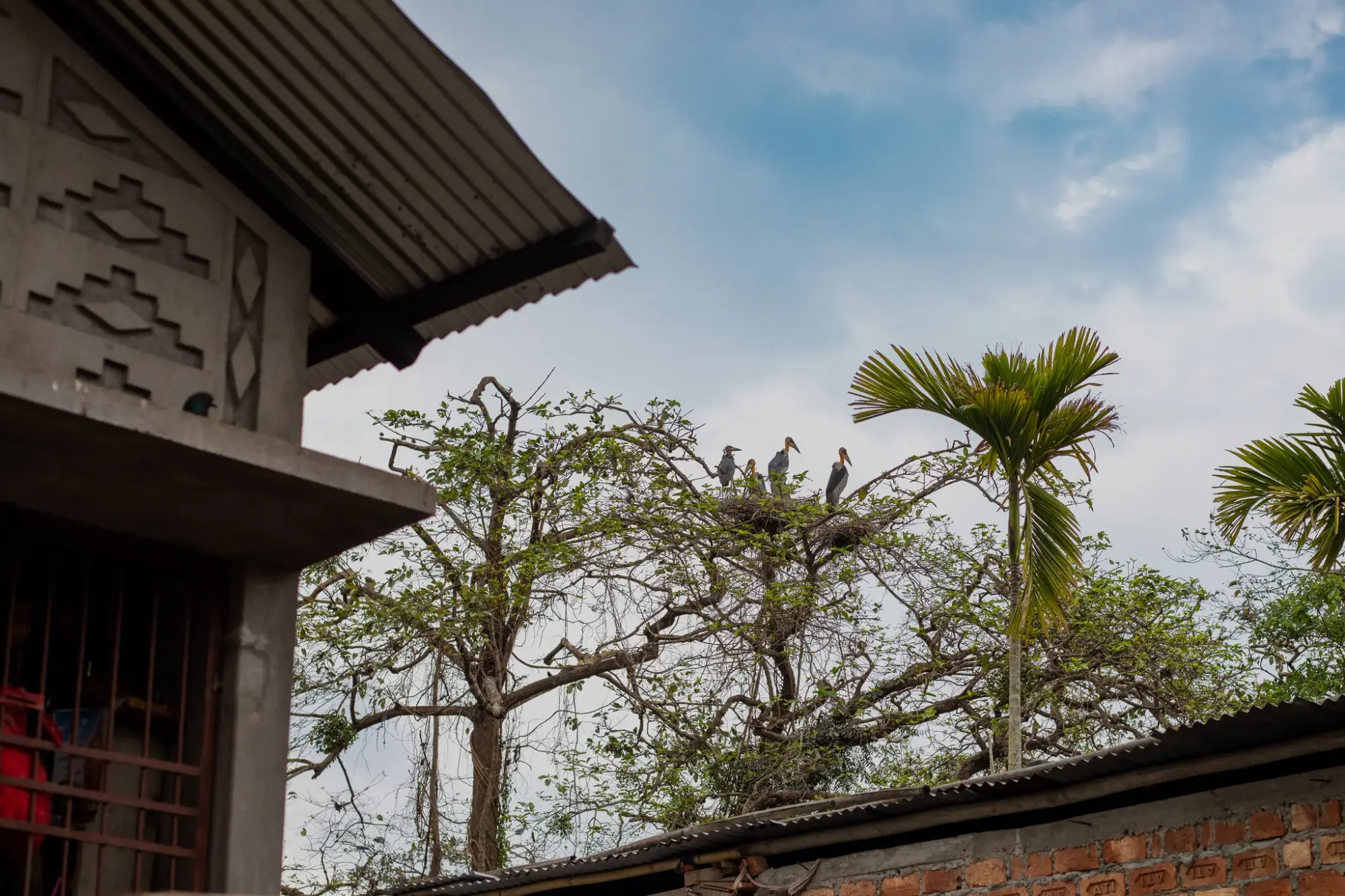
Because the nests are on privately-owned land in Assam, it was absolutely necessary to change the individual minds and hearts of those who owned the land. Her creativity about how to do this is amazing. She started by meeting with a few local women and focused on helping them see the stork in a more positive light.
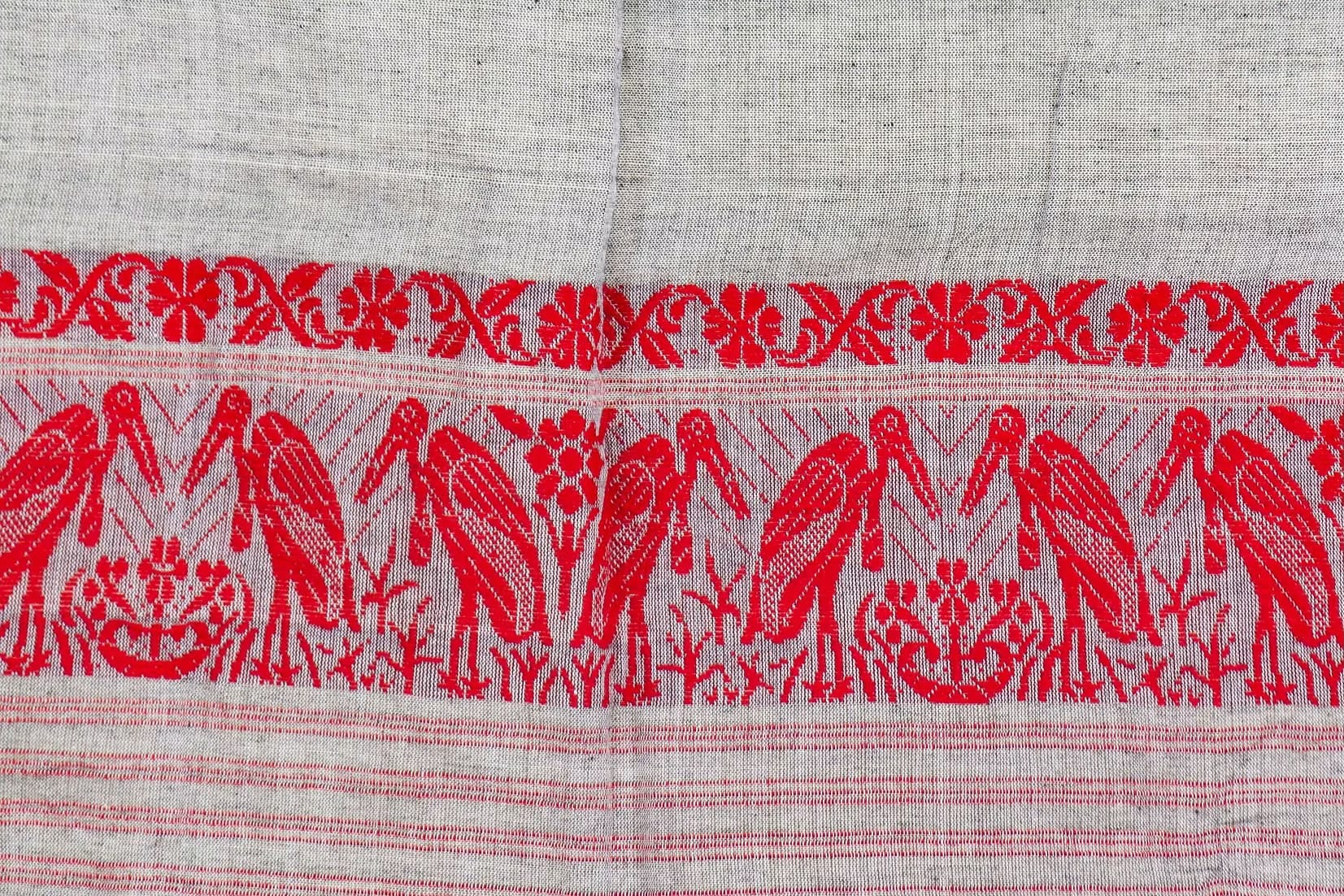
Barnum felt that in order to truly change people's deep-seated prejudices, she needed to help them make an emotional connection to the birds. She began linking the hargila to local celebrations and rituals. If she found a nest with eggs in it, she would hold a traditional baby shower for it. She sang local weddings songs to celebrate the breeding season and encouraged women to say prayers for newly hatched chicks. She introduced the hargila as a motif into traditional weaving patterns.
She drew parallels between their concern for their own children and the concern of the stork parents when their nests were destroyed or they were harassed by stone-throwing. The women began to recognize that storks were creatures with relationships, not just scavengers making a mess in their backyard or dark omens associated with bad luck.
The educational content was introduced later, after she had begun to break down the prejudices that the women held against the birds. Many of the households were deeply patriarchal and the women wouldn't attend lectures, so she offered cooking contests—with a slide show about the storks at the end. She ended meetings and other types of contests with a string game called The Web of Life, which taught about the interconnections of the ecosystem and the value of the hargila within that ecosystem.
She enlisted the help of schoolteachers of the children of landowners where the nesting sites were located and on World Wetlands Day, the children came home chanting praises for the hargila, advocating for the saving of their nests, and bearing gifts of coffee mugs with images of the stork imprinted on them.
Barnam attended weekly women's Hindu rituals and eventually gained permission to show her slideshows. She convinced a popular Indian actress to make a local appearance on behalf of the greater adjutant. She calls these her "tricky ideas." Due to her persistent efforts, she is very well known and has been given the nickname of "Hargila Baideo" or Stork Sister.
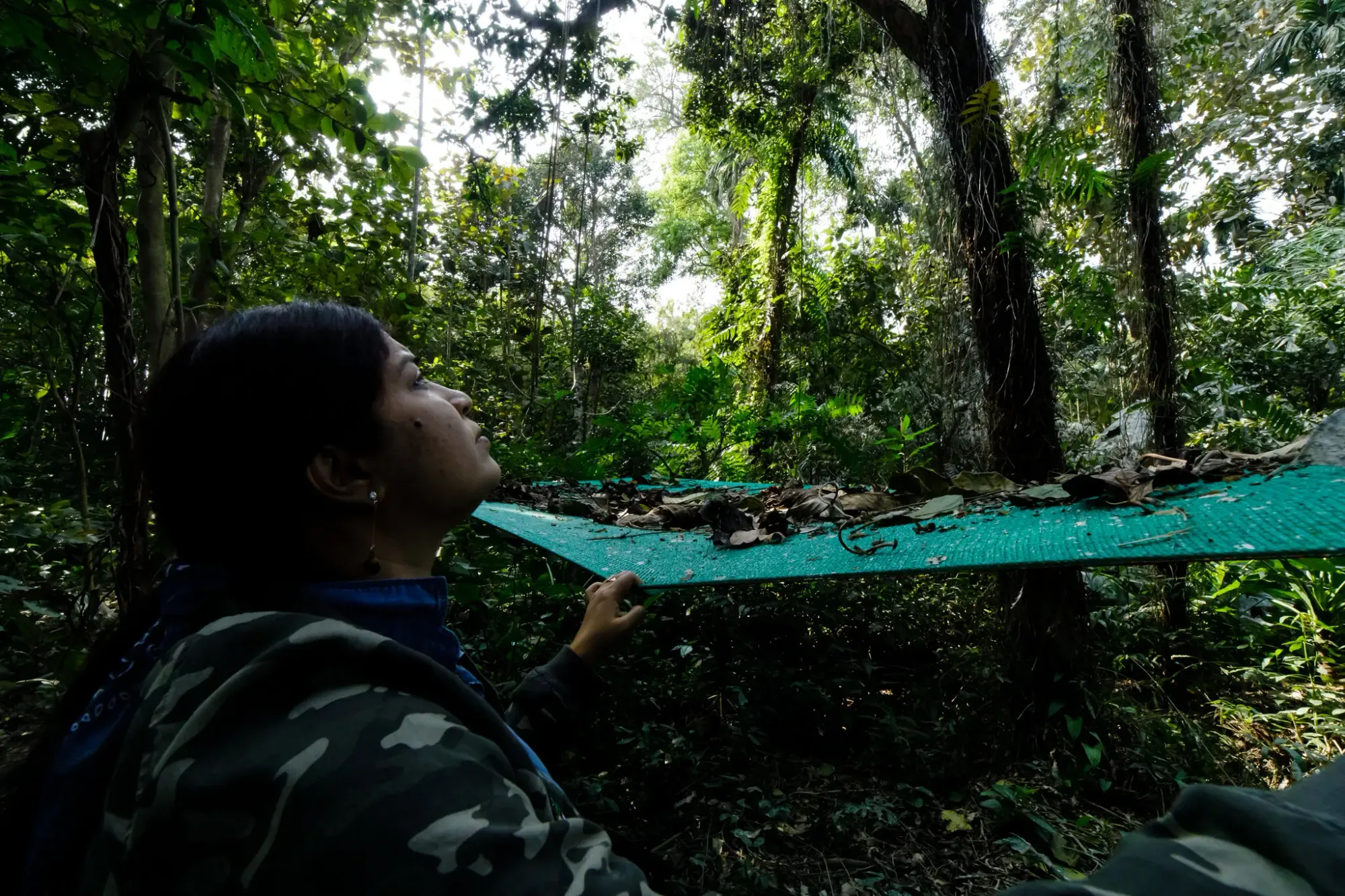
In 2008, when she had enlisted the interest of about 400 women, she started the Hargila Army. Members keep track of nests, rescue fallen chicks, and advocate with local officials for their protection. The women hold village-to-village campaigns, publicizing the positive attributes of the storks and working to dispel superstitions and prejudices.
The women involved, who had often never been in the public square before, are empowered as they learn skills to advocate for this misused bird and become more used to being in leadership roles and making public appearances. Being a member of the Hargila Army has become a way to increase a family's financial stability and learn new skills as the products they create have been turned into an online store.
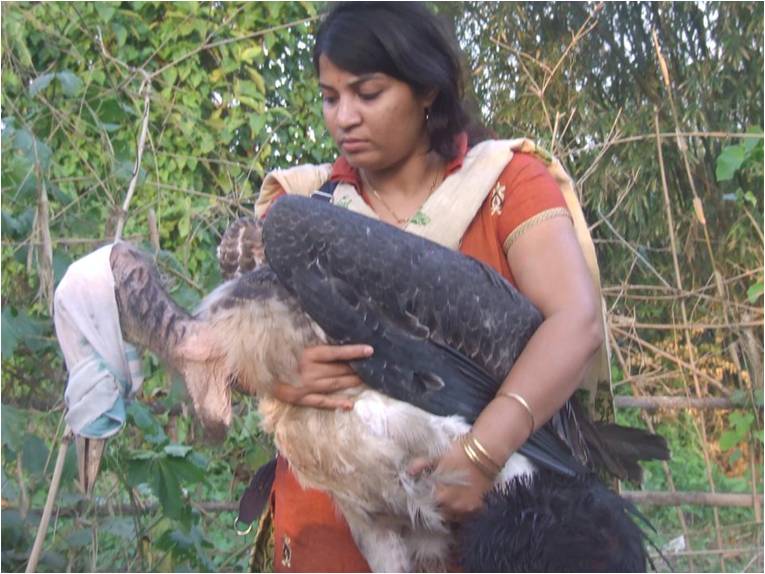
Barnam knew she was making headway when she began receiving calls from people who wanted her to rescue chicks that had fallen out of trees. One district commissioner was sympathetic enough to the cause that nets were placed around all the nesting trees so that falling chicks would be caught before hitting the ground. As Barnam has noted, however, depending on government officials is tricky since a change in leadership can destroy all the work you have already done. It is the local population that will ultimately sustain the work.

The Hagila Army is now composed of 20,000 women from 47 villages. The attitude of the people has shifted so much that it a source of pride that storks have chosen to live in their villages and trees. By 2023, the stork had been moved from "endangered," down to "near threatened" on some lists. The number of nests in the Kamrap district in Assam has increased from 27 in 2008 to 210 in 2026. The population in Assam has increased from 450 birds in 2007 to 1830 in 2026, and the area is now labelled an "Important Bird Area." The global population of greater adjutant storks is estimated to be at least 3,180, with its survival still quite dependent upon ongoing conservation efforts.
“There’s a lot that the hargila has taught me,” Barman says. “It is resilient, it is strong … but most of all, its resurgence has convinced me that human emotion is a powerful tool of change. Appeal to people’s emotions, and we can change the fate of entire species.”
As Barnam also points out, conservations groups tend to focus on charismatic species like rhinos and tigers who draw more public interest and appeal. Species like the greater adjutant stork...and the cockroach...tend to be undervalued, but if we can look beyond an appearance that might at first repel us, we may be surprised by the value of the creature we find beyond.
Feel free to leave a comment below (you can sign in through your email) or contact me directly at louise.conner@circlewood.online. We also encourage you to forward this post an anyone you think might benefit from it.
Louise
Click above to watch a 28-minute video from Cornell Lab of Ornithology about the Hargila.

The Ecological Disciple is part of Circlewood, an organization committed to "accelerating the greening of faith."


Comments ()