The Way Forward: Writing When The Earth is Melting
An update from James on his book project.
As we reach the mid-point of the year, I hope you have been enjoying the biweekly writing of Louise Conner, as I am, as well as our other regular contributors. You may recall that I am not publishing regularly for The Ecological Disciple this year in order to focus on a book project. The working title of the book is "Following Jesus from the Ground Up: The Journey of Ecological Discipleship." The purpose of the book is to invite readers to hear and respond to Christ's call - "Follow me!" - as it resounds through the beautiful and perilous ecological age we live in. For a longer description, you can check out what I wrote for The Ecological Disciple back in January.
Here is an update on how the book is coming along, including an excerpt from what I've written so far.
Watching Glaciers Melt
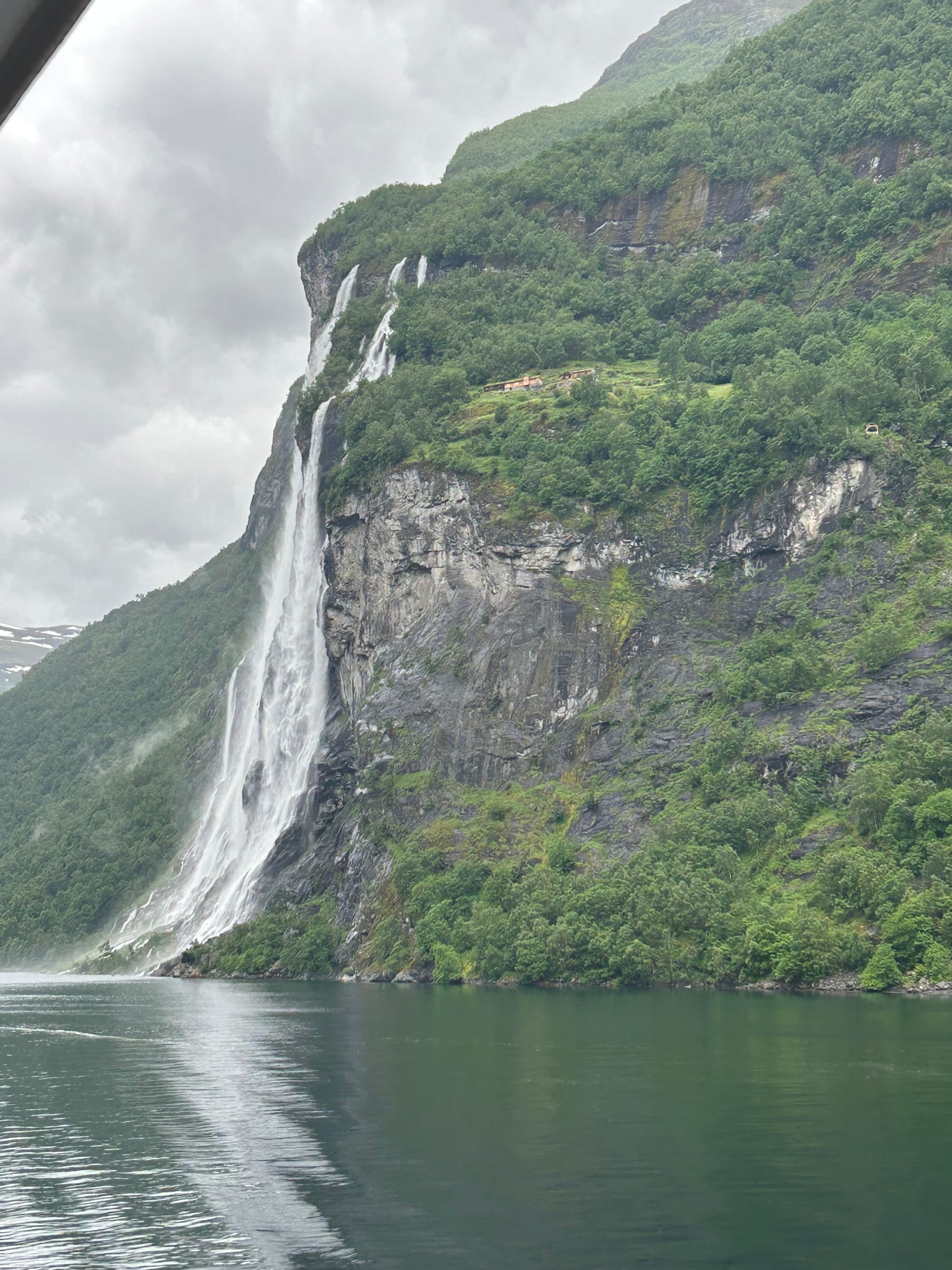
On a recent trip to Norway I spent a morning kayaking in a stunning fjord. Sheer cliffs rose a thousand feet out of the water, their tops shrouded in mist. Unseen glacial lakes sent waterfalls cascading down the cliffs on both sides of the fjord. The best word I can use to describe these fjords is magical.
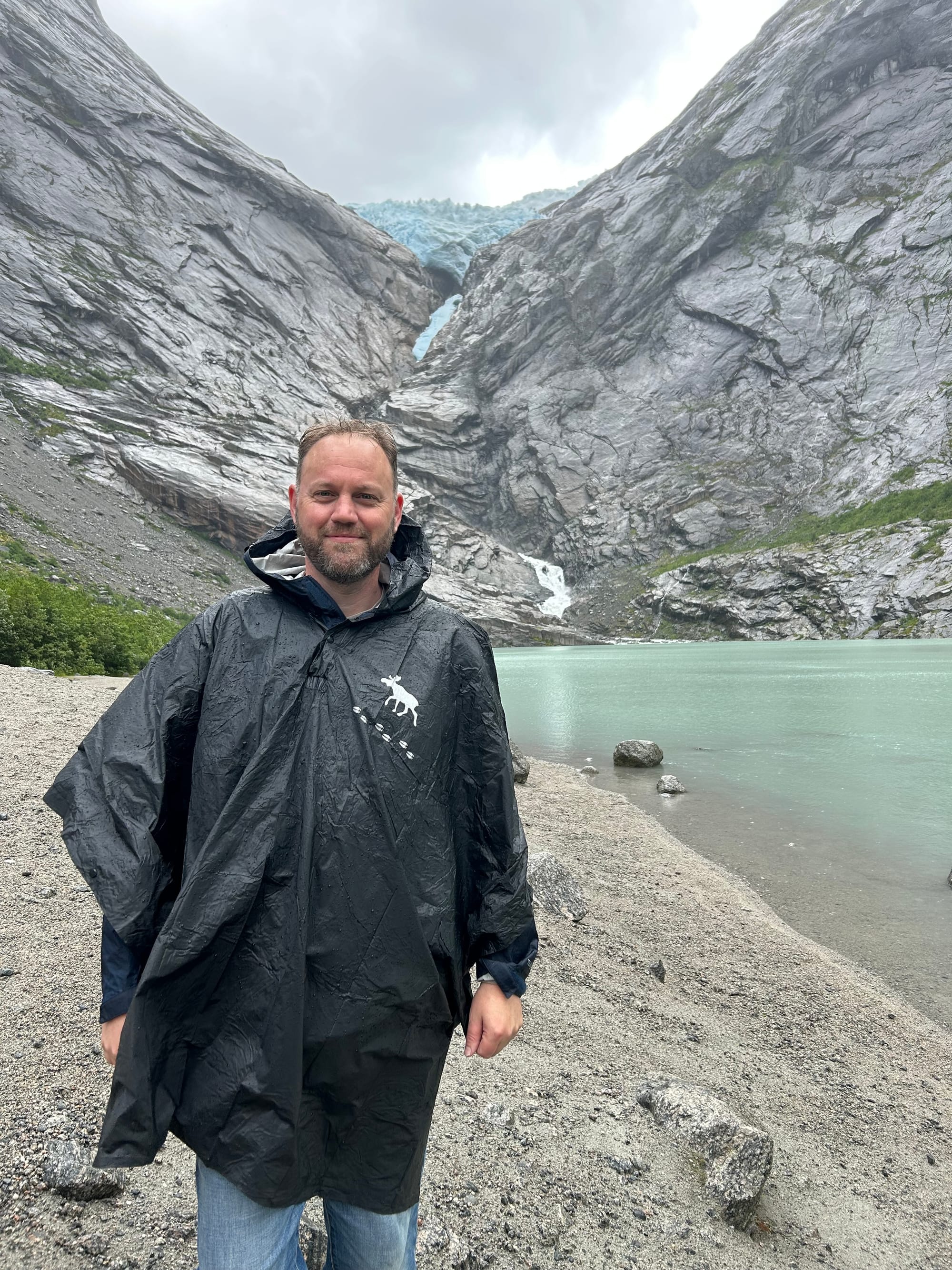
Later in the trip I visited the base of the Briksdal Glacier, an arm of the Jostedal Glacier, which is the largest ice sheet in continental Europe. Briksdal attracted attention in the 1990s because it was one of only a few glaciers that was actually advancing. However, since the turn of the millennium, it has been in retreat. On the short hike to the one of the terminal points of the glacier, signs along the trail denoted where the ice had reached at various points in its history - physical markers of climate change.
Climate change is not just about retreating glaciers, of course. While we were in Norway, a dangerous heat wave moved in south of us, shattering temperature records all across Europe. Texas tourists visiting London declared they had never experienced such heat. Roads melted, tram tracks buckled, and more than a thousand people died.
I recently recorded an Earthkeepers podcast episode with Bill McKibben, one of America's most influential environmentalists and activists. I brought up a book Bill wrote when we were just beginning to be aware of the dangerous future we were facing. His response was sobering:
All the things that I talked about in The End of Nature in the 1980s have now happened. And the damage is brutal and ongoing and scary every moment. I mean, in the last three weeks, there's been a huge amount of new science detailing just how imminent the threat to the Gulf Stream and the other huge currents of the Atlantic are. As melting freshwater pours off Greenland, [it changes] the salinity and hence the density of water in the North Atlantic. And that's what drives those giant conveyor belts. The estimate of the leading scientist in this field, Johann Rockstrom, last week was that there is a 50% chance that they'll collapse in the decades ahead. So there's [an] endless amount of bad news, but there's no use weeping over the things we've already done.
I'm not sure I agree with Bill's conclusion - "there's no use weeping over the things we've already done." Grief and lament are important responses to what is happening to Earth. But I agree with Bill's push toward action - each of us must figure out the steps we can take to end the damage, facilitate healing, and establish new ways of living that enable the community of creation to flourish. For Bill, this entails activism focused on our transition to renewable energy (you should really listen to our conversation). For me, it entails writing this book. The excerpt below explains why.
There Is Another Way
This excerpt is from the introduction. It very much in draft form, but I hope it gives you a sense of why I am writing this book.
This book was born from the recognition that the groaning of creation, rising daily in pitch and volume, continues to fall on deaf ears. To put it bluntly, the Church is fiddling while the earth burns. Climate change is destabilizing the planetary systems that have enabled life to flourish. Essential ecosystems are degrading, and some are on the verge of collapse. Our fellow creatures are being wiped out at rates that boggle the mind and turn Genesis 1 on its head. Everything God declared good is under siege: land, sea, sky, plants, trees, fish, birds, and all the creatures that move on and under the ground. This includes, of course, human beings, with the most vulnerable bearing the brunt of the consequences.
The hard truth of this moment is that we are engaged in a systematic, catastrophic, anthropogenic act of de-creation that makes the ancient words of the prophet Jeremiah seem particularly prescient.
“My people are fools; they do not know me.
They are senseless children;
they have no understanding.
They are skilled in doing evil;
they know not how to do good.
I looked at the earth, and it was formless and empty;
and at the heavens,
and their light was gone.
I looked at the mountains,
and they were quaking; all the hills were swaying.
I looked, and there were no people;
every bird in the sky had flown away.
I looked, and the fruitful land was a desert;
all its towns lay in ruins before the Lord, before his fierce anger (Jer 4:22-26).
This is the path we are on, the future which we are creating and will bequeath to future generations. If we do not change course, if we do not rapidly transform the way we live and relate to the earth and all its creatures, these consequences will intensify and spread. We must, to use traditional religious language, "repent".
There are many who have been making us aware of what is happening, many who have been working for change. Good work has been done. Some progress has been made. There are practical and technical solutions that we must continue to pursue. But the most important changes we need to make are inescapably moral, cultural, and spiritual.
If there was ever a time for people of faith to lead the way, it is now. Yet as the cries of creation echo with increasing urgency throughout the earth, too many Christians choose to keep their heads in the sand. Too many churches and pastors remain stuck in the very paradigms and practices that created and perpetuate our current crisis. We need Christians to pick their heads up and to open their ears and eyes to the pain and suffering of creation. We need denominations and Christian institutions to stop dividing over social issues and theological minutia, and to reimagine what it means to be the body of Christ that ministers to the broken body of creation. We need pastors to stop fretting over declining numbers and diminishing influence, and to start forming disciples ready to hear Creator call them to the sacred vocation of earthkeeping. We need churches to stop focusing their mission on securing a share of the shrinking religious marketplace, and to start imagining what it looks like to embody a gospel that is good news for all creation.
These words are sharp, but the book is fundamentally a work of hope, because the gospel is good news for creation, and there are an increasing number of Christ-followers who know this and are trying to live it. The book is an attempt to lay out a roadmap for the way forward.
Thanks for your understanding and support as I work on the book. I'll continue to offer periodic updates, and welcome your feedback.
With you on The Way,
James
Comment below or email me at james.amadon (at) circlewood.online.
IF YOU LIKED THIS, HERE'S ANOTHER TO TRY...
 Louise Conner, Editor
TO LEARN ABOUT OUR PARENT ORGANIZATION, GO HERE:


The Ecological Disciple is part of Circlewood, an organization committed to "accelerating the greening of humanity."
Comments ()