
The Art of Creation: The Place of Tides
A tale of hard work and transformation is an invitation into hope in a season of darkness.
Today we welcome writing from Jeff Reed, a regular contributor to The Ecological Disciple. You can find Jeff's previous writing for The Ecological Disciple and a short biography on his author's webpage here.
Thus says the Lord: “Stand by the roads, and look, and ask for the ancient paths, where the good way is; and walk in it, and find rest for your souls.” Jeremiah 6:16, ESV
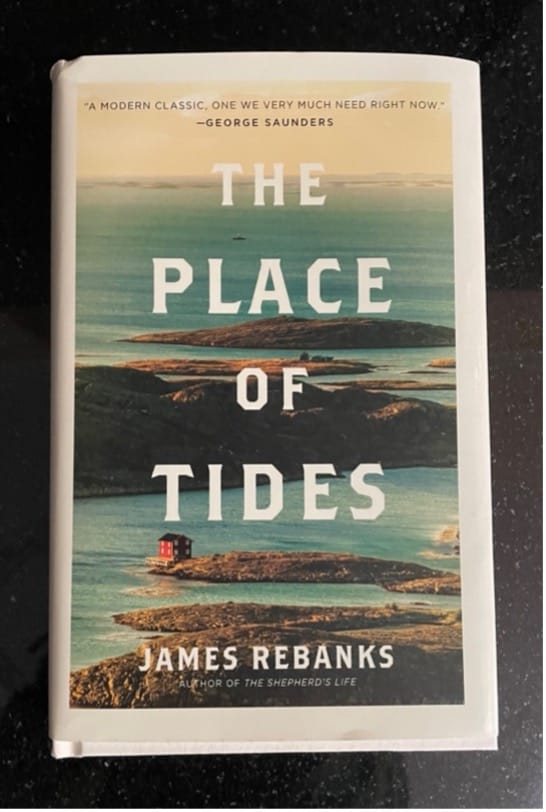
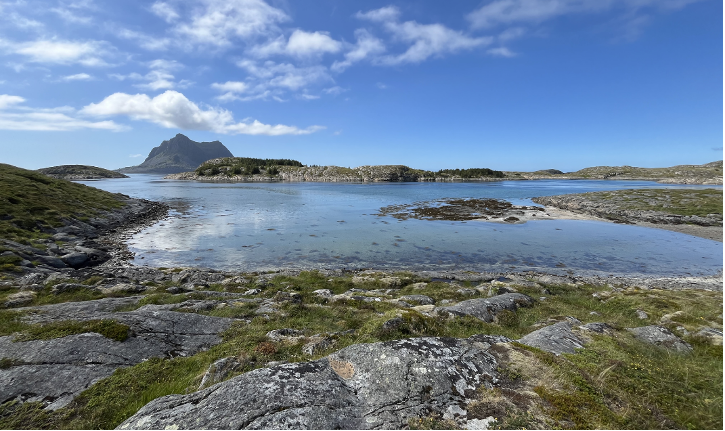
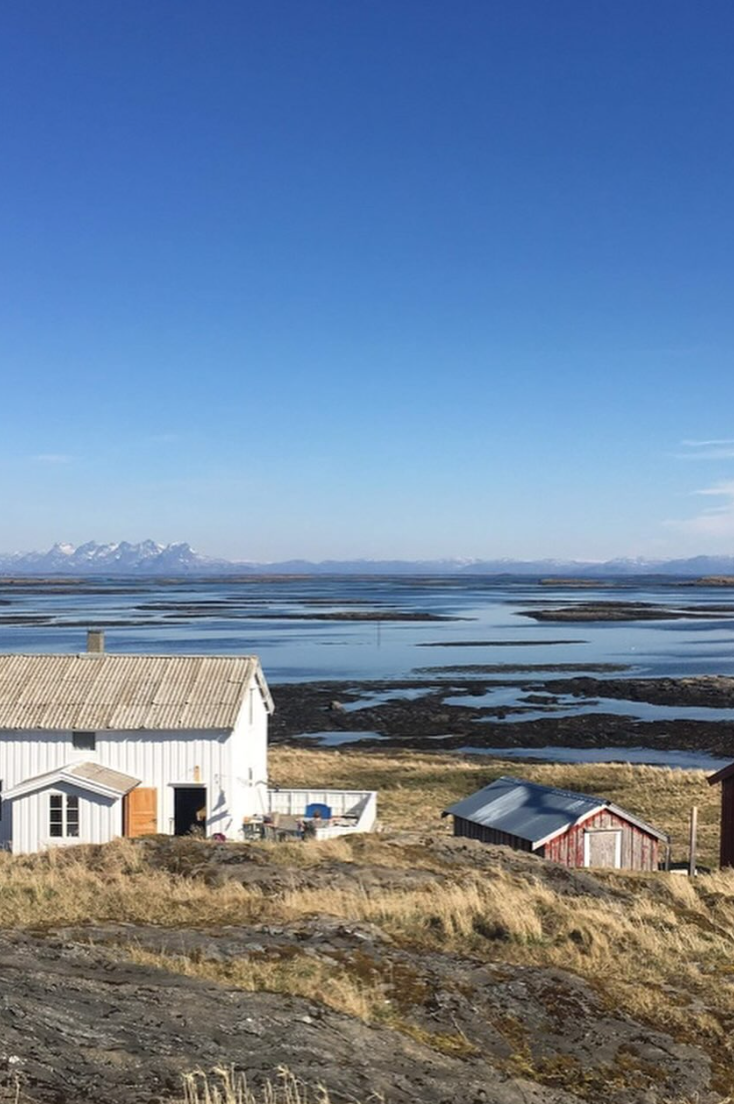
James Rebanks’ 2024 eco-memoir The Place of Tides offers readers a rare invitation to step into the center of a swirl of interweaving metamorphoses that all take place on a small archipelago of rocky islands off the northwestern coast of Norway one spring season earlier this decade. Beautifully narrated, and with vivid attention to observed detail, this is the author’s intimate account of spending several months with the elderly “duck woman” Anna Måsøy as she stewards (for the final time in her life, we learn) the annual nesting season of migrating eider ducks on a family of islands known as Fjærøyvær, translated in English as the Place of Tides.
The book bears witness to the spring metamorphosis of a barren winter rocky island into a buzzing avian nursery ecosystem. It also follows the metamorphosis of a woman who, from the rages of disappointments and poverty, becomes the heroine of the ancient and noble tradition of eider duck protection and eiderdown collection. Finally, we watch the metamorphosis of the writer himself, finding a new perspective on what makes life meaningful through a radical sabbatical away from the trappings of his busy depressed life in rural England as he spends four hard months humbly observing and serving a woman serving eider ducks with the passion of a saint.
Metamorphosis One: From Barrenness to Flourishing
Winter is severe in the northern latitudes, and it is a marvel that life on the little islands barely peaking their heads above the icy waters of the Norwegian Sea along Norway’s coast survives year after year. Rebanks carefully chronicles the transformation from wintry rock to vibrant spring ecosystem, from uninhabited husks to a thriving duck resort!
On first arriving on the main island of Fjærøyvær, there, at the very edge of the coastal shelf, the early spring conditions are bleak. “It all seemed a little forgotten about, and cold. Shards of grey roofing sheets crumbled by the barns. The doors on some of the duck huts were hanging on broken hinges. The raw sea winds had held any vegetation in check, leaving the island stuck in the end of winter (50).” As the cold rainy days gave way toward the milder manners of spring, “the grass and clumps of water marigolds slowly greened around the house (118).” “The buds on the peony were…like tight green scoops of ice cream with a hint of raspberry peeking out. The upper foreshore was now embroidered with colorful little flowers. And lower down, among the rocks the roseroot had its moment, its yellows and brilliant chalky green soon dissolving away into rusty clumps that dropped back, spent, in the race for the sky (205).”
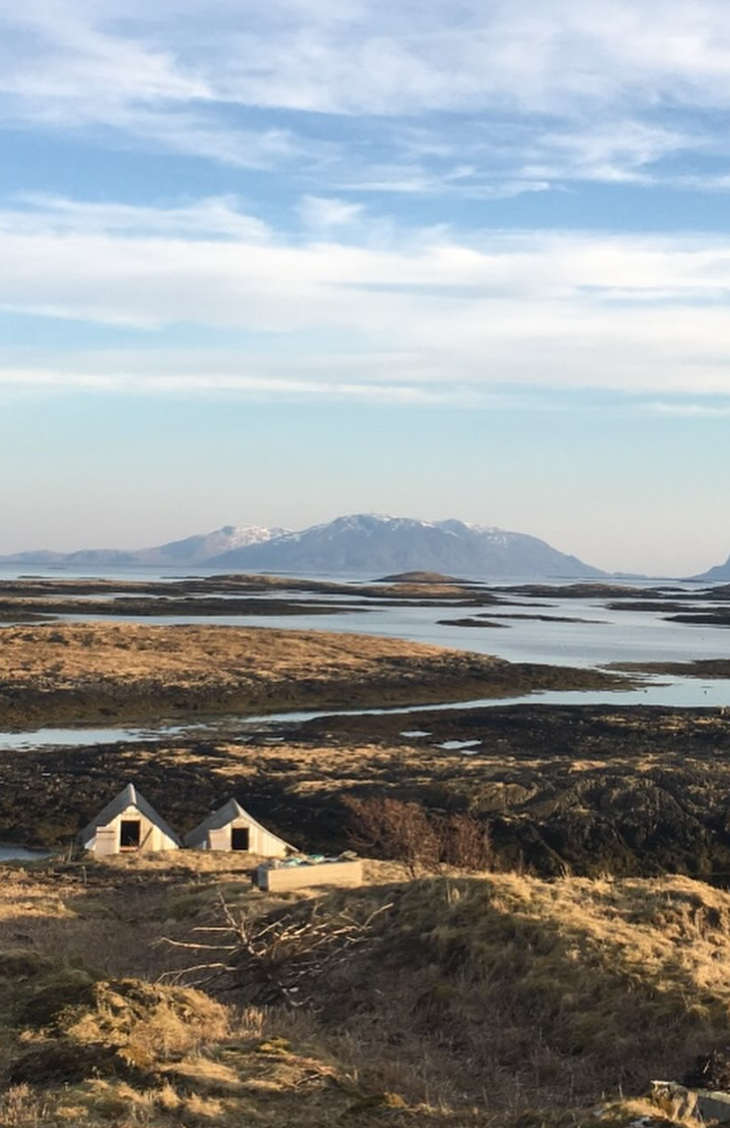
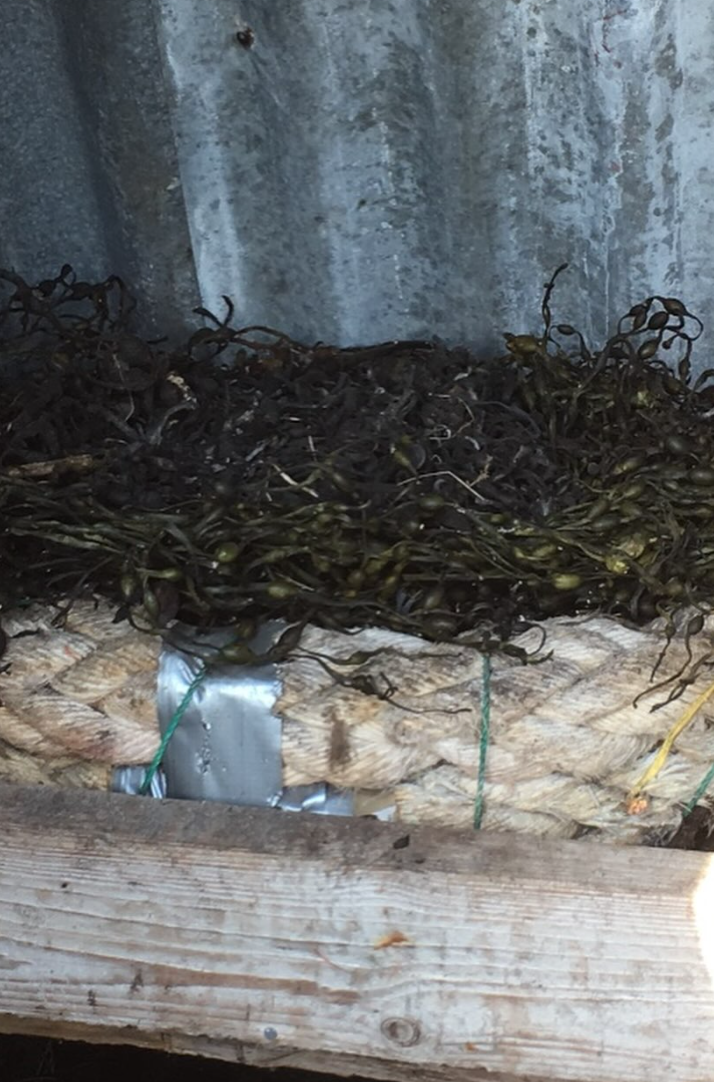
“Spring came with ducks,” exults Rebanks. Paralleling the awakening of the island’s flora, Rebanks tells the story of how he and Anna busily prepared over 121 nest sites to welcome the eider ducks back home to their little island, some who were known to have made the same return journey over many years. The duck nests, made of carefully collected and dried seaweed, were meticulously placed in a wide assortment of cobbled-together “huts.” Some were made of scrap wood. Some were built out of piled stones. Some were tucked in private spaces, under porches and barns, in natural crevices and caverns.
After weeks of tedious preparation, the island is primed and ready for the ducks to find a mate, to come ashore, to lay their eggs, and to brood over their nests until the time they would lead their little hatchlings back out to the open sea. Rebanks carries the reader through the whole thrilling cycle, from the very first brave ducks ascending the rocky shore, to an island full of nesting ducks, to the mass hatchings and the eventual exodus back to the sea. All the while, Rebanks and Anna are fastidiously watching, recording notes, chasing off sea eagles, otters, and other predators, talking to the ducks as if they were visiting island tourists, showering them with affectionate hospitality. How the barren island had transformed into a home! Rebanks writes, “Fjærøyvær was no longer a place on the edge of the world–it began to feel like the centre of the whole universe, everything revolving around its axis (188).”
Metamorphosis Two: From Obstacle to Glory
Rebanks weaves Anna’s life story throughout the telling of his four-month adventure with her. Her life follows an arc that begins in rich heritage, moves through loss of such heritage, and rises to reclaim that heritage through stubborn perseverance and unrelenting passion. We learn that she has come from a family with a proud tradition of eiderdown collecting which had endowed her forebears with wealth and reputation, a tradition on the verge of disappearing. We learn something of this ancient noble tradition in which the eiderdown left behind in duck nests was carefully collected, cleaned, and sold to fill duvets and coats with a highly sought after warmth and softness. Speaking of rare, the entire eiderdown enterprise itself is a unique, ecologically sustainable, and symbiotic partnership between humans and animals in which both parties truly benefit the other without exploitation–humans caring for and protecting ducks; ducks in return leaving behind their obsolete nest-warming eiderdown as a treasure-gift for humans. Win-win.
We learn that Anna’s family owned a small group of islands with a once-prolific duck population. We learn that the duck population was decimated during the Nazi occupation of Norway in World War II. We learn how against all odds Anna left her stable life on the central island of Vega to return to her family’s island all alone to singlehandedly coax the extinct duck population back to respectable levels, something never witnessed before among the eider duck caretakers of the islands. We learn how her brother one day suddenly decided to take over maintenance of the family island, excluding Anna from continuing to work there, and in so doing, broke her heart. We learn how Anna’s resilient spirit led her to eventually apply to become the new duck steward for someone else’s island, and we learn this is how she had come to care for Fjærøyvær, the place where Rebanks meets her and serves beside her. Through learning her story of loss and recovery, and in watching her passionate commitment to her family tradition, Rebanks undergoes an internal metamorphosis of his own.
Metamorphosis Three: From Despair to Hope
Rebanks’ Norwegian adventure is as much an internal journey for him as it is a challenging physical journey. He has come to Norway to recalibrate the inner workings of his soul that have gotten off kilter. His father’s death unmoored him. His work as a researcher on how to protect the wild and fragile places from global tourism exposed him to depressing realities. He writes, “Despair began to follow me home. I had once had endless reserves of hope and self-belief, but they were beginning to run out (9).” Having met Anna on one of his earlier work trips, he had never forgotten her captivating presence and bearing. He had been magnetically drawn to her and intuited that she might be a person that could somehow help him through his current malaise. He wrote a letter of inquiry, and she invited him to come join her for her last season on Fjærøyvær.
Something about the simplicity and clear focus of his time on the island with Anna deeply affected Rebanks. After getting to know Anna and her life story so intimately, after living through the intense season of duck hosting, hope reshaped itself in Rebanks’ heart and mind. “A certain version of me died on that island. I was returning different,” he writes. “I stopped feeling like I had to prove myself to the world…stop striving and being so single-minded…now I just wanted to get to work with my family; to make our farm the most beautiful and abundant place it could be. And then, when my time was up, I would know I had done my best. I would have lived like Anna (285).” Simplicity. Clear priorities. Conviction. Submission to the flow of the elements with flexibility and resilience. Loving something outside oneself. These were the puzzle pieces that slowly rebuilt a compelling vision for Rebanks’ own future.
I highly recommend The Place of Tides as a refreshing immersion in hope-building. It is true that today we are awash in bad news and naysaying and all for good reason. There are relentless dark forces pressing against this fragile beautiful world we call our home. But at the same time, deep in the story that is unfolding all around us, there are currents on the move that give us reasons not to lose hope: currents of birth, currents of resilient spring, currents of coming home again, currents of heroic turnarounds, currents of hospitality in barren places, currents of soft eiderdown cushioning the hard-edges of the world.
I welcome your comments below or email me directly at windinthereedspub@gmail.com.
Jeff
A NOTE FROM CIRCLEWOOD, OUR PARENT ORGANIZATION...
We are looking for an Associate Director to guide Circlewood's operations and prepare Circlewood for the next phase of growth. If you are interested, or know someone who might be, visit our employment page here for more information and to submit a preliminary application, which will be reviewed in mid-November. The job involves on-site duties.
IF YOU LIKED THIS, HERE'S ANOTHER TO TRY...
 Louise Conner, Editor
Comments ()