Practical Earthkeeping: Is a Zero Waste Society Possible?
Becoming a zero waste society would require some big changes—both in perspective and practice.
We are pleased to share this piece from Joe Sheldon, a regular contributor to The Ecological Disciple. It was originally published in a series called Creation's Corner, which Joe writes for Trinity Lutheran Church of Whidbey Island. Enjoy - Louise and James, eds.
When an act is morally right and economically justified, it is attractive and easy to accomplish. But when it is not, it is another story, and yet, caring for Creation is a first order responsibility!
I have been thinking for some time about my impact on Creation. I continue to be concerned about reducing my own impact on Creation. Do you share that concern?
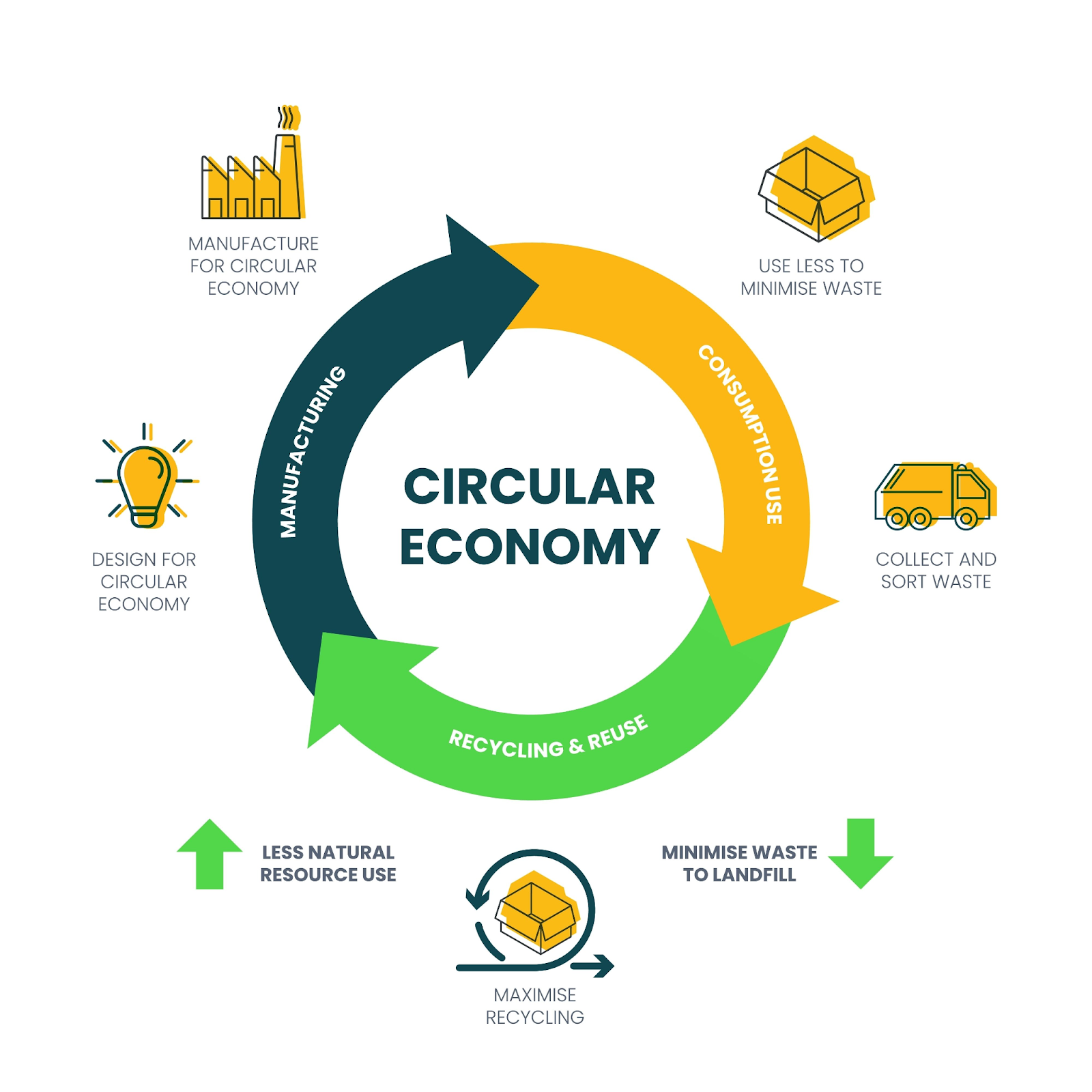
Can you imagine living in a near zero waste society where the “stuff” you purchase leaves your house as compost or recycling (including thrift shops, swap meets, etc.) with virtually no waste going “away” into what we now refer to as “sanitary landfills?” Sports arenas, businesses, homes, and other structures would be designed to last, and, in the end, they would be dismantled with the “parts” utilized in new construction. In short, we would move from the current “cradle-to-grave” society where we “try to” assure appropriate “disposal” of our stuff, to a cradle-to-cradle society where our discards serve as the resources for new products and buildings. This is referred to as a “Circular Economy.”
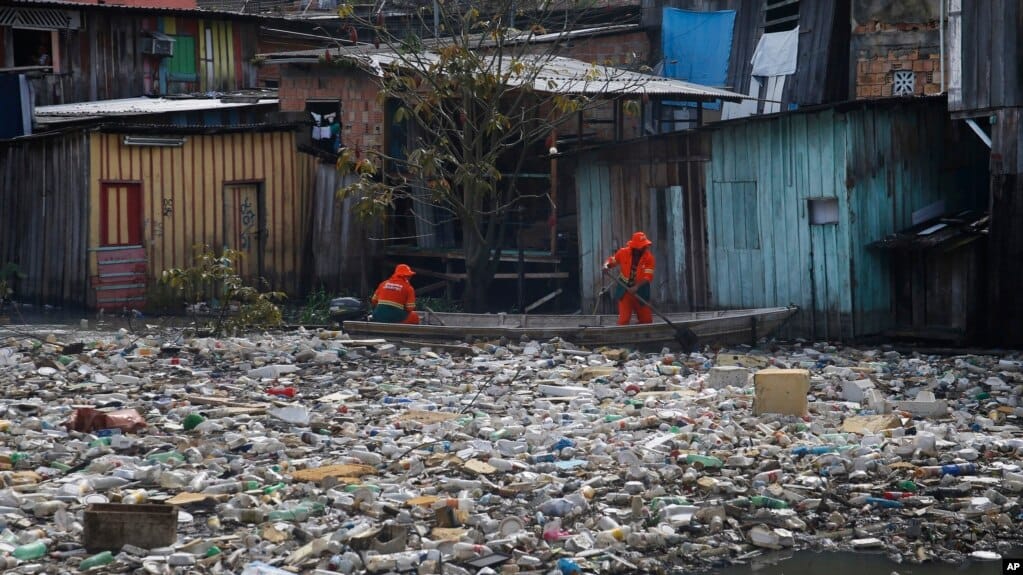
Today the average U.S. citizen produces 1,800 pounds of trash (4.9 pounds per day)! In light of this, is moving to a zero-waste society even possible?
In my experience, our day-to-day behavior and choices are typically based on whether it is easy, comfortable, monetarily wise, and takes little time. In short, we don’t want to bother to “go out of our way.”
Many tribes base their decisions on the 7th generation principle – the idea that people should make decisions that are sustainable for the long term (seven generations!). The biblical call is to live in God’s Kingdom today, caring for it as stewards, until Christ returns to establish His everlasting Kingdom. To me, it doesn't seem like we are doing very well.
Each of us can choose to alter our way of life to reduce the amount of waste that we produce by day-to-day and moment-to-moment decisions. But addressing the problem on a larger scale will require both political and economic drivers. In many, if not most, cases, the companies that handle garbage collection and recycling services are owned by the same parent company. It is an economic decision for the company: which brings in the most money—trash or recycling? If there is no economically viable market for the potential recycled product, it goes into the garbage since no recycling option is provided.
Problems and Solutions
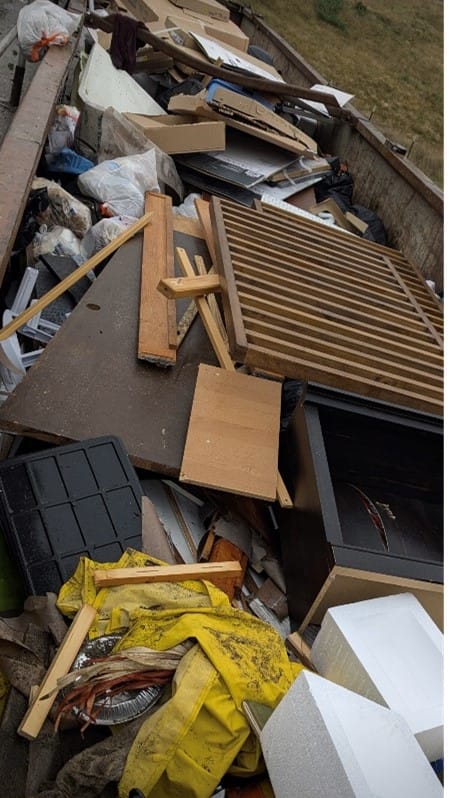
Even if a market exists, potentially recycled objects often go into the trash for the sake of expediency – see the photo below which I took at my local solid waste transfer station in Coupeville, WA. The abundant cardboard, metal, paper, glass, and plastics could have (and should have) been easily recycled!
Many forms of plastic are difficult to reprocess. At my local recycling centers, only plastics #1 and 2 are accepted. Plastic bags go to local grocery store sites. Much of my plastic is #5 and can not be recycled locally, so I take it to Seattle for recycling. What do you do? I believe that, with some exceptions, if it cannot be recycled, it should not be produced.
The fifth Intergovernmental Negotiating Committee (INC-5) met for a week in the fall of 2024 in Busan, South Korea to deal with the monumental problem of plastic pollution. No deal was reached on efforts to reduce production—big oil blocked any effort since plastic is an oil product.
If our current system is broken (we discard essential “stuff” that should be the feed stock for new products), and suitable sites for new landfills are scarce, what can be done today to live more sustainably for tomorrow? It is instructive to see what other countries are doing.
- Forced reduction: Many governments (e.g. British Columbia and much of Europe) have greatly reduced the volume of their waste by requiring the producing company to take back its own packaging materials. This requirement has had amazing results as companies rapidly reduced the amount of packaging used.
- Deposit return systems: Countries like Sweden use deposit systems to pay people back when they recycle. Currently ten U.S. states have “bottle bills” requiring deposits, meaning less roadside trash!
- Fees and fines: Countries like Switzerland and Austria charge high fees or impose fines for not recycling.
- Extended producer responsibility (EPR): EPR laws shift the responsibility for post-consumer products from municipalities to the manufacturer. E.g. packaging material.
- Public awareness campaigns: Governments can run campaigns to raise awareness about recycling.
- Rewarding citizens: Some countries reward citizens for recycling, with discount coupons, points systems, or cash.
- Rigid sorting guidelines: Countries like Japan have strict guidelines for sorting trash by the day of the week.
- Automated bins: Countries like Switzerland use automated bins that weigh food waste and charge residents based on how much they deposit.
- E-waste facilities: Countries like Wales have e-waste facilities that extract precious metals from e-waste at room temperature.
- Waste-to-energy schemes: Countries like Sweden use waste-to-energy schemes as a short-term solution, while also increasing recycling and renewable energy capacity. Burning waste, however, increases air pollution.
The bottom line is that recycling is a personal choice, but trashing God’s Creation is a form of blasphemy. Recycling can/should be viewed as one form of our worship! One can and bottle at a time….
Prayer for the day: Lord Jesus, “…turn us from careless tenants to faithful stewards, that your threefold blessings of clean air, pure water, and rich earth may be the inheritance of everything that has the breath of life…”. By the Reverend Libby Lane, Bishop of Derby.
Thanks for reading.
— Joe Sheldon
Comment below or directly to Joe at at jksheldon43@gmail.com.
As a reminder, last week Louise issued the following invitation. We would love to hear from you in reponse to this invitation!
Is there a particular poem, or line from a poem, that helps you to keep a measure of hope in your perspective when you feel the brokenness of the world acutely? If so, we would love for you to share it with us. Send it, along with a short explanation of what it means to you, by April 20th and I will include it in a post compiling what is sent in from our readers. (If you have an image to go along with it, please consider including that as well.)
The Ecological Disciple is part of Circlewood, an organization committed to "accelerating the greening of faith."



Comments ()