
The Art of Creation: A Bridge Across
An annual community gathering honors and strengthens connections between people and place, the past and present.
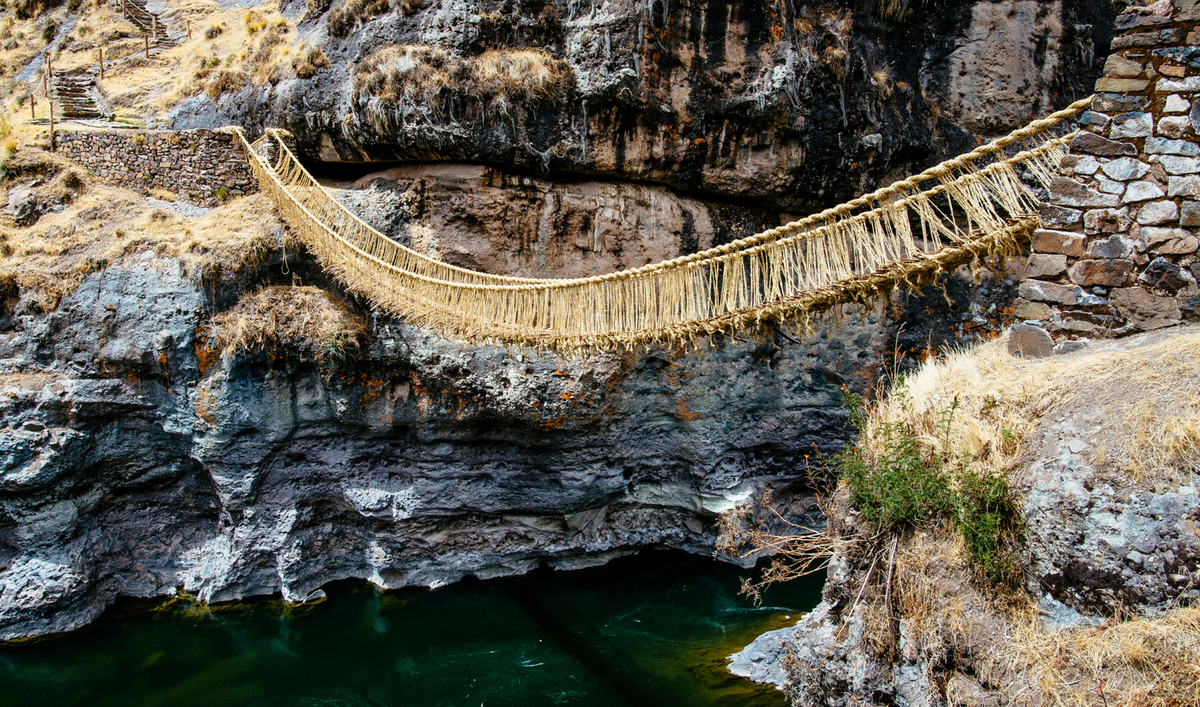
For 600 years, the 100-foot-long Q'eswachaka grass bridge has hung 50 feet above the Apurimac River in the southern Andes of Peru. It connects the communities of Huinchiri, Chaupibanda, and Choccayhua on the west side with Quehue on the east side.
The Q'eswachaka bridge is part of a historical road system named The Qhapaq Ñan (The Royal Road). It ran through six countries, extended 24,855 miles (roughly the circumference of the globe), and included 200 or more bridges that crossed rivers, crevasses, and incredibly rough terrain in order to unite the often small and far-flung communities of the Incan civilization. The bridges were stone, wood, or plant fiber, depending on the materials available at each location. Some floated, some were suspended, all from an Incan civilization without the wheel, the arch, money, iron or steel tools, draft animals capable of ploughing fields, or a written language.
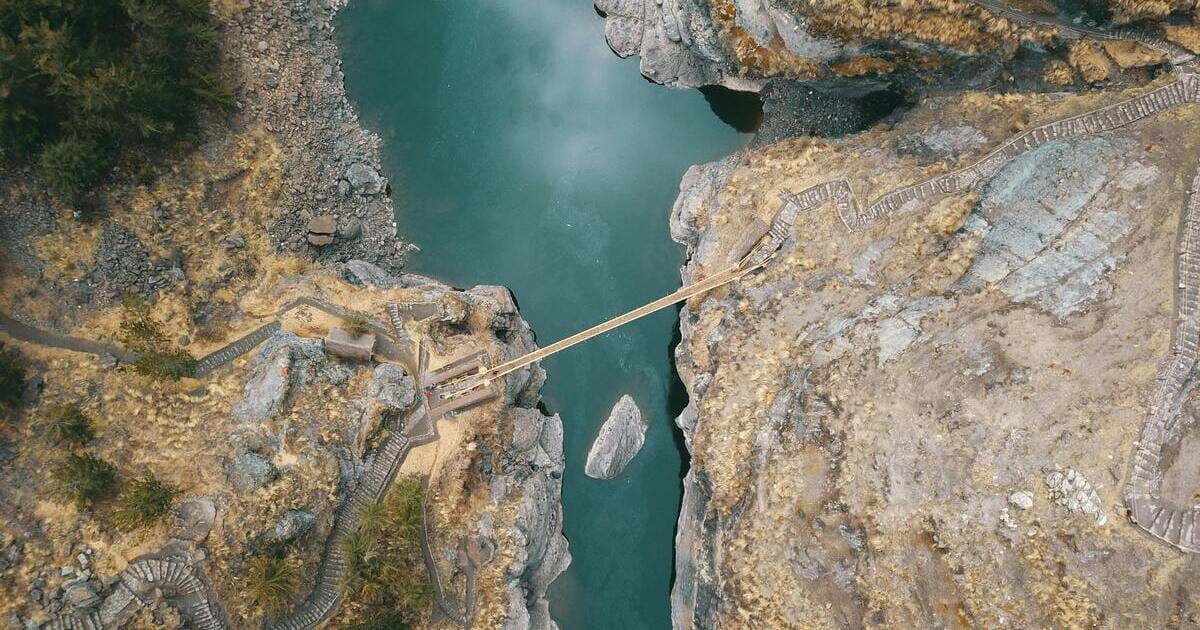
The construction of modern bridges and roads caused most of these traditional bridges to be abandoned, leaving the Q’eswachaka bridge as the sole surviving example of a suspended grass bridge from this era. In 1970, it, too, was abandoned when a steel bridge was constructed nearby, but three years later, the local communities revived it and, since then, it has held a central place in the communities' identities.
Every June, these Quechua-speaking peasant communities come together to weave together a new bridge connecting them to each other and to their Incan traditions and history. The process and history of this bridge-building is a testament to unity: unity of community, unity of sacred and non-sacred, unity of purpose, unity of creature and creation.
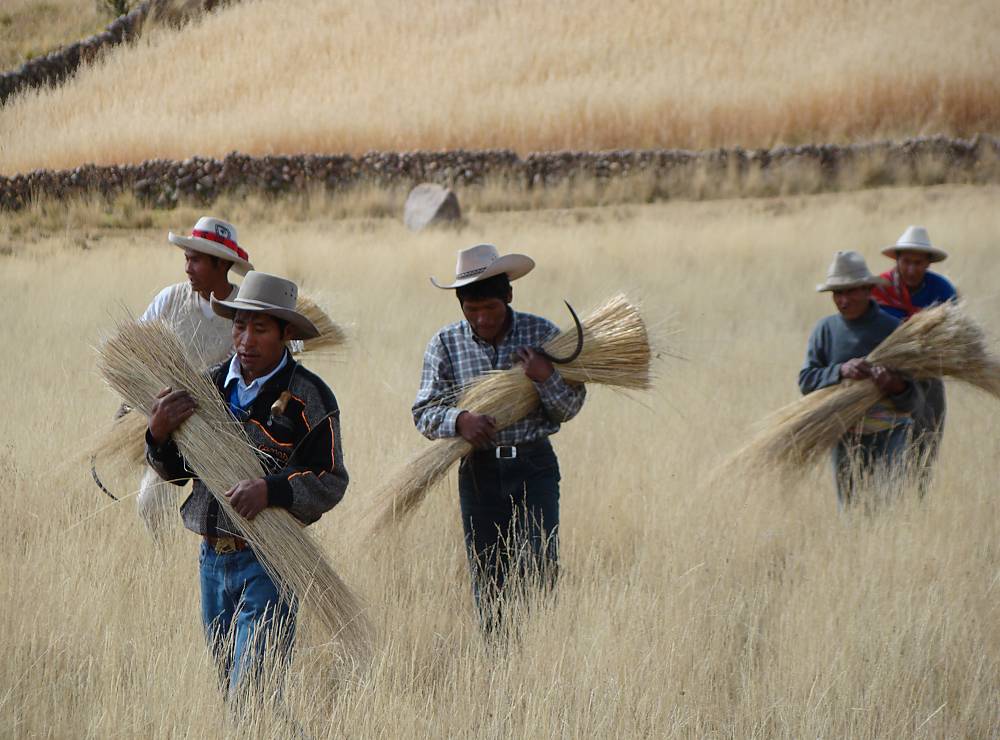
It begins with community responsibility. Each family in the community is responsible for providing a 76-foot-long rope of twined q'oya, a tall, tough grass used to make the bridge. The families harvest, beat, and soak the grass until it can be twisted it into the rope they will bring to the three-day bridge building event. Once collected, several of these thin ropes are twisted together to form thicker ropes and three of these thicker ropes are twisted together to make the heavy cables that form the base and the handrails of the bridge.
Each of the communities has additional responsibilities. One provides the two "chakaruwaq" (engineers) who oversee the building of the bridge as well as the Andean priest, who guides the prayers, offerings, and other rituals connected to the work and the celebration that follows. Another community provides long poles that are spaced perpendicular to the bridge to provide support. Yet another community provides rolled up mats of sticks woven together to form a flooring which, when rolled out on top of the grass cables, creates a safe walkway across the bridge. Each village contributes to a project, demonstrating a unity that is tangible through the process and completion of the bridge's rebuilding.
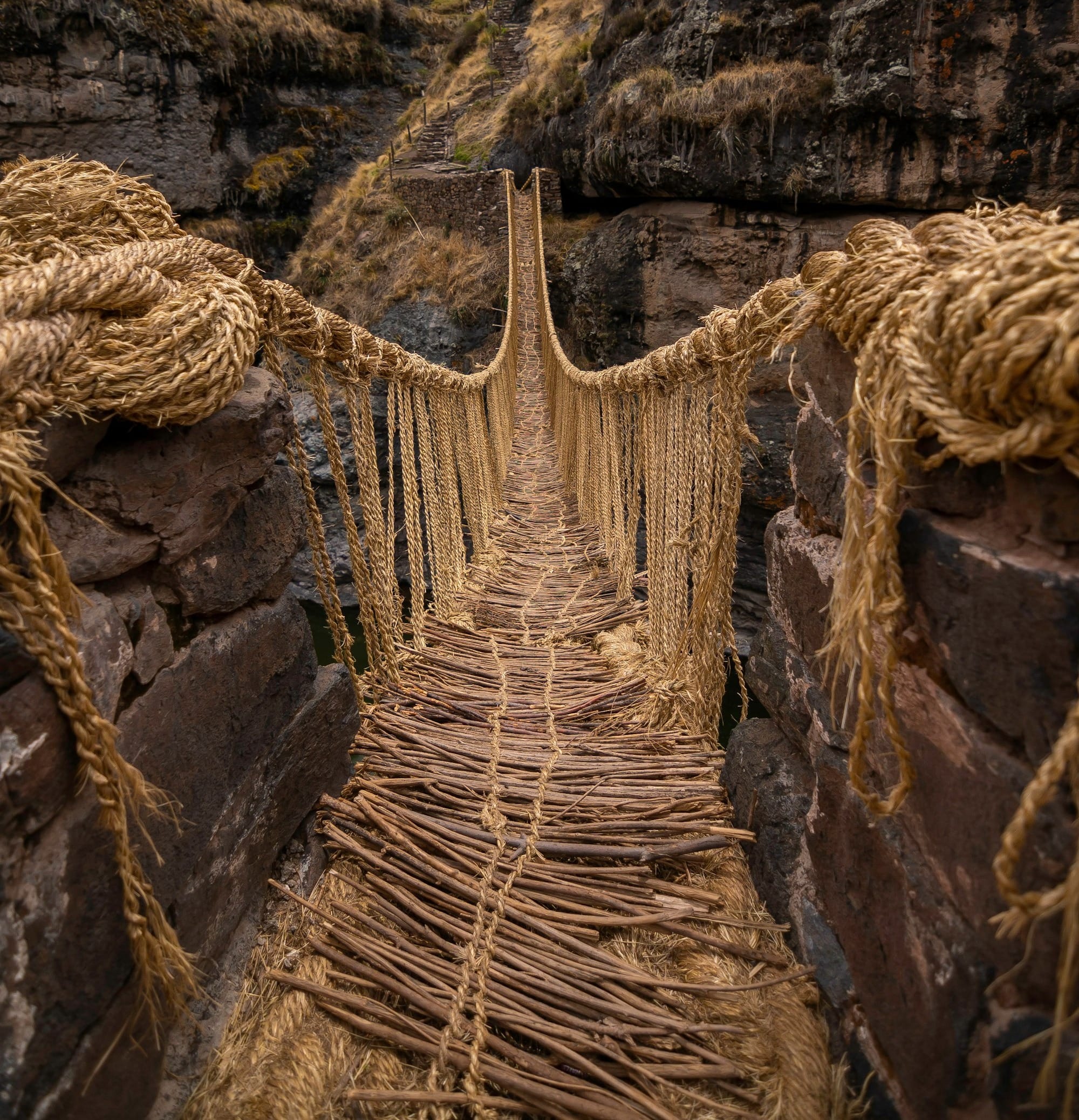
The building materials reflect the surrounding countryside. Made only from grass and wood, the bridge is unified visually with its surroundings and connected in substance to the hillsides it joins. In the bridge-building process, there is one step that particularly emphasizes this reality. The old bridge is used to pulley the six new rope cables across the river from one side to the other. Once the cables have been pulled hard for several hours by many, many hands, and have been made taut enough, they are tied tightly to ancient stone bases on each side of the river. Then, a moment of climax arrives as the old bridge is cut away and released into the river below. What was once a bridge is now a composite of natural materials taken from the land and returned back into it. It is swept away to decompose naturally as a fallen twig or tree would do. No manufactured parts lie rusting on the riverbed.
The religious rituals performed are based on long-held indigenous practices that have become enmeshed with Catholic beliefs. The priest asks for permission of the Pachamama (Mother Earth) and the mountain (Apu) before the work is begun, and offerings are continually given throughout the three days of the work and into the day-long celebrations that follow. According to Bruce Mannheim, an authority on the Quechuas, "There is no division between the sacred and the profane, so you could say they're always living in a sacred world or you can say they're always living in a profane world. Neither statement make sense in Quechua."
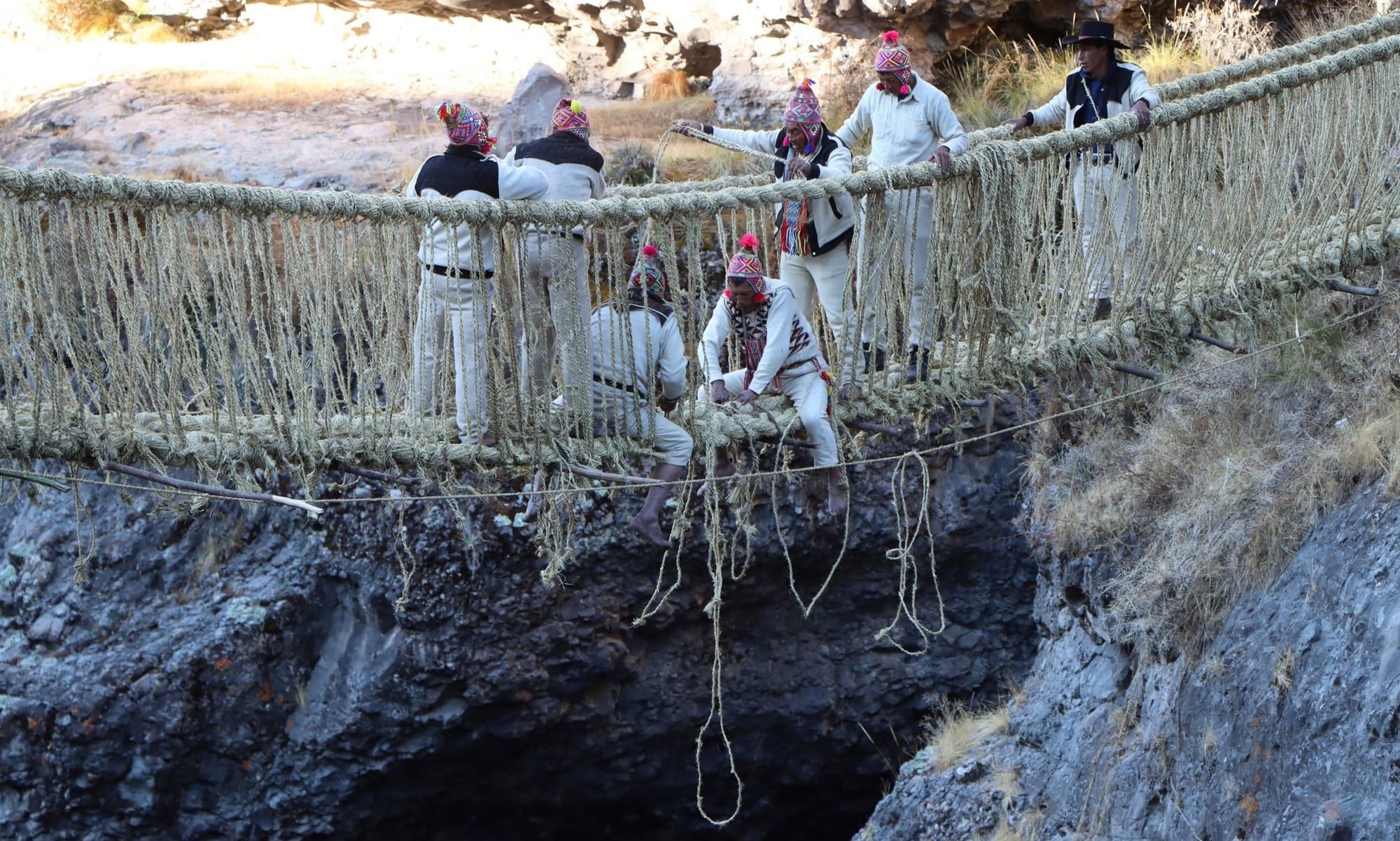
The time of bridge-making is permeated with meaning that connects the Quechua to each other, to the land, to their history, and to their beliefs. Typically, over a thousand people from all over the area join in work and celebration that hold deep significance for the communities involved.
To complete the bridge, the two engineers in charge, with the support of others, weave rope after rope between the outside base rope and the handrails of the bridge. Starting from the ends, they very carefully scoot themselves toward the center of the bridge and each other. When they meet in the middle, the bridge is whole, safe, and renewed for another year; the community will return in mid-June the following year to do it all over again. In the meantime, the bridge hangs between the two banks of the river, a reminder of connections that are both as old as 600 years old and as new as the current moment.
The Quechua way of seeing the world as a unified, sacred whole is a perspective those with western Christian mindsets can learn from. Too often, the physical and spiritual are relegated to different realms, with the physical being held as inferior and suspect.
How would our practices and perspectives change if instead, we saw the creation as a holy place filled with the presence of God? Is there disconnection or connection between you and your community, between you and the place you inhabit, between your faith and your physicality? Are there practices that remind you of those connections and strengthen them for you?
If you would like to see a three-minute video of the bridge-building process, click below.
Feel free to leave a comment below (you can sign in through your email) or contact me directly at louise.conner@circlewood.online. We also encourage you to forward this post an anyone you think might benefit from it.
Louise
The Ecological Disciple is part of Circlewood, an organization committed to "accelerating the greening of faith."
Comments ()