
The Art of Creation: Afloat
Age-old practices model methods of resilience in the face of climate change.
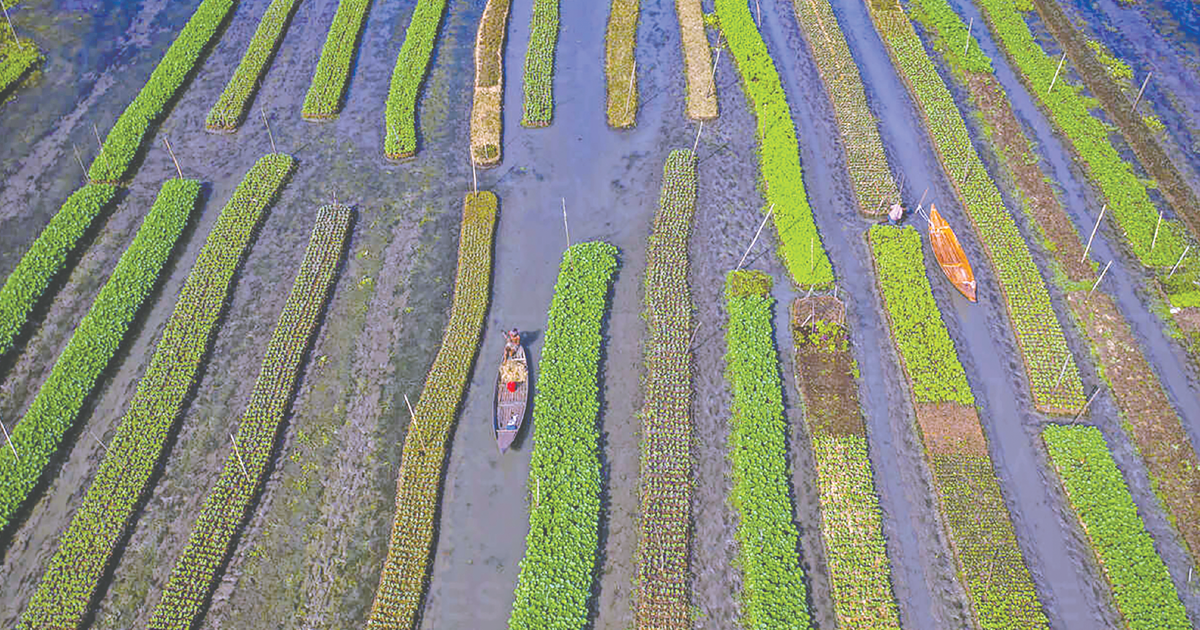
Floating gardens have existed for a very long time. In Mexico, the Aztecs developed chinampas, gardens constructed by building a mound of soil on the floor of a body of water until it tops the surface of the water. On Dal Lake in Kashmir, floating gardens are called raad; Myanmar's Inle Lake has a version called kunpor. Floating gardens have interesting advantages, such as being able to absorb water into the soil from the water they rest on, thus providing a form of natural irrigation regardless of seasonal weather. In particular, the floating gardens of Bangladesh are drawing widespread attention.
The floating gardens in Bangladesh are called baira or dhap and are being hailed by some for their potential as partial solutions to the devastating effects climate change can have on agriculture. Many have hope that these types of gardens can enable agriculture in places where food is scarce, people are numerous, and the small amount of land that can be used for agriculture is increasingly under water for longer and longer periods of time due to climate change.
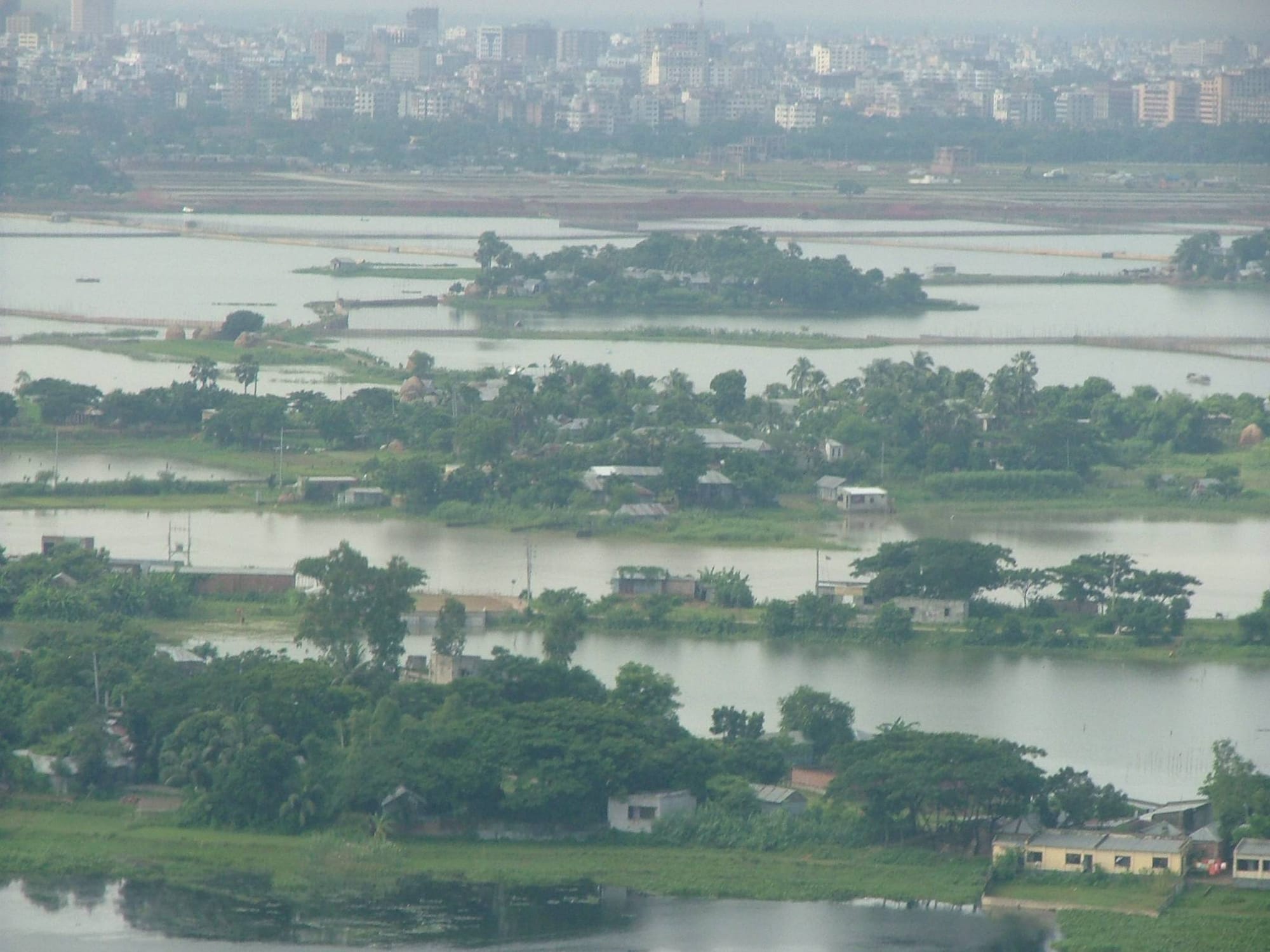
Bangladesh, the largest delta in the world, is often called “the land of rivers." The country has somewhere between 400-500 rivers (estimates vary widely) and is part of the Ganges-Brahmaputra Delta System. Combined with its low elevation, this makes it especially susceptible to frequent flooding and soil erosion. Some parts of Bangladesh are under water for eight months out of the year. The country also experiences frequent cyclones and increasingly erratic rainfall patterns. A 2019 report from the International Monetary Fund stated that food production was expected to decrease in Bangladesh by 30% by 2050 as usable land decreases. More than a quarter of the population lives in the coastal area of Bangladesh, where they are most susceptible to these difficulties.
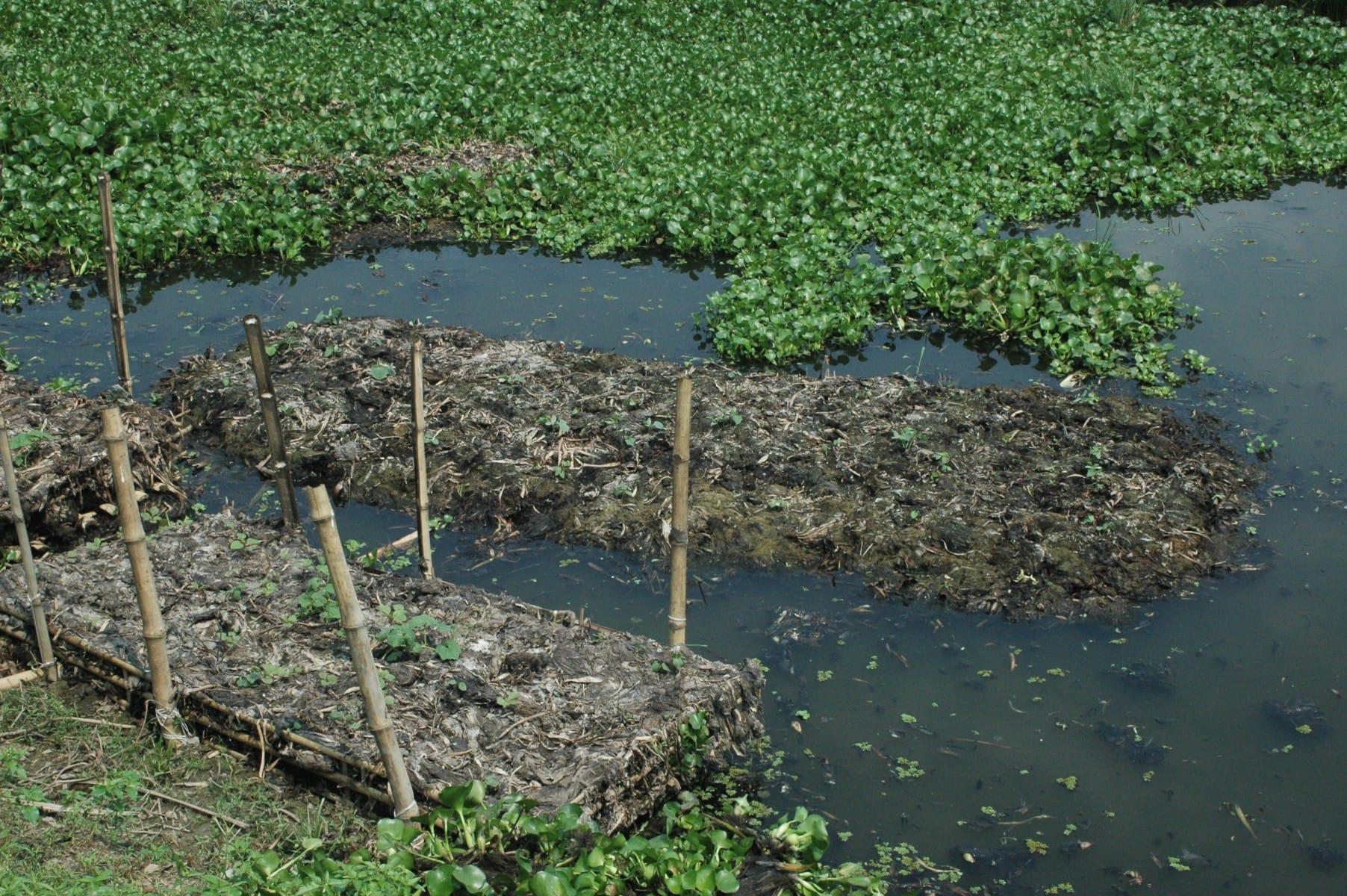
The floating gardens of Bangladesh have been around for 200-300 years. Farmers are using the water hyacinth (the most invasive aquatic plant species in the world), which is abundant in Bangladesh waterways, to create the gardens. During monsoon season, they weave this very abundant pest into long, skinny rafts, which are about three feet wide, 30-50 feet long, and a foot and a half thick. Layers of decomposed organic material such as cow manure, compost, and aquatic plants are piled onto the raft. This forms a planting bed that contains rich nutrients that continually are replenished as the raft material continues to decompose. Once the bed has been built, seed balls are implanted within the raft.
Although researchers see this as a self-fulfilling system, there are farmers who add artificial fertilizer to the gardens, making those particular gardens less sustainable than many would like. When this is done, the fertilizer unfortunately runs into the water causing nutrient pollution, the depletion of oxygen, and spawning pathogens and nitrates in the water.
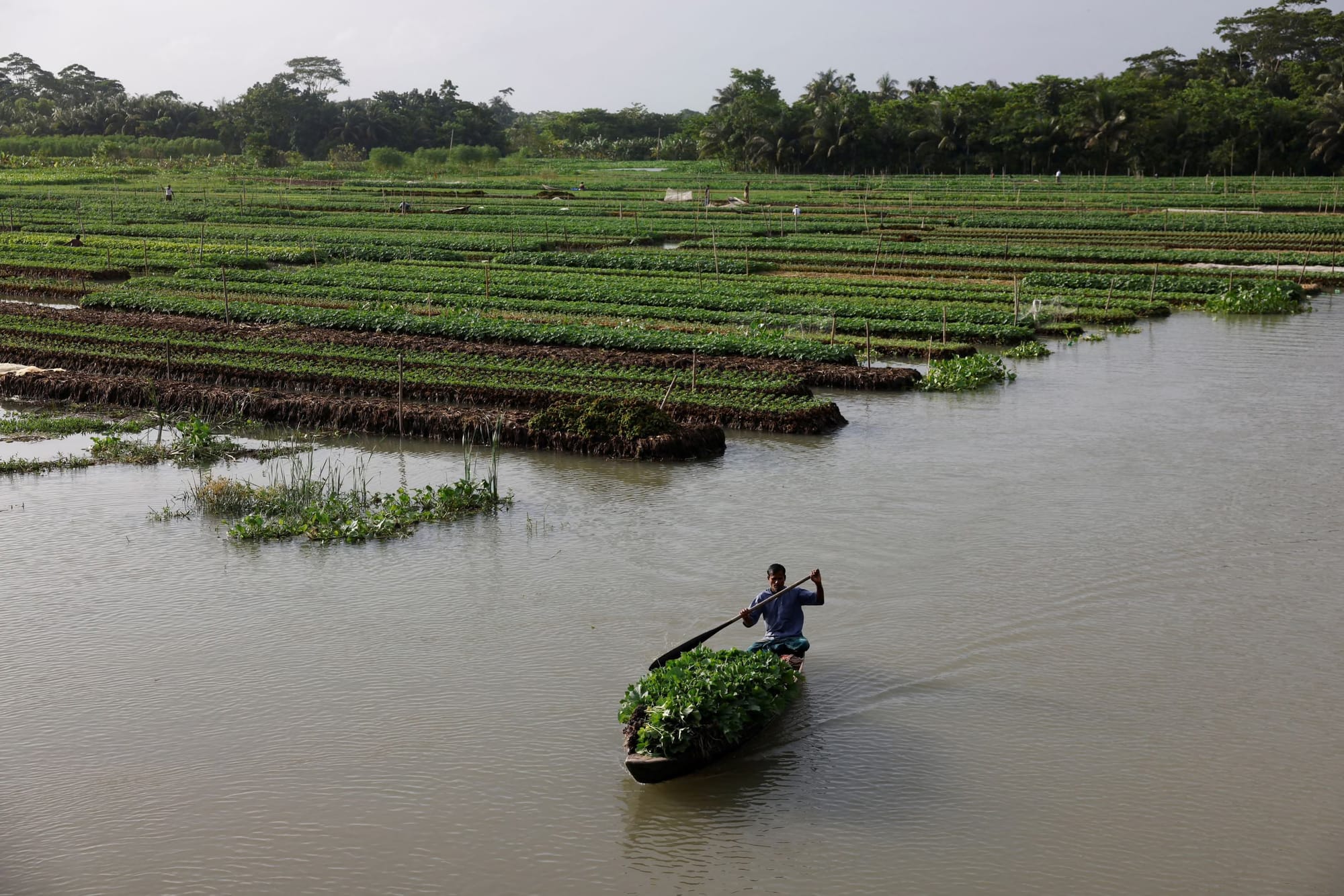
In some districts this is exacerbated by the use of pesticides, which again decreases the sustainability of the gardens as the pesticides seep into the water, causing harm to plants and animals. Floating gardens that don't use artificial fertilizers or pesticides are tidy, closed-loop cycles, in which something harmful (the hyacinth) becomes something useful and, after fulfilling its purpose, can then be reused as fertilizer for crops once no longer usable as a raft.
There is great interest in expanding these gardens to other areas of Bangladesh, but they tend to be site-specific so that adjustments must be made when introduced to other areas. In the north, for instance, higher winds make the rafts less stable and more liable to drift. Adaptations are necessary when trying to make them viable in new conditions and places.
The UN's Food and Agricultural Organization recognizes Bangladesh's floating gardens as a "globally important agricultural heritage system," one of 57 examples of traditional or indigenous agriculture that they believe can successfully adapt to environmental threats such as climate change. Currently about 800 farmers are cultivating floating gardens on about 450 acres in Bangladesh, a number that is increasing and is supported by interested agencies and governments.
As a concept, the idea of gardening on water is intriguing enough to draw notice and interest, which could aid in the effort to disseminate the idea. This summer, Mary Mattingly, a New York interdisciplinary artist, has been using a floating garden on a barge to call attention to ecological resilience and to the scarcity of fresh food, especially in urban areas. Her Floating Garden is based on an earlier project called Swale, but she also points further back for her inspiration to traditional floating gardens found around the globe.
As interesting as the effort is, there are those who warn against seeing floating gardens as the answer to climate change. As Saiful Islam, a climate expert at Bangladesh University of Engineering and Technology points out, this is just "a drop in the bucket" as far as what needs to be done to solve the problem.
“We need to spend billions to raise and strengthen embankments along our big coastline. We need to create mangrove forests along the coastal belt to work as natural barriers to cyclones, subsidence and sea level rise.”
“We need to build new roads, preserve rainwater and create alternate livelihoods for millions of people...Bangladesh alone can’t do it,” Islam told AFP New Agency. He adds that since Western nations were “responsible for emitting most of the greenhouse gases,” they need to actively help in solving the problem. Islam said Bangladesh received “barely any” of proposed $100 billion dollars set aside by developed nations for adaptation to and mitigation of climate change.
This is something that Western nations must face up to. The countries who are most responsible have a moral obligation to actively and aggressively assist in solving the problem. This means both accepting the personal cost of recognizing culpability and changing consumption habits as well as sharing the financial cost that is being borne by countries who are less culpable. The water is rising in places like Bangladesh and there are exciting solutions to explore such as floating gardens—and more humdrum actions that need to be addressed such as financial support and learning and teaching new ways of living that are more earth-friendly and sustainable.
Feel free to leave a comment below (you can sign in through your email) or contact me directly at louise.conner@circlewood.online. We also encourage you to share this piece with your friends using the share button provided.
Louise
TO LEARN ABOUT OUR PARENT ORGANIZATION, GO HERE...


The Ecological Disciple is part of Circlewood, an organization committed to "accelerating the greening of humanity."
Comments ()