
The Art of Creation: Bringing the Depths into the Light
The sea life installations of Courtney Mattison are a window into a beautiful and fragile world we may never see with our own eyes.

With experience and education in ceramic sculpture as well as marine ecology/environmental science, Courtney Mattison is in a unique position. She understands the data of climate change and is able to communicate in an artistic way that can connect to people’s hearts as well as their heads. She chose artistic expression over hard science as a profession because, she says, “I didn’t feel like I could contribute as uniquely sitting behind a lab bench doing research on different coral species and solutions to coral bleaching.”
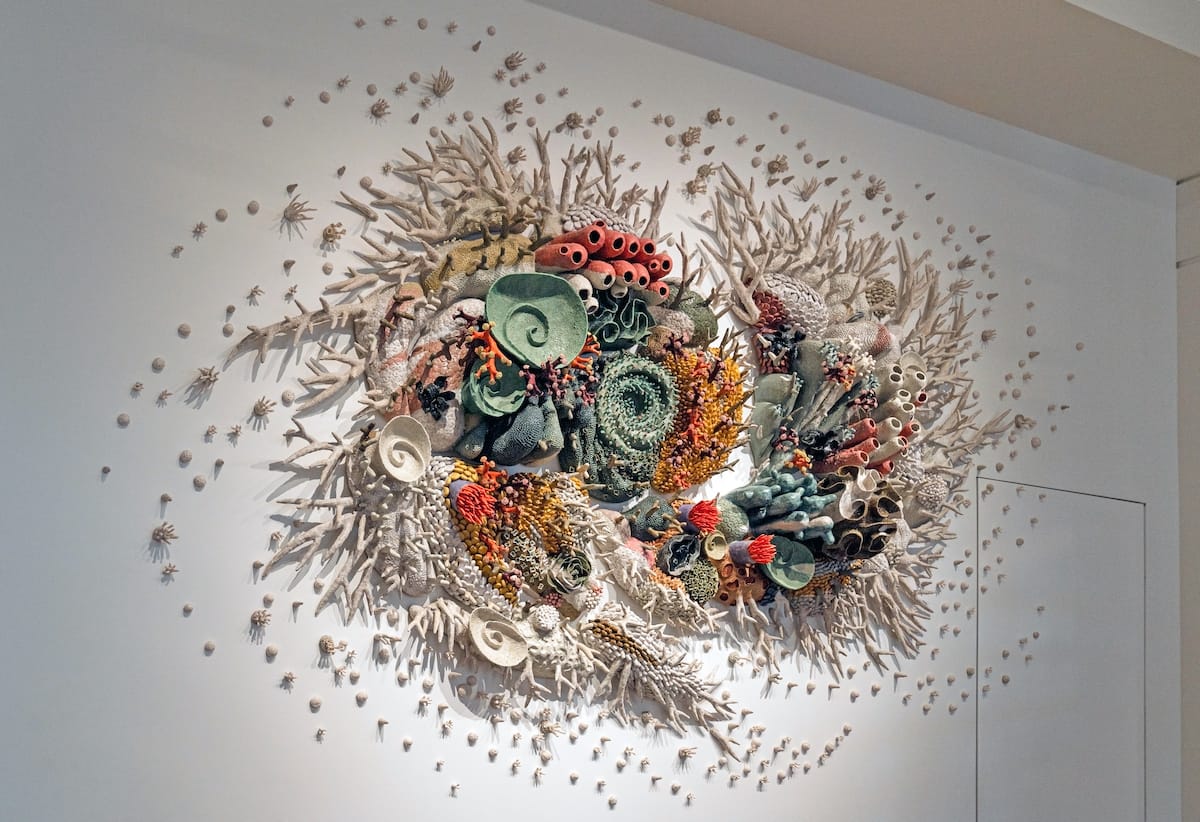
Rather than leaning into the more intellectual aspects of environmental conservation, Mattison realized she wanted her viewers to feel climate change. "Understanding [climate change] is one thing," she says, "but actually feeling that you have a stake in it, and that you can make a difference in terms of conserving that or changing that fate, I think is much more powerful."
A three-dimensional learner herself, teaching people through her very physical art pieces is congruent with her own learning style. As she says, she hopes that people will experience her wall sculptures as they might experience a coral reef floating above it with scuba equipment. "Coral reefs have captivated my imagination for as long as I can remember. I’m happiest when the exotic forms, vibrant colors and often-venomous appendages of the animals that inhabit a tropical reef dance through the window of my scuba mask as I slowly hover above."
Her love and passion for coral reefs combined with her knowledge and skill, leads to creative pieces that imaginatively and powerfully convey the dangers of climate change, often through stark images of a coral reef transitioning from health to crisis.
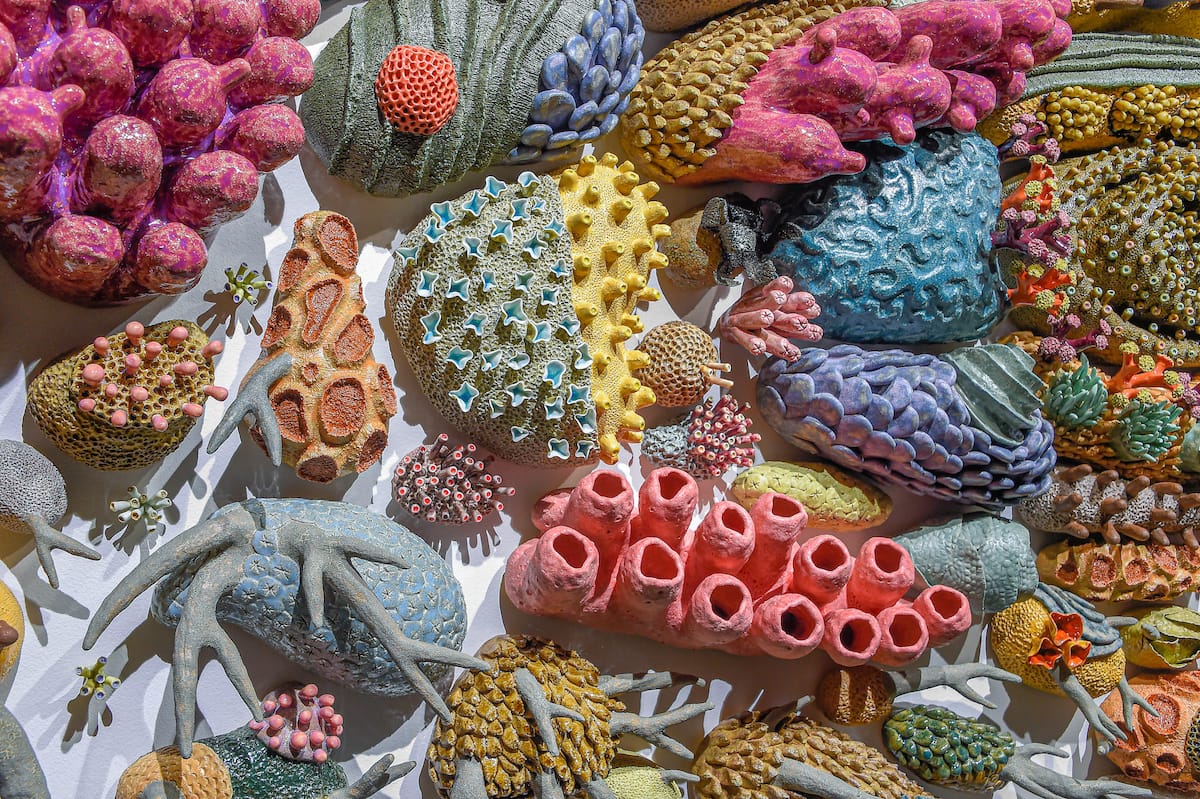
Coral polyps are colonial animals. Hundreds or thousands of genetically identical individuals grow from a single individual to create a colony. This is true of both soft and stony coral. Soft coral tends to resemble trees, grasses, or bushes, and is flexible and moveable. Stony coral performs calcification, bonding calcium and carbonate ions extracted from the surrounding water and then secreting calcium carbonate, which hardens into a structure that protect the soft parts of the coral and cements the individual polyps together. These rigid skeletons accumulate over time, eventually forming coral reefs.
Both types of coral are dependent upon symbiotic relationships between the animal (the polyp), photosynthesizing algae (zooxanthellae), and microorganisms (bacterial, archaea, fungi, and viruses). The zooxanthellae live in the polyp’s tissues and perform photosynthesis, converting sunlight into chemical energy. It is the zooxanthellae that give coral their bright and various colors as well as 90% of their sugar and protein.
These organisms and the ecosystem they spawn enthralled Mattison years ago as an undergraduate student when she, as an exchange student in Australia, explored and fell in love with the Great Barrier Reef. Years later, she returned with her husband to share that love with him but found a very different reality. She was present during a massive period of coral bleaching and instead of the multi-colored, lively, community of sea life that Mattison had fallen in love with years earlier, she found an enlarging ghost town of bleached, white coral.
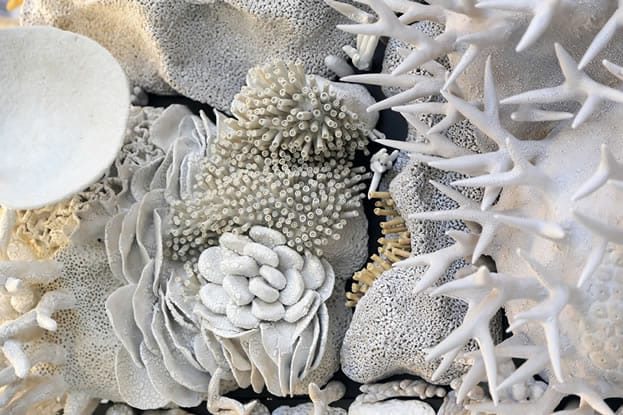
Bleaching is a stress response of corals from environmental changes such as changing surface temperatures, excess sunlight, pollution, inflow of fresh water, and low tides. Mass coral bleaching is commonly caused by severe or prolonged heat stress, such as happens with climate change. The higher ocean temperature causes stress to the algae and the coral, resulting in the coral expelling the algae (zooxanthellae). This leaves the coral both without its major source of sustenance, and without color—thus the bleached skeletons of empty coral stretching across the bottom of the ocean floor.
Although it’s possible for bleached coral to survive if new algae take up residence, this won't happen if the stressing factors (such as too-warm water) continue. Without zooxanthellae, the coral is more vulnerable to disease and will most likely die of disease or starvation. Entire reef ecosystems including fish, invertebrates, and other marine organisms that rely on coral reef habitats for food, shelter, and breeding can collapse as a result. Coral reefs cover only 1% of the ocean floor but support 25% of life in the ocean. Although soft corals have proven harder to research, they may be more able to survive rising temperatures.
For Courtney Mattison, her experience with coral bleaching at the Great Barrier Reef was devastating and motivating at the same time. "Seeing bleached coral reefs like that changed everything for me because I could actually visualize climate change." Through her work, she both shares the beauty of healthy coral reefs moving in the currents, particularly with those who haven't experience them, and also the horrendous devastation that the reefs are currently undergoing. As she has said, "It’s taken 10,000 years for coral reefs to grow into the ecosystems they are today. In the last 50 years we’ve lost half of them."
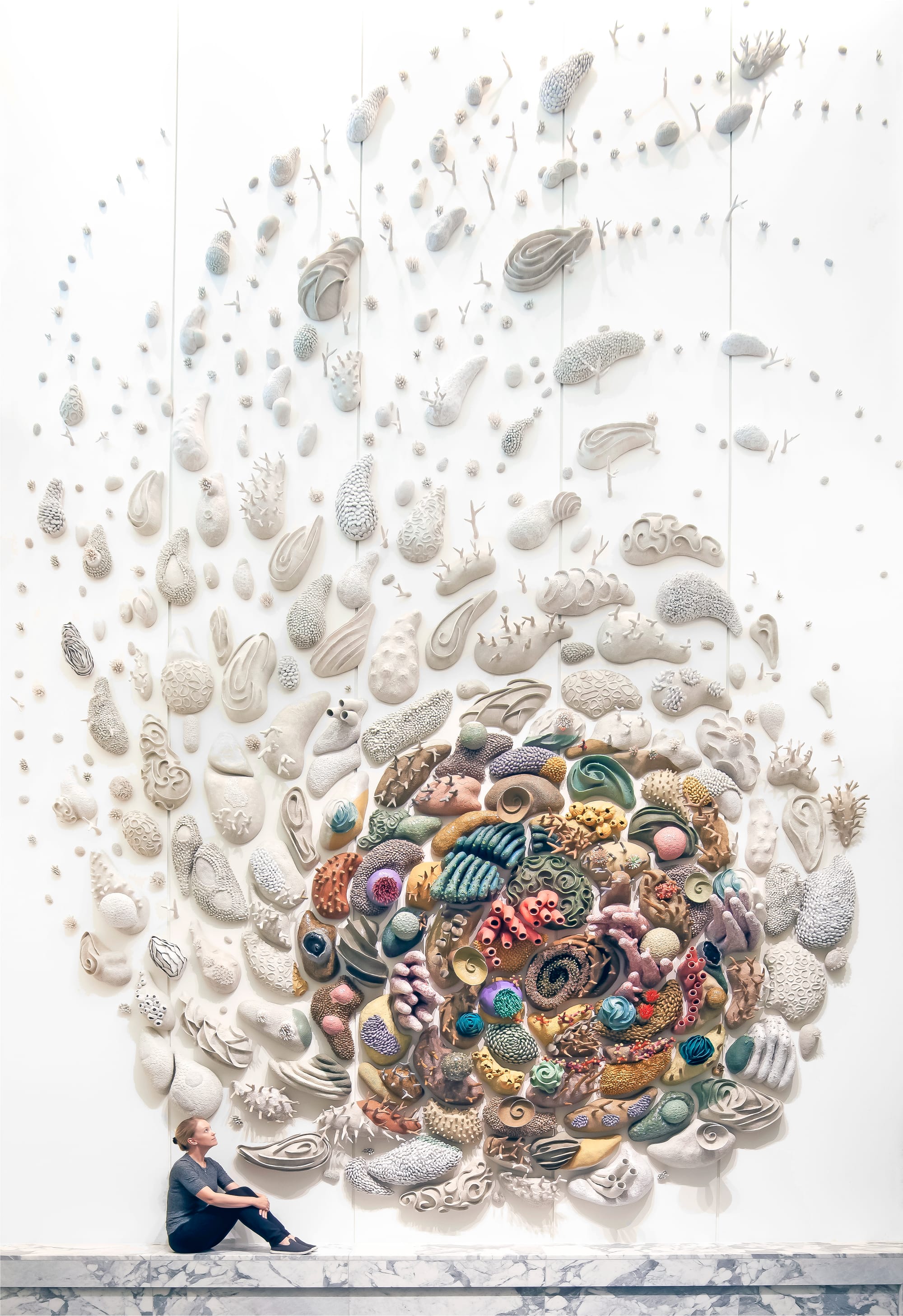
Her passionate advocacy has led her to create often gigantic wall sculptures that catch attention with their beauty and size, causing viewers to stop, look, attend, and ask questions. Viewers might begin by noticing the center of the piece is colorful, but the outside edge is white. This helps them to grasp both intellectually and emotionally the effect bleaching has on a once healthy coral reef. They "see" the pale ghostliness of bleaching move from the edge of the piece toward the vibrant center, and feel the ominous prospect of the remaining vibrant color fading to white.
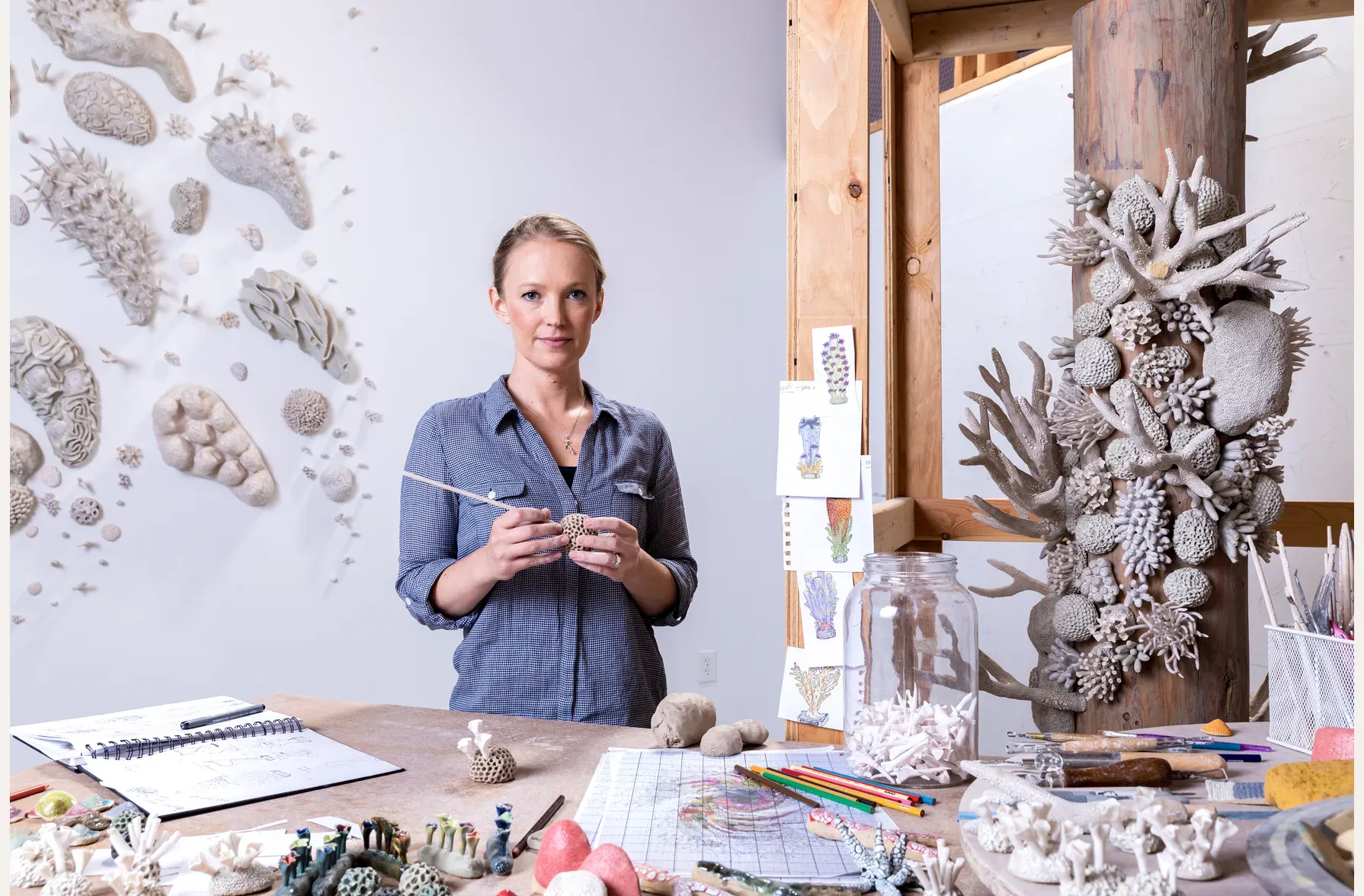
Mattison begins each of her pieces by sketching it out and then creates a full-scale template, laying out each piece using Photoshop, figuring out exact measurements for each piece. Larger, more structural parts of her sculpture are made from stoneware, while small decorative pieces are made from porcelain. She sculpts every piece freeform, sculpting hollow forms by pinching together coils of clay and creating a diversity of textures to reflect the huge variety of textures in a coral reef. She uses dental tools and dissection tools, toothpicks and chopsticks, spending hours poking holes that portray the repetitive growth of coral colonies. Dried pieces are numbered, fired in her kiln, and glazed by hand. Creating one of her large-scale wall sculptures can take eight months to year.
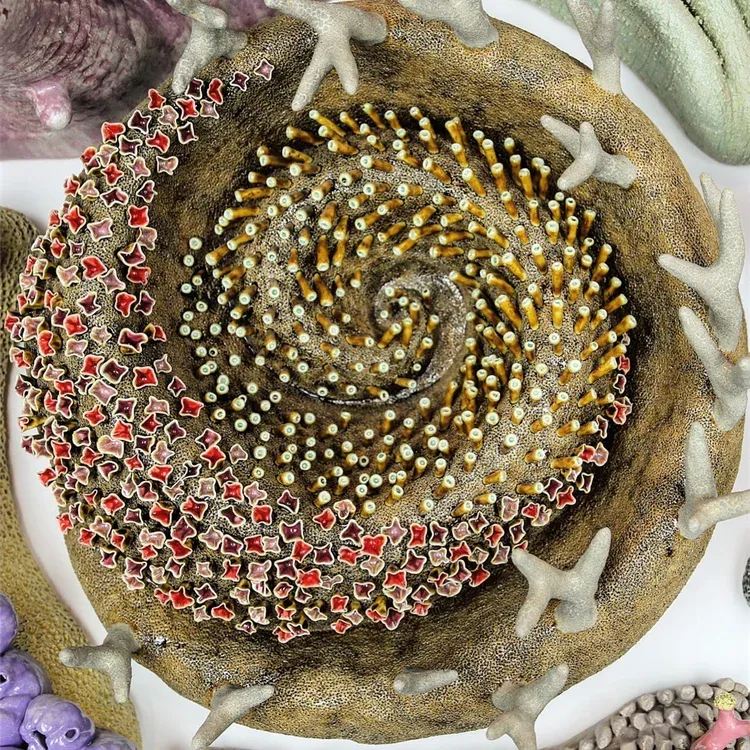
Her ceramic glaze contains calcium carbonate, the same element that is secreted by coral polyps to form reefs (and mollusks to form shells) and this creates a significant connection between material and subject matter. The fragility of her work provides another important parallel to the fragility of coral reefs. Her work draws people to want to touch it, but doing so could break the work in the same way that touching a coral can kill an entire coral reef.
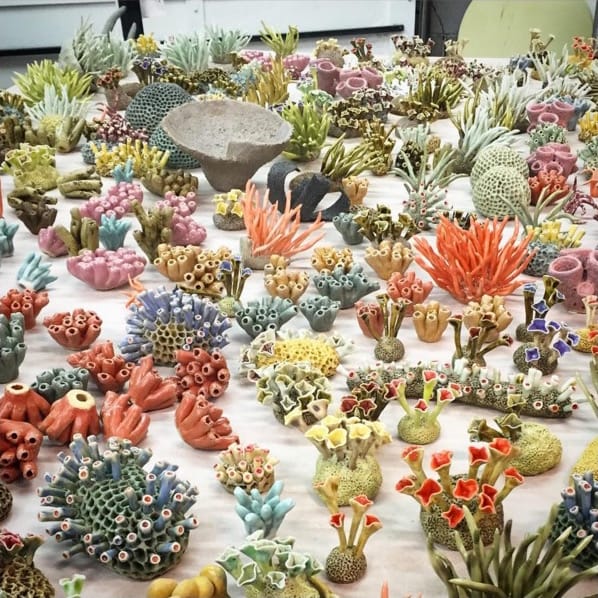
Rather than trying to construct anatomically accurate dioramas, Mattison invents her own “hybrid species” of corals, sponges, anemones and other creatures. She chooses not to focus on being completely realistic as her priority is to spark the viewer’s sense of wonder and curiosity. She has said, "I don’t want my work to be too literal because the point is to evoke sparks of inspiration and curiosity, not just teach people what a particular species of sea sponge looks like."
Her work is beautiful and intricate, but she is clear about one thing, "Nature is so much more creative than I could ever be."
Mattison sees her works as monuments to coral reefs in celebration of their beauty, their fragility, and their value, but not, she hopes, as memorials of once-living systems. "I really hope that I’m not creating memorials to coral reefs. A lot of the time I’m afraid that I am, but I hope that that’s not true."
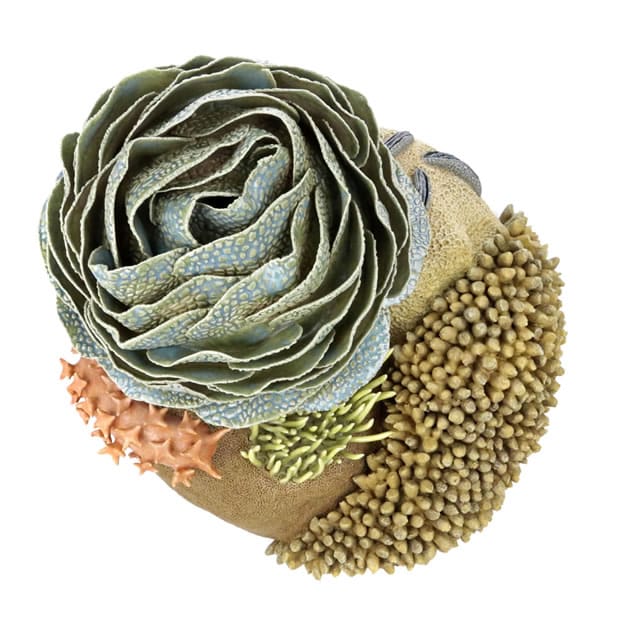
One of her series is called Hope Spots, with each sculpture representing a particularly healthy area of the ocean which is deserving of special protection. Her exhibits encourage people to find ways to get personally involved in conservation efforts in areas such as these. She views this advocacy work in light of the tiny coral polyp, tiny and yet very important, reflecting that, "Even one tiny human in the world can make a gigantic difference if they focus their efforts."
Coral reefs may feel distant from where you live. But it is both a fearful and hopeful fact that what happens in one part of this Creation isn't disconnected from what happens elsewhere. God has created a complex and interconnected world. Are there ways you can use your gifts and knowledge to help bring greater health to the oceans, or to some other focus area you are passionate about? Figure out what you love about this world and then do what you can to help it thrive, whether that be through political protest, art, practical earthkeeping, research, or more than one of these methods at the same time, especially keeping in mind the areas, which like the coral reefs, are in need of swift and concerted intervention.
You can learn more about Courtney Mattison on her website.
Feel free to leave a comment below (you can sign in through your email) or contact me directly at louise.conner@circlewood.online. We also encourage you to share this piece with your friends using the share button provided.
Louise
TO LEARN ABOUT OUR PARENT ORGANIZATION, GO HERE...


The Ecological Disciple is part of Circlewood, an organization committed to "accelerating the greening of humanity."
Comments ()