
The Art of Creation: Never By Their Own Hand
Music can find a way to the human heart in a way that is not always possible with facts alone.
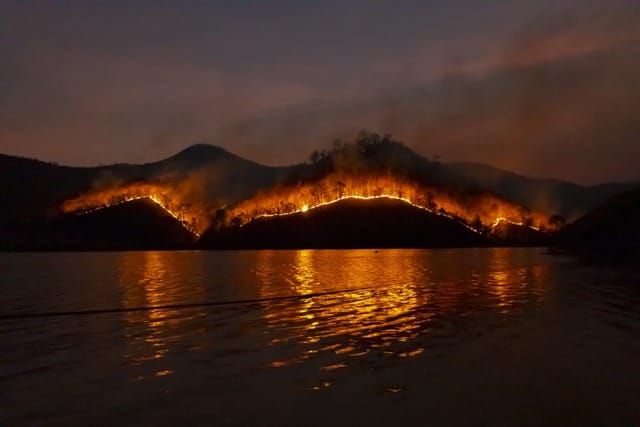
Today we welcome writing from Jeff Reed, a regular contributor to The Ecological Disciple. You can find Jeff's previous writing for The Ecological Disciple and a short biography on his author's webpage here.
Oh, my children, where you gonna go?
Now you've lost the land you called your home
When the Earth is burning, fever on her brow
Crying, "Oh my children, who will save you now?"
–Glen Phillips, Fever
Facts can help shape values, it’s true, but facts also can be twisted, data can be manipulated, and statistics can play into the hands of seemingly opposite positions. In shaping attitudes that drive behavior, the pointing finger of rational science can sometimes use a little help. The scientist needs artist partners to speak more directly to the human heart. Emotions and feelings assign value to ideas, making them more compelling catalysts for behavior change and lifestyle commitment.
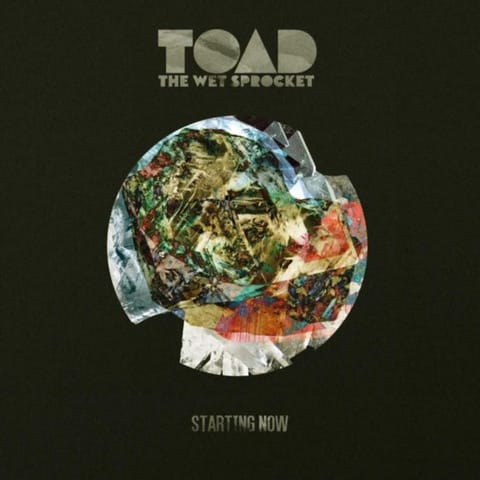
In the current climate change battle to win hearts and minds regarding human complicity in the global warming crisis, songwriter Glen Phillips is one such artist partner. He is the lead singer and songwriter for the Santa Barbara-based alternative-rock band Toad the Wet Sprocket, which formed in 1986 and is playing and recording music to this day. Phillips has given a lament song to those of us who desire to persuade our neighbors of both human culpability and human corrective power in our present climate predicament. Featured on Toad the Wet Sprocket’s seventh studio album, Starting Now (2021), Phillips’ rock-ballad Fever brilliantly captures the pathos of our climate change crisis with the voice of a mother and the critique of a prophet.
I encourage you to first read the lyrics to Fever, and then listen to the song by clicking on the link to Phillips’ live solo performance from 2023 in New York City.
Fever
With a shrug of her shoulders
The mountain came down
Tore a path all the way to the water
And through my sleeping town
And the trails I'd wandered
All erased in the birth
Of the million-year-old rock
From the naked gasping earth
Chorus
Oh, my children, where you gonna go?
Now you've lost the land you called your home
When the Earth is burning, fever on her brow
Crying, "Oh my children, who will save you now?"
Verse Two
Now the winters hit harder
The summers are fire
And the rains are the tears of a mother
For her rebellious reckless child
But still the spring brings clover
Amid the blackened oaks
Sprays of fledgling branches
And the wildflowers below
Chorus
Bridge
Farewell the family of the Holocene
Farewell the fragile air, the sea, the land
Five times before she's seen the rise and fall again
But never by their own hand, never by their own
Oh, my children
Verse 3
Chaos was my lover
But fate is my bride
We will meet at the edge of the ocean
And the ever-rising tide
Chorus
Listen to and watch a performance of Fever here:
The song begins with a description of a destructive mudslide in Phillips' hometown of Santa Barbara, CA, an area particularly susceptible to mudslides due to the one-two punch of summer wildfires and winter deluges. The mudslide functions as a portent of the ancient earth writhing and “gasping” in another cycle of cataclysmic upheaval, a kind of “birth,” as the “million-year-old rock” violently emerges after casting off its raiment worn thin by extreme weather. The voice begins as an observing bystander and then suddenly switches to the tender voice of a mother, “O my children, where you gonna go?” The image of “fever on the brow” is intimately maternal, and stirs deep emotion in me as I remember my own mother holding a cool cloth to my head when I was sick.
The impacts of climate change—mudslides, severe winters, fire-plagued summers, torrential rains—are vividly catalogued in this song appropriately set in a minor key. But alongside these sobering realities, the song also highlights the reality of the Earth’s furious fidelity to its life-giving role. Phillips recalls the spring clover and the wildflowers blooming beneath the fire-blackened oaks, and helps us feel that all is not lost…yet. The earth is still doing her desperate part if we would just start to do ours. The song builds in intensity and calls out to our hearts for a response!
At this point, Phillips’ lays down his powerful indictment. He leaves no doubt where he stands as to the cause of the current rise in global warming. While he fully recognizes that the earth has cycled through climatic change before our current epoch (which he correctly refers to as “the Holocene,” the relatively stable period since the last ice age), he bluntly announces that we are approaching the end of our epoch. We are waving goodbye to the “fragile air, sea, and land,” but this time not in step with the sine wave of ancient natural terrestrial or solar cycles, but rather–and here is the song’s dagger to the heart–this time the change has come “by our own hands.” Never before, he points out, has an age been threatened by the very hands of its own “rebellious children.”
This is the heart-connecting moment of self-awareness that Fever offers every sensitive listener. A moment of horrible realization. A moment of corporate shame. A moment strong enough to jar a paradigm-change toward personal discipline and public advocacy in some small way.
After the gut punch, Phillips leaves the future open-ended. The cryptic line “chaos was my lover” recognizes that all the living manifold beauty of the earth has risen out of what was once inchoate disorganization–formed and called into being by love. Perhaps he is drawing here from his Jewish heritage with a Torah allusion to the Spirit of God hovering over the formless void, over the face of the waters, before God’s “let there be light” (Genesis 1:1-3) brought forth the fruit of life. Or perhaps not.
Either way, Phillips continues, “but fate is my bride; we will meet at the edge of the ocean and the ever-rising tide.” As a bride compared to a lover is a symbol of commitment, so the near-future presents the world with a choice of marriage to two possible definitive realities–either a rising ocean that will encroach the land and throw the world back into chaos where the children have no place to go, OR… and here the positive alternative is left unstated. Amplified by the long pause in the music itself, calling conspicuous attention to itself, the music effectively hands the microphone over to the listener, giving each of us the challenge to finish the song differently. It goads us into thinking with and through our hearts toward choosing a different bride of fate, one where at the ocean’s edge the tides will have stopped rising because we have finally heeded the faithful mother’s cries and turned our hands to solving the problems our hands, and our hands alone, have created.
I welcome your comments below, or email me directly at windinthereedspub@gmail.com.
Jeff
IF YOU LIKED THIS, HERE'S ANOTHER TO TRY...
 James Amadon, Editor
TO LEARN ABOUT OUR PARENT ORGANIZATION, GO HERE...


The Ecological Disciple is part of Circlewood, an organization committed to "accelerating the greening of humanity."
Comments ()