
The Art of Creation: Neither Plant nor Animal
Stephen Axford was looking for a hobby - he found something that changed his view of the world.
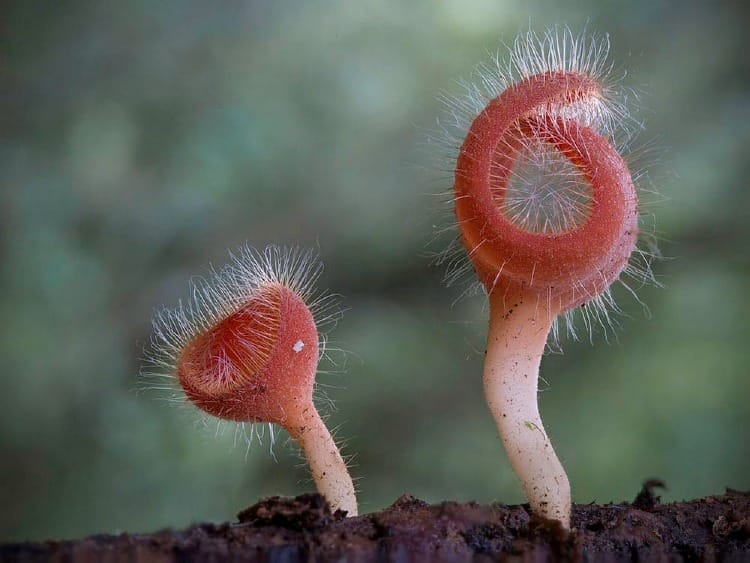
When Australian Stephen Axford retired from his work in computer design and his long-time partner died of breast cancer, it seemed time to reinvent himself. Already interested in photography, he decided to take it up as a serious hobby, photographing whatever he found interesting and beautiful. After he moved to what remains of The Big Scrub (a once-expansive subtropical rainforest in New South Wales that has mostly been cleared for agriculture), he made a discovery. The photography that started as a hobby turned into something life-changing. Amidst this adventure he found that, "Even the smallest system in the natural world is more complex that the largest computer system."
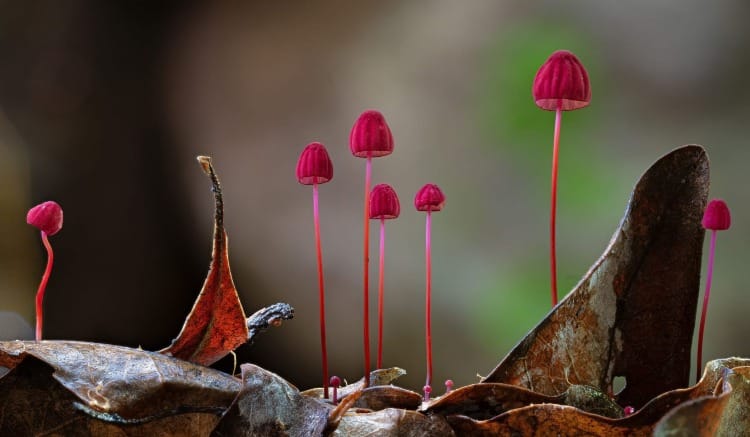
As he began restoration work on the 7 1/2-acre property that had previously been converted from rainforest into dairy land, he found himself intrigued by the fungi he found growing in the soil as he planted native trees. Fungi (which are more like animals than plants, but is neither), caught his attention and camera lens with its strange and varied beauty.
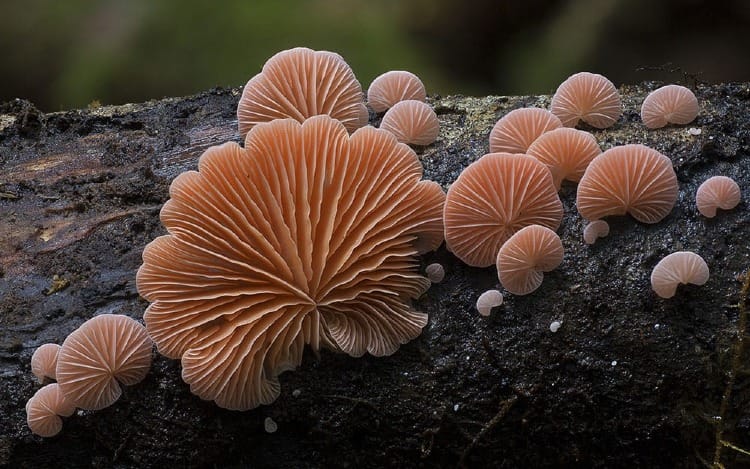
He has said, It is great to have a hobby that forces you to stop and really look at the forest (or anything else for that matter). There is infinite variety hidden inside a forest and it takes careful looking to find it. You just have to know where, and when, to look, and you only get that by time and experience. Photography is a great excuse to slow down and really look. I will often go for an hour walk that will take 5 hours... Photography gives me an excuse to delve into all sorts of things, and to gain knowledge, that I would never have discovered otherwise.
Eventually, Axford and his partner Catherine Marciniak, a documentary director and cinematographer, began experimenting with time-lapse photography of fungi, first converting a second shower and then an old shed into a dark room. He has been told that his time-lapse videos enable people to see things they would normally never see, bringing the fungi that appears to be inert to life. The time-lapse videos have been widely shown around the world, including on David Attenborough's BBC documentary Planet Earth 2. The four-minute YouTube video above is an example of this work.
I find the video fascinating. Colorful and strange types of fungi send out their fruiting bodies in the form of mushrooms which grow, plump up, and eventually shrink and collapse back into the dirt or other surface they sprouted from. It is beautiful to watch and an opportunity to learn about this this segment of the life cycle of fungi--the only part of the life cycle that many of us ever are aware of.
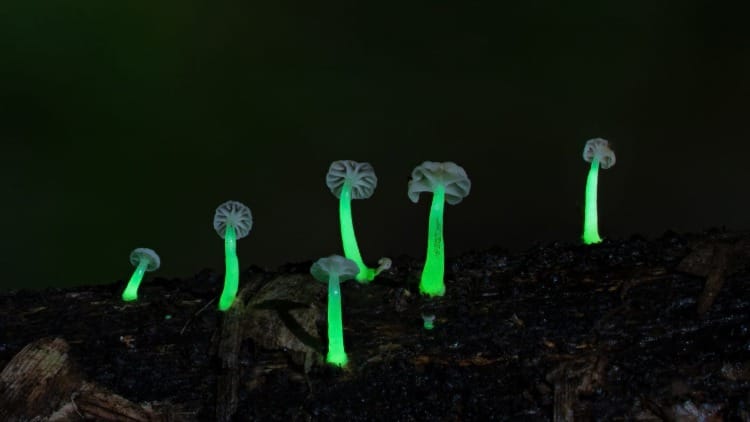
What began as an aesthetic interest in fungi for Axford developed into a deeper interest. Through his photographs and observations, his work now supports the research being done on fungi. He has learned what is helpful to researchers and has adjusted his photographs to provide the information that is helpful to them. It has been estimated that there are between two and 12 million species of fungus present on the earth. Only about 150,000 species have been documented, so there is a lot of room for research and discovery. If someone wants to discover a new species, this is definitely a field to consider!
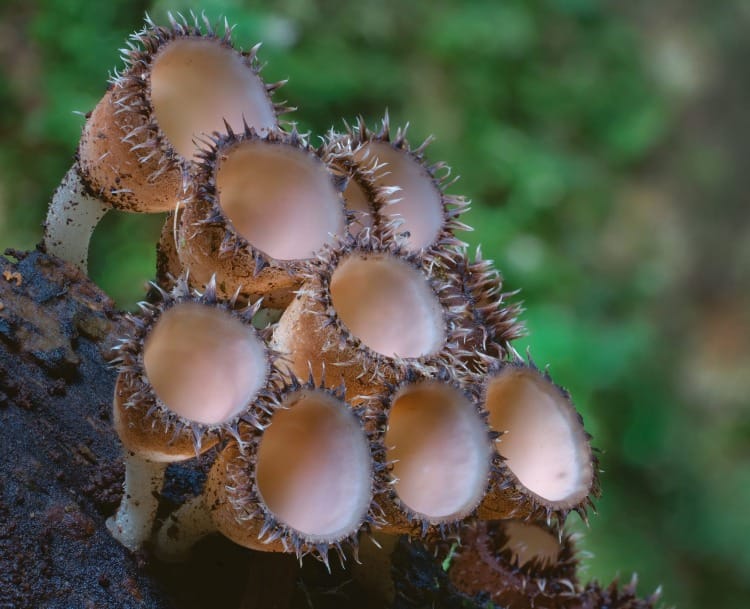
As Axford began to photograph fungi, his curiosity was piqued to learn more about them. That curiosity led to a much deeper understanding of how pivotal they are to the forest's ecosystem and to the overall functioning of the earth's system as a whole. Their role as decomposers is absolutely essential in the natural system of the earth. Without them, logs would stack up and be buried by vegetation rather than being broken down and becoming nutrition for the next generation of life.
"I started on this journey knowing a little bit about photography, but very little about the natural world. Learning about the complexity of fungi, and through it the complexity of life, I realize now that life on this planet is more interconnected that I ever could have imagined. We are just one organism in that story and yet we have the means to destroy it all, including ourselves, because we cannot survive on our own."
For me, Axford's work is a powerful reminder to stop and notice what is around us. What we dismiss as insignificant may just be the piece that keeps the earth's systems up and functioning.
You can learn more about Steven Axford and his work on his SmugMug website. You might want to watch the 32-minute video included below to learn more about fungi and hear how this hobby changed Axford's perspective and life.
Feel free to leave a comment below (you can sign in through your email) or contact me directly at louise.conner@circlewood.online.
Louise
Comments ()