
The Way Forward: Members Mailbag #1
June 7, 2021 - First ever Members Mailbag! Check out what our thoughtful readers want to know, and the wisdom they have to offer. By James Amadon

Welcome to the first "Members Mailbag." For this special post, only subscribers will recieve it by email and be able to see it on the website.
Thank you to everyone who responded. I loved reading your questions, resource recommendations, and practical suggestions. I have tried to include something from everyone who submitted responses. Let's get started!

THREE EXCELLENT QUESTIONS
Our first response addresses two questions. Rick Mylander wrote that he finds it interesting how responsibility for earth's exploitation gets laid at the feet of the Christian church, and largely its evangelical wing. He acknowledges that there is certainly shared guilt through omission, commission and complicity, but wonders, “What is the true substance of this charge?” J.Paul Fridenmaker gives us a partial answer, noting that churches and seminaries do not give much time to teaching ecology, the environment, and faith. He feels like many Christians have given the issue to the ‘other side’ because “the earth is not our home.” J.Paul wants to know, “How can we counter this argument from a biblical and theological point of view?”
Great questions, Rick and J.Paul - thanks for sending them my way. Let me start with the first question about the church’s responsibility for the earth’s exploitation. I come across this a lot in my reading, as well as in my conversations with people involved in what we often call the environmental movement. Much of this can be traced to a 1967 essay by a historian named Lynn White, Jr. called “The Historical Roots of Our Ecological Crisis.” White argued that the destruction of nature is in large part a consequence of the triumph of Western Christian theology, which emphasizes God’s transcendence outside of creation, and humanity’s superiority among creatures and divinely-granted dominance over the earth (which was created to serve humanity). White demonstrates how these theological pillars functionally removed a sense of the earth's sacredness, which inevitably opened it up to exploitation.
White's essay was widely read and debated, and still is. Many readers, and some influential scholars, became convinced that Christianity was not just negligent in its lack of care for the planet, it was the root cause of the earth’s suffering. Add to this perception the fact that Christians have been woefully absent in the environmental struggles of the last half century, as well as the public stances of prominent evangelical leaders and organizations that proudly embrace the theology White describes and vilify almost anything regarding creation care, and you can see why so many people who care for the earth see Christians as the problem, or at least a huge part of it.
White’s argument has merit, and followers of Jesus who have been formed within Western theological traditions need to humble themselves and collectively repent. That’s why I wrote about repentance as the first step of an ecological disciple. That said, many critics have failed to notice that White places the blame on a particular theological system, not on the faith itself. And many others have taken up the task of reading the Bible with ecological eyes and writing theology that puts care for the earth in the center of discipleship and mission. White was a practicing Christian himself, and at the end of the essay he calls not for the abolishment of religion but its renewal:
Since the roots of our trouble are so largely religious, the remedy must also be essentially religious, whether we call it that or not. We must rethink and refeel our nature and destiny.
And this takes us to J.Paul’s question about how we can articulate a more earth-friendly discipleship and theology. The best advice I can give is to read the Bible with the earth in mind. You will be surprised just how much “non-human” content there is. That said, most of us have been trained to read it as if only humans mattered (what is often called "anthropocentrism"), so it may be helpful to study the work of scholars who have spent years in biblical and theological study and have produced accessible works that can help us, and our friends, “see the light.”
I also encourage everyone to read White’s short essay, and perhaps follow it up with Pope Francis’ slightly longer encyclical, Laudato Si. If you are ready for longer works, here are some that our readers suggested:
For the Beauty of the Earth: A Christian Vision for Creation Care, by Stephen Bouma-Prediger
Creation Care: A Biblical Theology of the Natural World, by Douglas and Jonathan Moo
The Bible and Ecology, by Richard Bauckham
Salvation Means Creation Healed, by Howard A. Snyder and Joel Scandrett
Shalom and the Community of Creation, by Randy Woodley
Introducing Evangelical Eco-theology by Daniel L. Brunner, Jennifer L. Butler, A. J. Swoboda
Our next question is from Jessalyn Megerle. She has been thinking about how a "sense of place" can benefit people both spiritually and ecologically, and is wondering, "How can I learn more about the benefits we receive from connection with the natural world?"
Great question, Jessalyn. First, I should tell readers that you are Circlewood's Social Media Director, a trained naturalist, and an all-around wonderful person. As for your question, we need to start with the understanding that we are fundamentally and irrevocably connected to and dependent on the natural world. We often read the creation story in Genesis 1 as if we humans were the most important part of creation, despite the fact that we are completely dependent on all the features that precede us (light, sun, moon, water, land, sky, vegetation, animals, etc.) - not the other way around. God's creation gives us life. We are like children, receiving so much more than we are able to give. This should instill in us a deep sense of reverence and humility. But, for the most part, it does not.
It is amazing how hard we have worked to separate ourselves from the natural world. Just think about our language - if we describe the non-human world as "natural," that necessarily makes the human world "unnatural." It should alarm us that we have reached a point where we have to learn about the benefits of "nature" and change how we live our lives to receive them. I know you know this, Jessalyn, and took your question to be about this process of becoming more intentionally connected to the world, which is crucial to healing ourselves, our communities, our churches, and our culture. Let me offer two ways forward.
First, there is much to be learned from indigenous cultures about the mental, social, emotional, physical, and spiritual benefits from deep connection to the physical world. Indigenous cultures typically carry within them deep ecological knowledge that has been formed through hundreds, even thousands, of years living within the gifts and rhythms of creation.
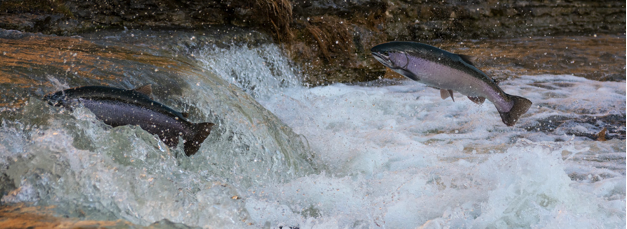
I live near the Salish Sea (Puget Sound), and have learned about the centrality of salmon to the native tribes that have lived here for centuries. Salmon are not simply a source of food, they are honored and celebrated for the life they bring to people and to the wider bioregion. The multitude of blessings that salmon offer is precisely why legal fights over fishing and dam removal have been so fierce, and why the steady depletion of salmon in our region has been so devastating to the mental, emotional, physical, and spiritual health of native people (and, though we are slower to recognize it, to us non-natives as well). It is also why restoring salmon populations is so crucial to the overall health of our region. Knowing this has led me to feel more connected to the place where I live, and to look for ways to foster that connection by nurturing and protecting its gifts.
I frequently encourage people to learn about the native people in their area. It can give you great insight in how to receive and care for the gifts that God has set within your particular corner of creation. And if you want something to read in this area, more than one of our readers suggested Braiding Sweetgrass by Robin Wall Kimmerer.
The second way forward is through the insights of modern science, which has been confirming the wisdom of indigenous communities with increasing frequency. One area we see this is in the growing body of scientific literature exploring the way forests contribute to human health. Most of us recognize the benefits forests give to the overall health of the planet through carbon sequestration, water filtration and conservation, and air purification. What we are beginning to recognize is the direct benefits humans receive from spending time in a forest. Studies have shown that time in a forest reduces cortisol, a stress hormone; another found that participants significantly lowered their blood pressure. Japanese doctors have been prescribing “forest bathing” (shinrin-yoku) for some time; Western doctors are beginning to catch up.
You can read these studies, of course, but the best way to learn about the benefits of connecting with the non-human world is to connect with the non-human world! If you live near some woods, take a stroll and open up all your senses to the experience. And if you want something to read while you are swinging in a hammock or sitting with your back against a tree, I’m just about to start “Finding the Mother Tree: Discovering the Wisdom of the Forest” by Suzanne Simard.
OTHER RECOMMENDED RESOURCES
Here are a few other resources and organizations that have been helpful to readers.
Our readers are readers - here are some more book suggestions
The Earth is Enough” by Harry Middleton
Earth, Our Original Monastery: Cultivating Wonder and Gratitude through Intimacy with Nature by Christine Valters Painter
Anything and Everything by Wendell Berry
Our readers are writers!
Rick Mylander blogs at "Naturally: Reflections on Creation and Christian Spirituality"
Rev. Dr. Robert Shore-Goss has written several books and articles, including "God is Green"
Rev. Elaine Breckenridge has a great reflection called "Chickens and Kinship."
Our readers are active! Here are some organizations they are involved in.
A Rocha
Au Sable Institute
The Sierra Club
Earth Ministry
PRACTICES THAT HAVE BEEN HELPFUL
Several readers highlighted the practice of gardening, whether alone, with the family, or with the church and local neighborhood. Their advice – get out and grow something!

Elaine Breckenridge is celebrating a new practice:
For the first time in my life, I do not use a garbage disposal. All scraps are saved for the chickens at a local farm. In turn I receive their eggs. It is a joy to know that some of the energy that feeds the chickens comes from my table scraps.
Rev. Dr. Bob Shore-Goss recommends applying the lessons of lectio divina - slow, meditative reading of Scripture - to our encounters with the earth. This is often called lectio tierra, and you can find a helpful guide here.
KEEP IT COMING....
I hope this has been helpful to you. If it has brought a question in your mind, reminded you of a resource, or connected you to a particular practice, please leave a comment.
Feel free to reach out to me directly, too! I can always be reached at james.amadon@circlewood.online.
With you on the Way,
James
Comments ()