The Way Forward: Healthy Soil, Healthy Community
The better the soil, the better the plants will grow.

Rev. Sarah Robinson, one of The Ecological Disciple's regular contributors, writes for us this week. Pastor Sarah loves living and pastoring in the eclectic Ecodistrict Audubon Park in Orlando, FL. You can read Sarah's earlier pieces for The Ecological Disciple here on her author's page.
I was recently in New York City for a short vacation, and I love the city! The excitement and energy of all the people, the concentration of creativity and diversity that characterizes most big cities, but particularly New York. It makes me feel alive! (Can you tell I’m an extrovert?)
Settling back into Orlando has me reflecting on the difference between a place that makes you feel alive versus the gift of making a place come to life. Over the last 12 years, I have had the privilege of pastoring and living in a neighborhood called Audubon Park. One of the guiding ideas of investing myself in this community is inspired by Jesus’ parable from Matthew 13 (also Luke 8 and Mark 4). In this parable, Jesus compares four types of soil as a metaphor for people’s receptiveness to the message of Jesus. It is an effective metaphor, as it is easy enough for most of us to understand that the better the soil, the better the plants will grow.
Rooted in this parable, I have developed the philosophy of the relational soil of a community.
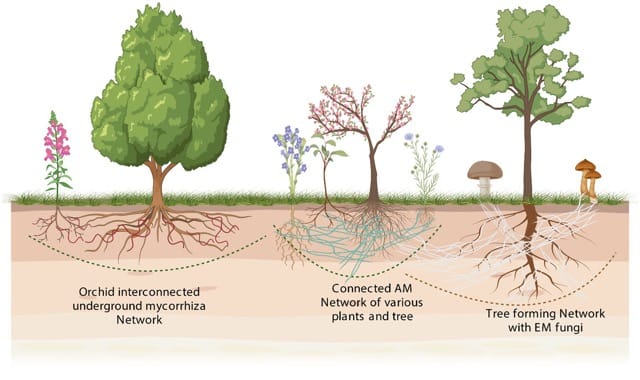
It turns out that what makes healthy soil is nutrients, yes, and enough organic material to be able to retain water (something I have learned a lot about in sandy Florida), but also something called the Mycorrhizal communications network. See this National Geographic video:
As I have learned more about the function of soil and the amazing elements of healthy soil, I have discovered this not solely as metaphor, but as dimensional reality. There appears to be a real relationship between the health of the soil and the health of the community. It can in fact be one and the same health.
Colonialism, Consumerism, and Capitalism all are extractive by principle, extracting resources from soil, ecosystems, individuals, and the community, for the gain of a few. This leaves our soil, our ecosystems and our communities depleted, unable to sustain life. Life and people become disconnected from one another.
The signs are everywhere if we choose to notice them:
- Neighborhoods where people live but have no real relationships with their neighbors.
- Millions of people who have never grown anything and know little to nothing about the plants and animals and land around them, functionally having no relationship with the soil and plants around them.
- In the US, we often live in economic and racially stratified ways, essentially mirroring the kind of extractive monoculture farming that depletes soil instead of regenerating it.
This extractive way, and the depletion that results, is damaging in ways we don’t always realize. We have become profoundly disconnected from the earth, from each other, and from ourselves. This is both the bug and the function of extractive systems. These systems of broken extractive culture leave us all more vulnerable and more susceptible to community illnesses: isolation, fear, divisiveness, apathy, violence, mental and physical health issues.
But this is not the only way.
The way of God’s creation is one of natural replenishment and regeneration. And soil that reflects God’s creation is a balance of fungi, complex networks of roots, microbes, bacteria, insects, worms and other creepy crawlies, bits of sand and other organic materials, in a constant state of transformation and communication. Healthy soil by its very definition is diverse and alive, constantly moving and changing, but profoundly interconnected and interdependent.
So it is with healthy communities and God’s Kingdom way. We are part of and a reflection of the creation around us. We are at our healthiest, body and soul, when we are diverse and connected, interdependent on those around us, regeneratively giving and receiving, using what we need, passing on what others might need. A single tree is not a forest, just as a single human is not a community.
Those of us who are part of a church community have hopefully seen glimpses of what this can look like. Many around the US and in other places have begun to recognize the problem, and are crying out for a different way, even if they don’t really have an idea of the remedy.
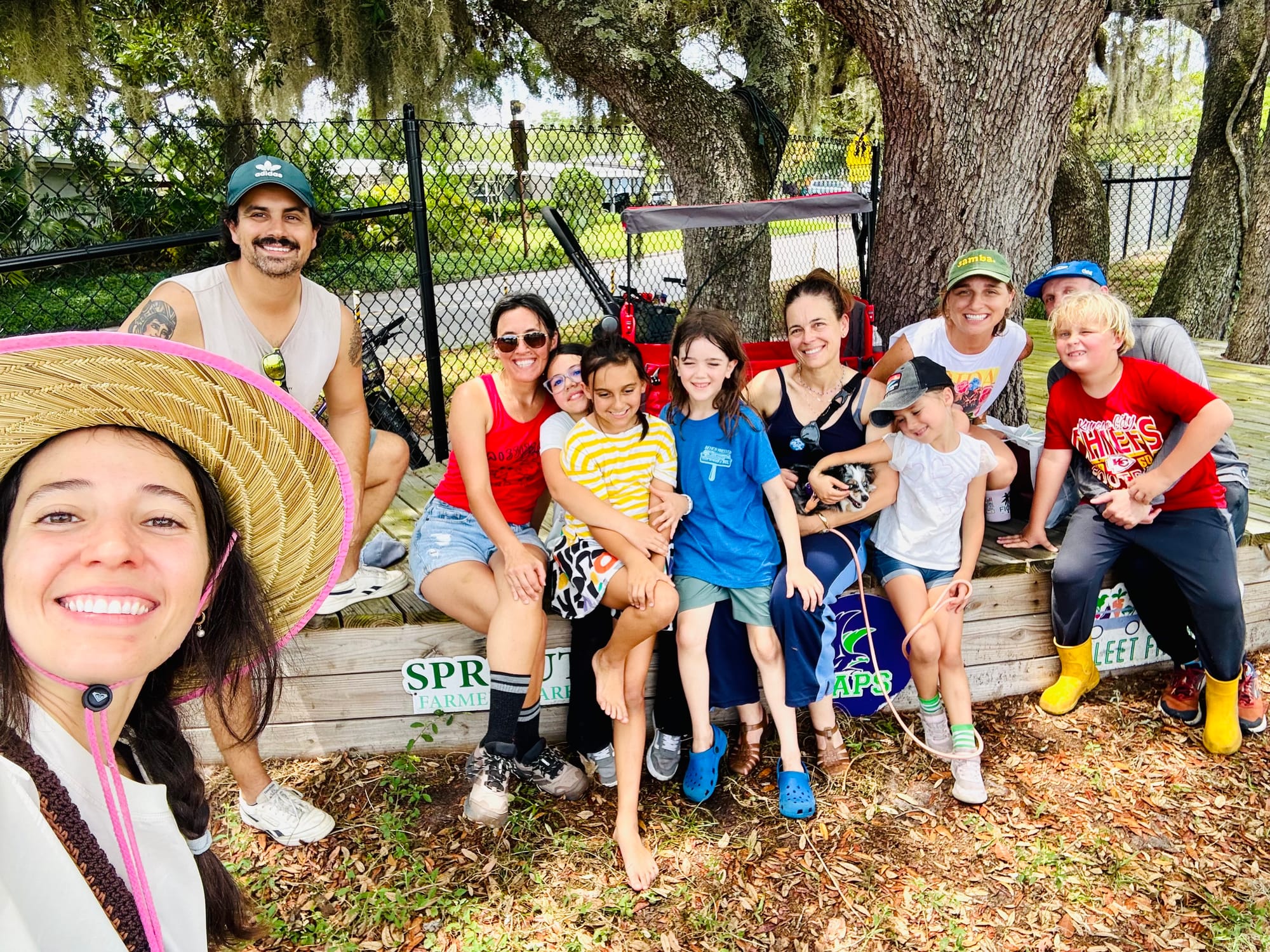
In my own neighborhood, we have been working on our relational soil health. In ways both small and big, now more than ever, we need each other! This doesn’t just happen, and it is not easy, but it is indeed worth it.
We work to develop the relational health of our communities so when a crisis happens, we will be able to manage it better, together.
- Find small ways every day to be connective, to invest in the people and places you come into contact with every day! Make it simple and obvious. Make it creative and unexpected. Dig into your strengths, and stretch yourself beyond your comfort zone.
- Find your people, those around you who have a desire to connect and build relationships, not just for their own sake, but for the sake of the community around you.
- Try, however imperfectly, to scale up with things such as block parties, community game nights, little free libraries (of books, seeds, art, food, puzzles, etc.), wine nights, community gardening, art nights, community choirs.
- Tend to your relationship with the soil, the ecosystem, the watershed where God has planted you. You are part of it and have impact on it whether you realize it or not.
I must be honest with you, building real relational soil health is not a quick fix. It’s more than just applying the fertilizer of a big block party or an infusion of money. While this is helpful, and provides a kind of relational jump start, real soil relational health requires consistent attention, time and investment. It’s not a one-and-done.
Look to Minneapolis, even as the ice (and ICE) took over this winter, they have shown us day in and day out that healthy soil communities can do more than just survive - they can even feed others. We are being taught and fed and encouraged by them daily.
And as the ice has begun to melt this spring, I invite each and every one of you to turn to your own community, your own neighbors and consider the gift and power of healthy relational soil. What might you grow?
Pastor Sarah
IF YOU LIKED THIS, HERE'S ANOTHER TO TRY...
 Louise Conner, Editor
TO LEARN ABOUT OUR PARENT ORGANIZATION, GO HERE...


The Ecological Disciple is part of Circlewood, an organization committed to "accelerating the greening of humanity."
Comments ()