
The Art of Creation: Grounded
At the center of this piece of music is a river running through the heart of its country.
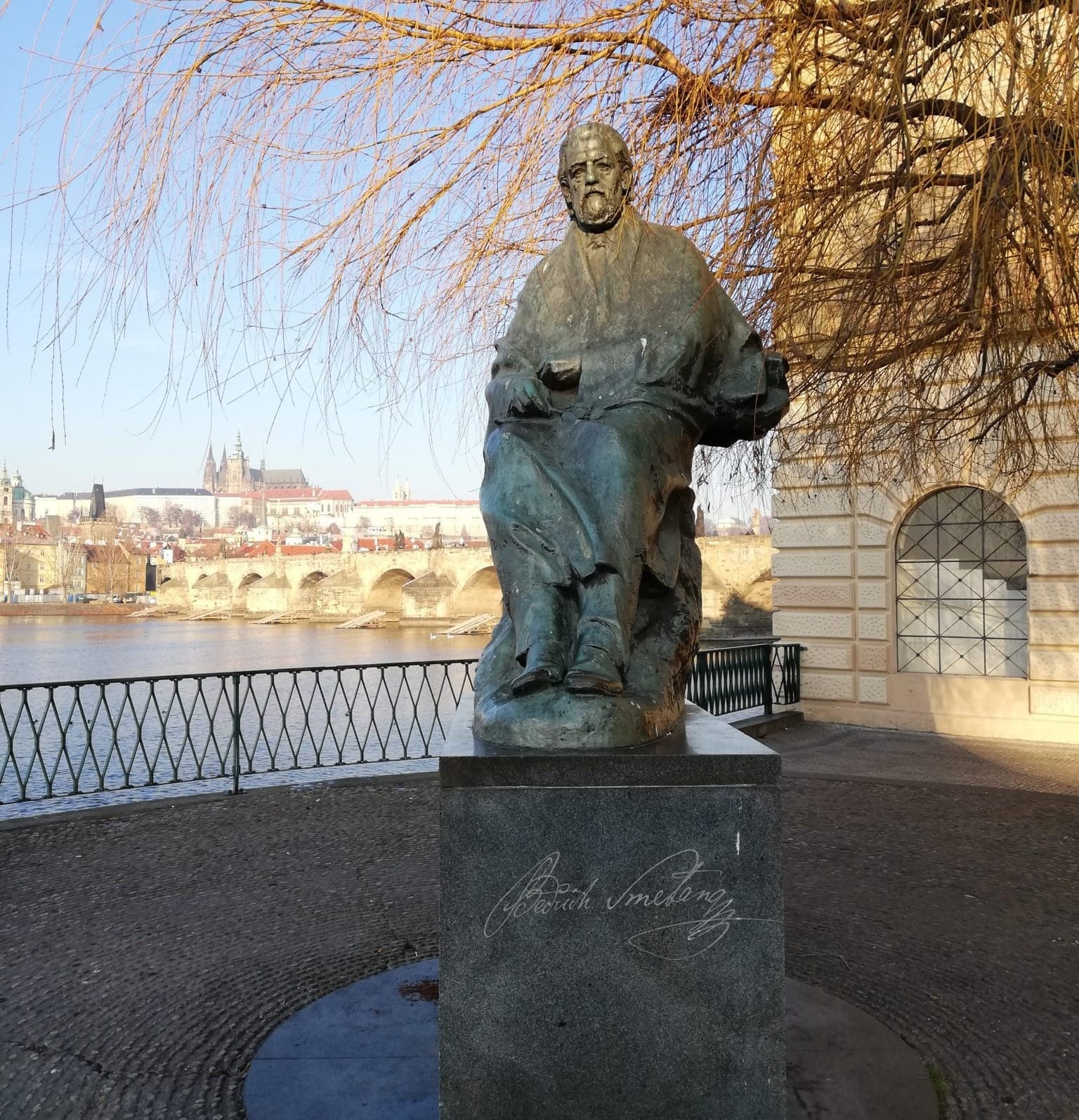
Bedřich Smetana (1824 – 1884), a classical composer in the Romantic tradition, is known as the father of Czech music. His most well-known work is a cycle of six symphonic poems named together Má Vlast (My Fatherland) which has been played on the opening day of The Prague Spring International Music Festival (Pražské jaro) every year since 1952.
This yearly ritual remembers Czech’s political history (the music was banned by the Nazis in an attempt to break the spirit of the Czech people) and celebrates the physical connection between the people and the land which grounds the country's history and culture.
The second symphonic poem in the cycle—Vltava (translated to "Moldau") and the fourth—Z Českych Luhů a Hájů ("From Bohemias’ Groves and Fields"), particularly celebrate the physical land itself. This connection between national identity and physical place is something often absent in our post-industrial world as national unifiers are more likely to be man-made symbols like flags, songs, or labels, rather than this type of strong identification with a particular element of earth. This is, I believe, a symptom and a cause of our often-felt sense of dislocation. Although "human" shares its root with the word "humus" (earth or soil), this reality of our earthliness is often overlooked, downplayed, or even vilified.
With this piece of music, we experience an identification centered on the shared ground people live on rather than on more ideological identification markers which tend to highlight the division between people rather than the commonality.
Vltava has been called one of the most topographical compositions ever written. (In fact, I discovered a lovely StoryMap made to illustrate this truth). The composition follows the course of the 267-mile Vltava River, as it runs from the south of the country, through its center, past Prague, and further northward to where it joins the Elbe River.
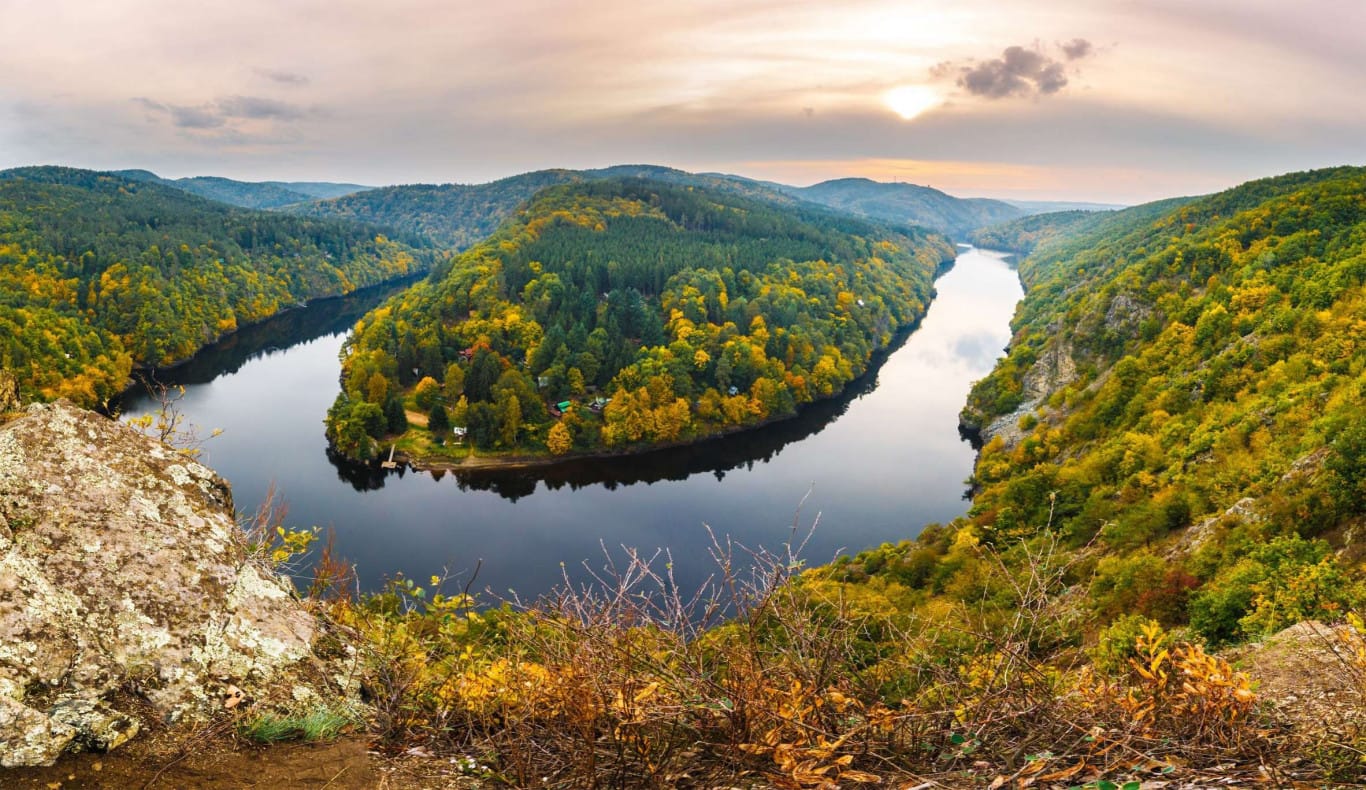
A friend of Smetana’s describes the composer’s encounter with the river on a trip to visit friends in the country in this way: Looking around the enchantingly lovely countryside, he followed the Otava River, accompanying it in spirit to the spot where it joins the Vltava, and within him sounded the first chords of the two motives which intertwine, and increase, and later grow and swell into a mighty melodic stream.” There is a spot in the countryside called "Smetana's Viewpoint," so called because it is thought to be a spot where Smetana looked down upon the river as he was formulating his music.
In his preface to the musical score, Smetana describes the piece this way; “Two springs pour forth in the shade of the Bohemian Forest, one warm and gushing, the other cold and peaceful. The forest brook, hastening on, becomes the river Vltava. Through thick woods it flows, as the gay sounds of the hunt and the notes of the hunter’s horn are heard ever nearer. It flows through grass-grown pastures and lowlands where a wedding feast is celebrated with song and dance. At night, wood and water nymphs revel in its sparkling waves. Reflected on its surface are fortresses and castles — witnesses of bygone days of knightly splendor and the vanished glory of fighting times. At the St. John Rapids, the stream races ahead, winding through the cataracts, hewing out a path with its foaming waves through the rocky chasm into the broad riverbed — finally, flowing on in majestic peace toward Prague and welcomed by the time-honored castle Vyšehrad. Then it vanishes far beyond the poet’s gaze.”
Listening to the piece is like journeying on a poetic and joyful travelogue. As the river weaves its way across the countryside, it also weaves its way through the lives of those who live along its banks. A wedding, a hunt, a dance, each are passed as it follows its course. But none of the these are the main focus of the piece; the central personality is the river itself.
Below is a renowned 1953 recording of the piece. You can listen to in its entirety (11 minutes in length) or you can dip in and out of it, listening for the different sections of the piece mentioned here. Although timings of a piece of music vary depending on the performance, the transitions of the river as reflected in the music can be found at the following times in this recording:
- Beginning—Two springs feeding the river, one from the mountains one from the hotsprings
- 1:00—Main river theme
- 2:39—Forest hunt
- 3:27—Peasant wedding
- 4:49—Moonlight dance of the water nymphs
- 6:59—River theme returns
- 8:15—St. John's Rapids
- 9:15—Vyšherad Castle/River theme
- 10:34—River exits Prague, fading away to join the Elbe
As you listen, can you feel the sense of physical and emotional connection between the composer and the river? If you were to put into words, or music, or another art form, a land feature that represents your homeland to you, what would that feature be?
Z Českych Luhů a Hájů (From Bohemias’ Groves and Fields), the fourth tonal poem of the Ma Vlast cycle is less of a story and more of a general homage to the beauty of the natural world. It was originally written to be the final poem of Má vlast and its divisions are as follows:
- The Opening (Forest & Grandeur): Opens dramatically with a full-orchestra burst and swirling string figures depicting the deep, echoing forest.
- The Fugato & Woodwind Melodies: A fugato in the strings alternates with gentle, lyrical themes in the clarinets and horns, representing the quiet shade of the woods and solitary forest calls.
- The Lowlands and Rejoicing: The mood shifts from solemn woodland scenes to the open, fertile lowlands of the Elbe valley.
- The Polka & Peasant Dance: A joyous, bouncy allegro polka erupts, weaving in a "peasant girl theme" carried by the woodwinds.
- Stately Culmination: The piece builds to a triumphant, emotionally charged full-orchestra conclusion celebrating the beauty of the countryside.
In Smetana's outline for this work, he wrote, “It is a painting of the feelings that fill one when gazing at the Bohemian landscape. On all sides singing, both gay and melancholic, resounds from fields and woods: the forest regions, depicted on the solo horn; the gay, fertile lowlands of the Elbe valley are the subject of rejoicing. Everyone may draw his own picture according to his own imagination; for the poet has an open path before him, even though he must follow the individual parts of the work.”
From the same 1953 performance included above, a recording (also 11 minutes long) of this fourth tonal poem is included below.
As you listen to the piece, do you feel the love of the countryside embedded within its melody? Do you love the land you inhabit in a way that resonates with this? Is there a way you can use your aptitudes and interests to celebrate your connection to it?
When Smetana was composing the first poem of the cycle, he was rapidly losing his hearing; by the time he began Vltava, he was completely deaf. And still, somehow, he was able to compose a piece of music that is still central to the Czech identity and the people's love for their land.
Louise
A NOTE FROM CIRCLEWOOD, OUR PARENT ORGANIZATION...
We are looking for a full-time Associate Director to guide Circlewood's operations and prepare Circlewood for the next phase of growth. If you are interested, or know someone who might be, visit our our employment page here for more information and to submit a preliminary application, which will be reviewed in mid-November. The job involves on-site duties.
Comments ()