
The Way Forward: Gardens of Reconciliation
How might the way we treat creature and place be a truer reflection of God's love?
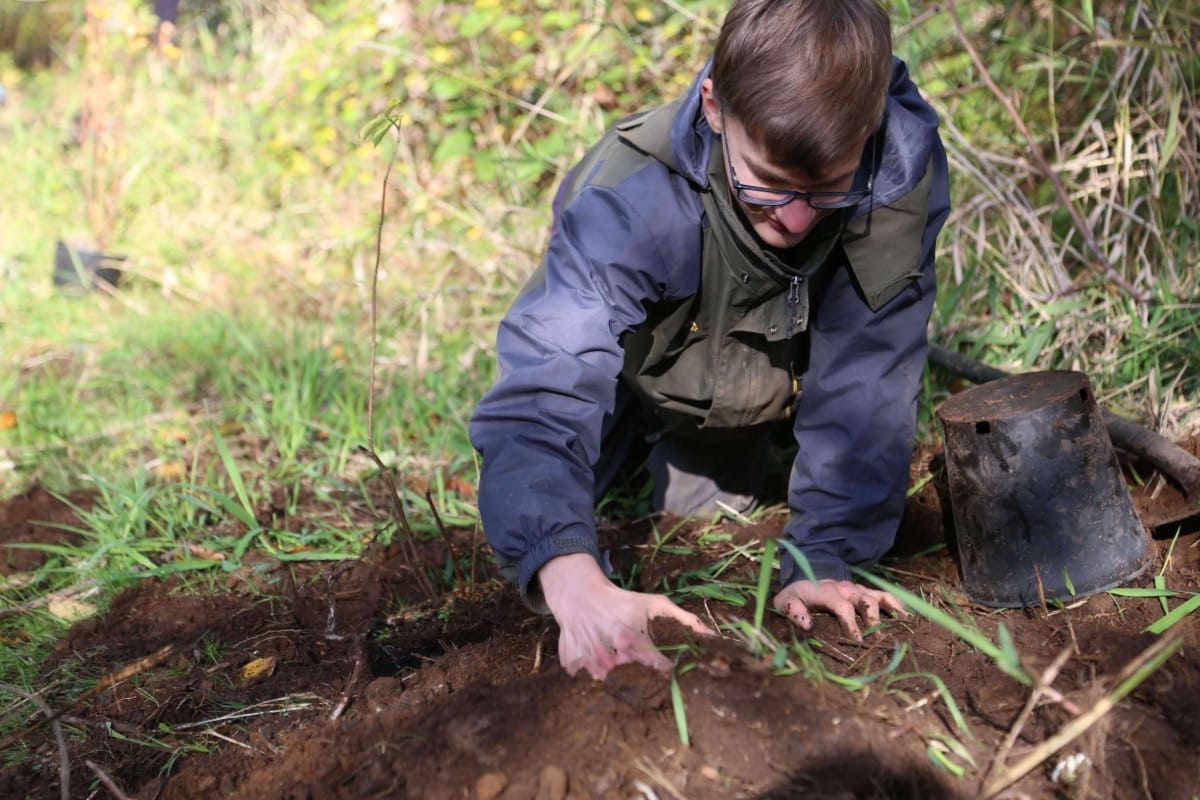
Noah Guthrie, one of our regular contributors to The Ecological Disciple, explores the theology and practice behind sustainable agriculture. You can find all of Noah's posts for The Ecological Disciple on his author's page here.
Our First Vocation
Chop. The hoe sliced through the dirt. I was still getting the hang of this strange tool – its duck bill, the way I had to let it swing toward my feet – but I kept heaving and slicing, turning up soil in a ridged, rippling wake as I walked backwards. Pretty soon, the other farming students and I had prepped a frothing lake of loose earth, primed for rows of carrots and corn.
I was in Umatilla, Florida, at a farm where sandhill cranes strutted about with rouged crowns. It’s one of two sites belonging to a Christian sustainable agriculture group called Empower. This may already bring up questions – such as, “What does it mean to farm in a ‘Christian’ way?”As it turns out, sustainable agriculture can be a profound means of establishing God’s kingdom on earth as it is in heaven.

In Genesis 2:15, God places the first human in the Garden of Eden to “tend and keep it.” Tending the soil, then, is the first human vocation described in the Bible. Moreover, if we’re called to reflect the image of a compassionate God (Gen. 1:27), a God who provides life, food, and habitat to all creation (Ps. 104), then this vocation must mean tending to creation with love, helping it to flourish the best we can.
Sin, however, fractures our intended relationship with the earth. After Adam eats the forbidden fruit, God tells him, “cursed is the ground because of you; in pain you shall eat of it all the days of your life” (Gen. 3:17). This curse is echoed in the New Testament when Paul envisions all of creation groaning in “bondage to corruption,” yearning for its liberation through the “revealing of the sons of God” (Rom. 8:19-23). When we, as “children of God,” enter our full freedom in Christ, it seems that the curse we’ve inflicted on creation will come undone, too.
This isn’t just end-time talk, though; we can start to unravel parts of that curse even now. What if we chose to once again “tend and keep” the soil in a way that reflects the loving image of God? What if we put aside unsustainable forms of agriculture and sought reconciliation with the earth? It would be a powerful means of joining Christ in his work of liberating and reconciling all things (Rom. 8:19-23; Col. 1:19-22).
Tend the Earth, Nourish All Creation
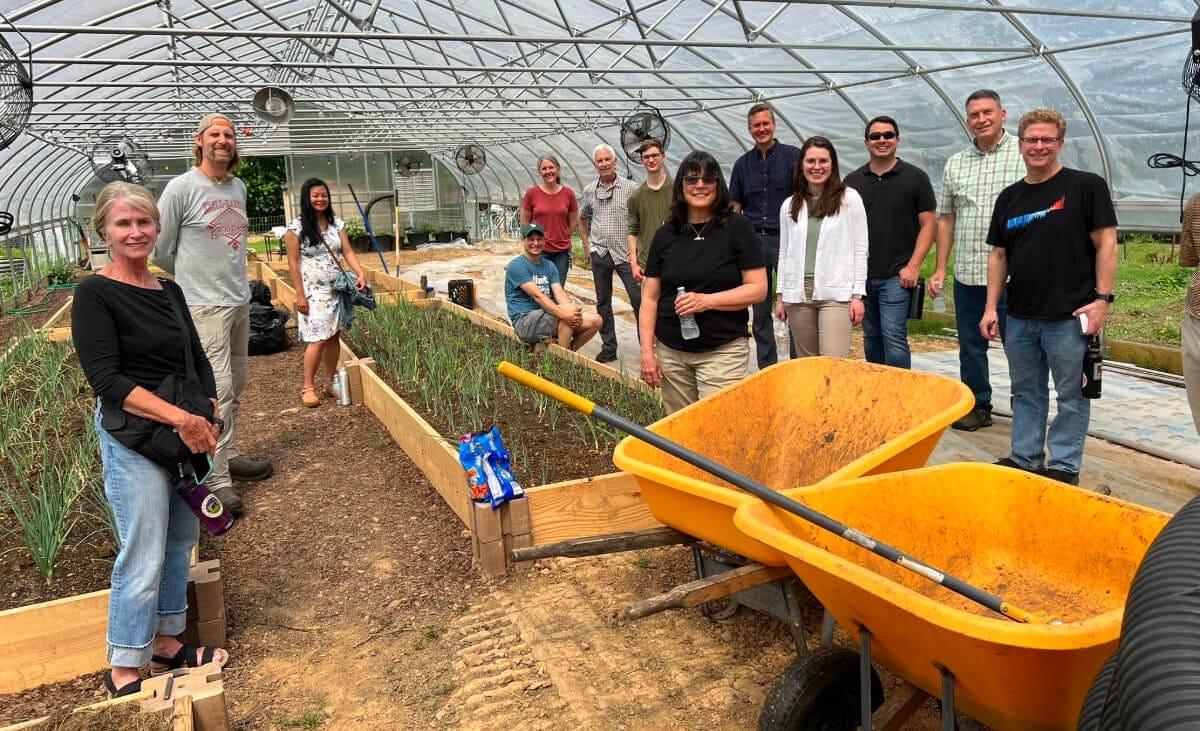
Many Christians already understand this connection between sustainable agriculture and Christian ministry. Empower School & Farm, based in Knoxville, TN, and Umatilla, FL, pursues this by training agriculture students to raise crops in a way that maintains the health of the soil and feeds local communities. They also support international hunger alleviation, training believers in impoverished regions to sustainably feed themselves and their neighbors. It’s a beautiful vision of how a restored relationship with God’s creation can lead to the mutual flourishing of humanity and the soil.
Another example of this kind of ministry is Roots Urban Farm, a sustainable agriculture nonprofit in my home-city of Nashville. They raise peppers, onions, cucumbers, tomatillos, jalapeños, and even tropical moringa plants, fertilizing some crops with their chickens and others with fish in aquaponic crates. After harvest, Roots Farm sends their crops next door to a church-based benevolence center, which prepares meals for those in need.
Both Empower and Roots strive to feed human beings, but even if we do sustainable farming just for the sake of God’s non-human creation, it is still worthwhile. Every plant, and every bird, butterfly, bee, or other insect that may rely on these plants is among the many creatures that God created “good.” Moreover, each is one of the “all things” on heaven and earth (Col. 1:19-22) that Christ is liberating from corruption and reconciling to God, so it’s only natural that Christians should seek their welfare.
How do we farm in a way that shows God’s love to all creatures? Drawing from my habitat restoration work with A Rocha and my sustainable agriculture training with Empower, I’d ask gardeners to aspire to three overarching goals.
1) Leave Food for Birds and Bugs
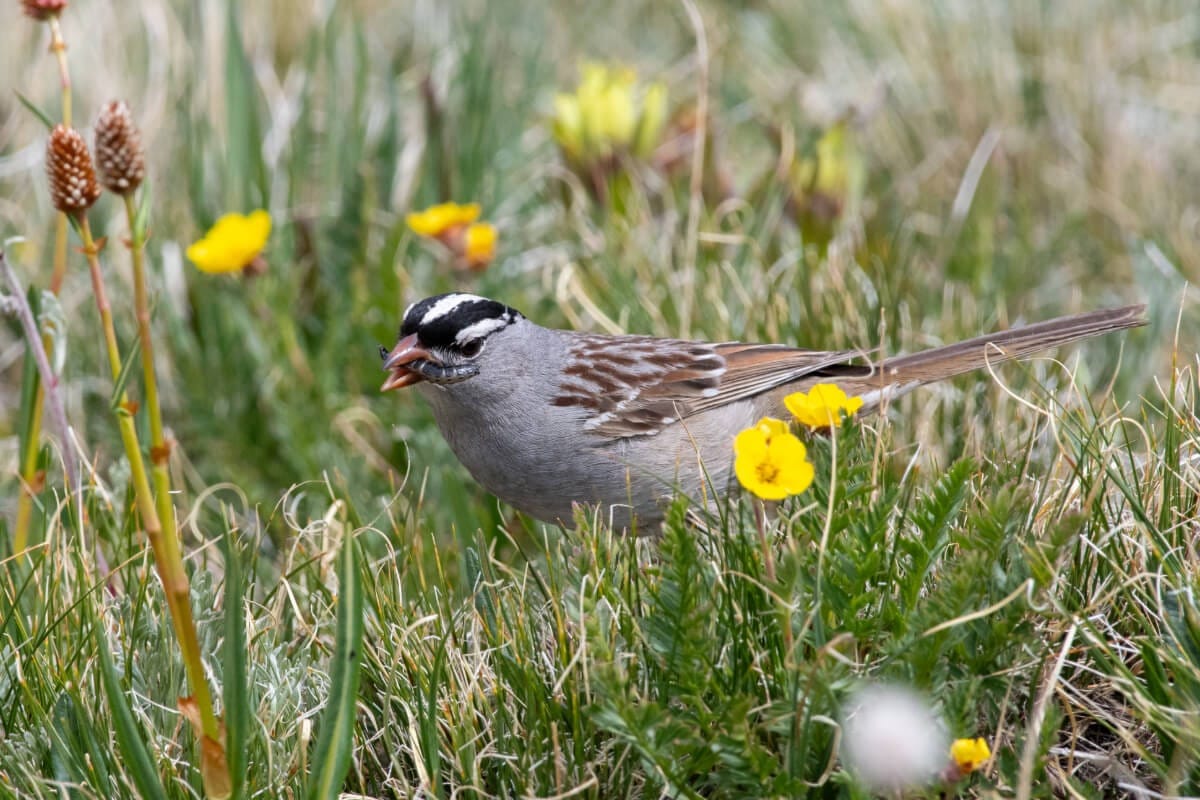
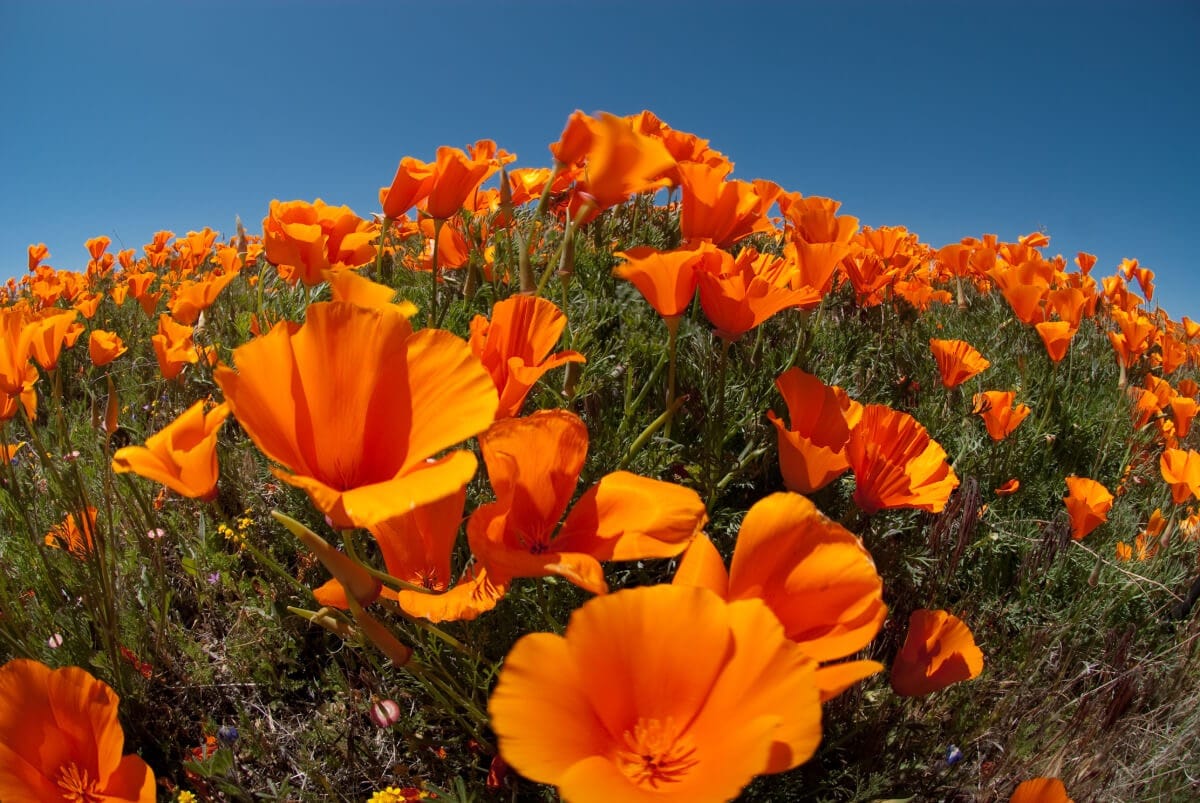
When you remove invasive plants, then replace them with natives, you not only increase the ecological stability of your land, but also feed the native bugs who rely on those native plants. The well-fed bugs, in turn, become food for native birds.
You can use the following webpage from Garden for Wildlife to learn which seeds are native and which ones support butterflies, birds, or other creatures. For detailed information on bird-friendly native plants, you can use this page from the Audubon Society. Last, the Xerxes Society can help you identify native seed sellers in your area.
2) Leave or Create Shelter for Birds and Bugs
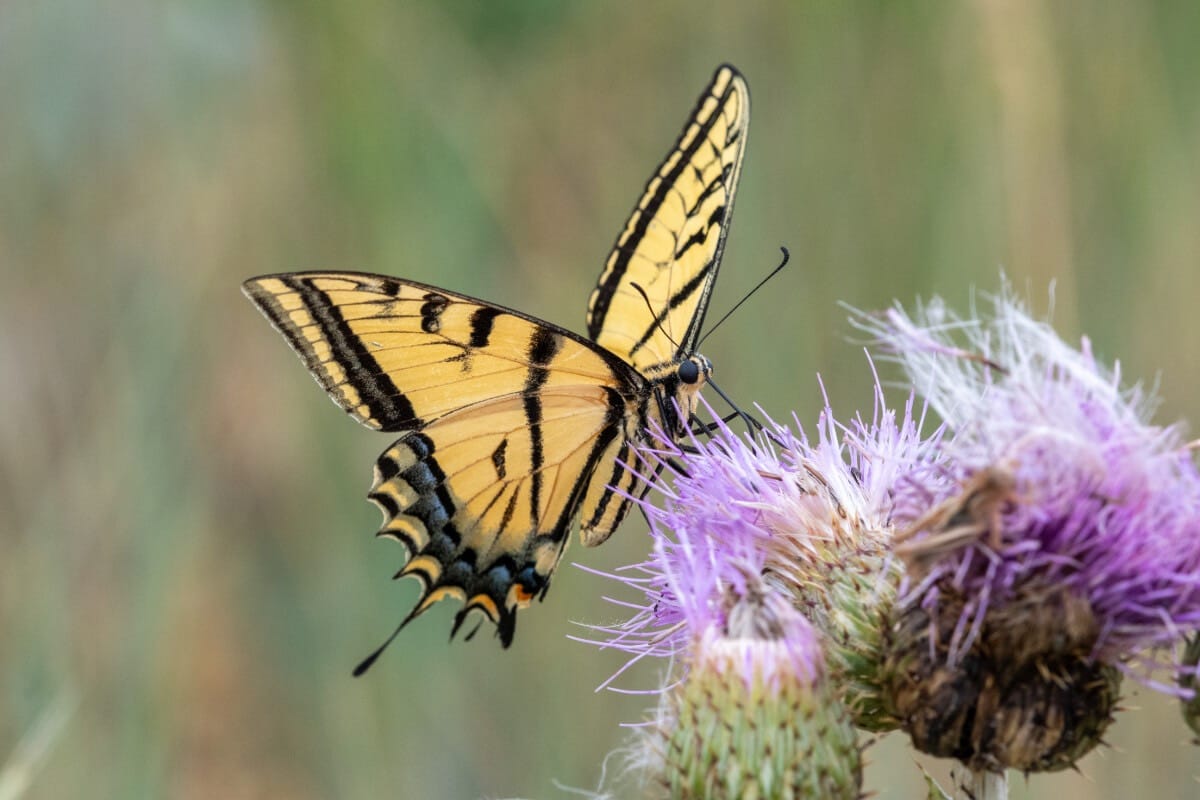
Birds can nest in native trees, unraked leaves, rock piles, or nesting boxes. Bees and other crop-friendly insects can make their home in logs, rock piles, and overwintering flower stalks and seed heads, as well as compost and plant-based debris. (Homemade compost and local plant debris are preferable to plastic mulch or heavy wood chips.)
Visit the National Garden Bureau or Xerces Society websites for more information on showing hospitality to your local birds or crop-friendly insects.
3) Avoid Pesticides and Herbicides
Pesticides and herbicides can poison crop-friendly birds, bugs, and pollinators, while also harming the native plants they rely on. If you must use repellents of some kind, you can create home-made alternatives with ingredients like dish soap, garlic, or hot peppers. You can find repellent recipes on the Old Farmer’s Almanac website.
Empower taught me that, luckily, there are lots of ways to protect your crops from pests and weeds without using any toxic chemicals. When you minimize soil disturbance (i.e., don’t plow), diversify and rotate your crops, and cover your plants year-round with things like leaves, home-made compost, or other plant debris, all of this makes your crops more resilient against pests and weeds. You can also try establishing “companion plants,” which support your crops by repelling insects, fixing nitrogen in the soil, and more.
For more on this topic, feel free to check out the “Alternatives To Herbicides” page on the Xerces Society website.
Reconciliation of All Things
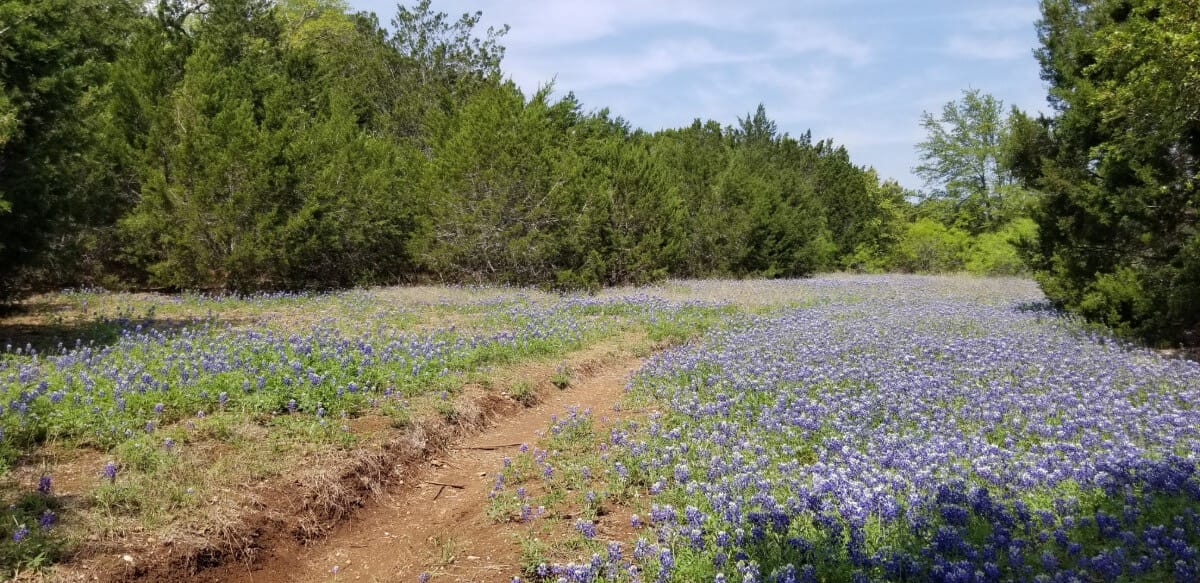
We live in a world of broken relationships. When we heal one relationship, though, we often find a chance to heal another, then another. We heal our relationship with the soil, and we find a way to heal our relationship to local birds, butterflies, and bees. We heal our relationship with our land, and we find a chance to heal our relationship with our hungry neighbors.
As we live out this ministry of reconciliation, which gardening is just one way of pursuing, we join with Christ in his mission to restore creation to the flourishing God intended. This work can start in any space, great or small: a farm, a lawn, a garden, even a single flowerpot. Each bloom is another small revelation of God’s kingdom.
Noah
If you have any thoughts you’d like to share about this piece feel free to email me at “noah.guthrie@arocha.org” or comment below. You can read my other pieces I have written for The Ecological Disciple here.

The Ecological Disciple is part of Circlewood, an organization committed to "accelerating the greening of faith."



Comments ()