
Practical Earthkeeping: An Earth-Honoring Communion
What does a more ecological communion look like?
Today we share a post from Allison Gilmeister, who is doing an extended internship with Circlewood. Allison is pursuing a Master of Arts in Religion and Ecology at Yale Divinity School, where she explores the intersection of environmentalism and Christianity.
As I drove to my first day at Circlewood in eager anticipation, I was unaware that I would end the day with burning red welts dotting my arms and legs. Rumbling back home, two things had etched themselves into my mind: 1) thick pants are a necessity for this work, and 2) I am not a fan of this stinging nettle stuff! With their tall leaning bodies and prickly little hairs, stinging nettle and I became acquaintances quickly in the Camano forest. While some people have a very mild reaction to nettle’s touch, I, on the other hand, found myself with welts lasting for days. This, paired with the fact that I am not a very careful person by nature, resulted in many, many nettle stings over the course of my Circlewood summer.
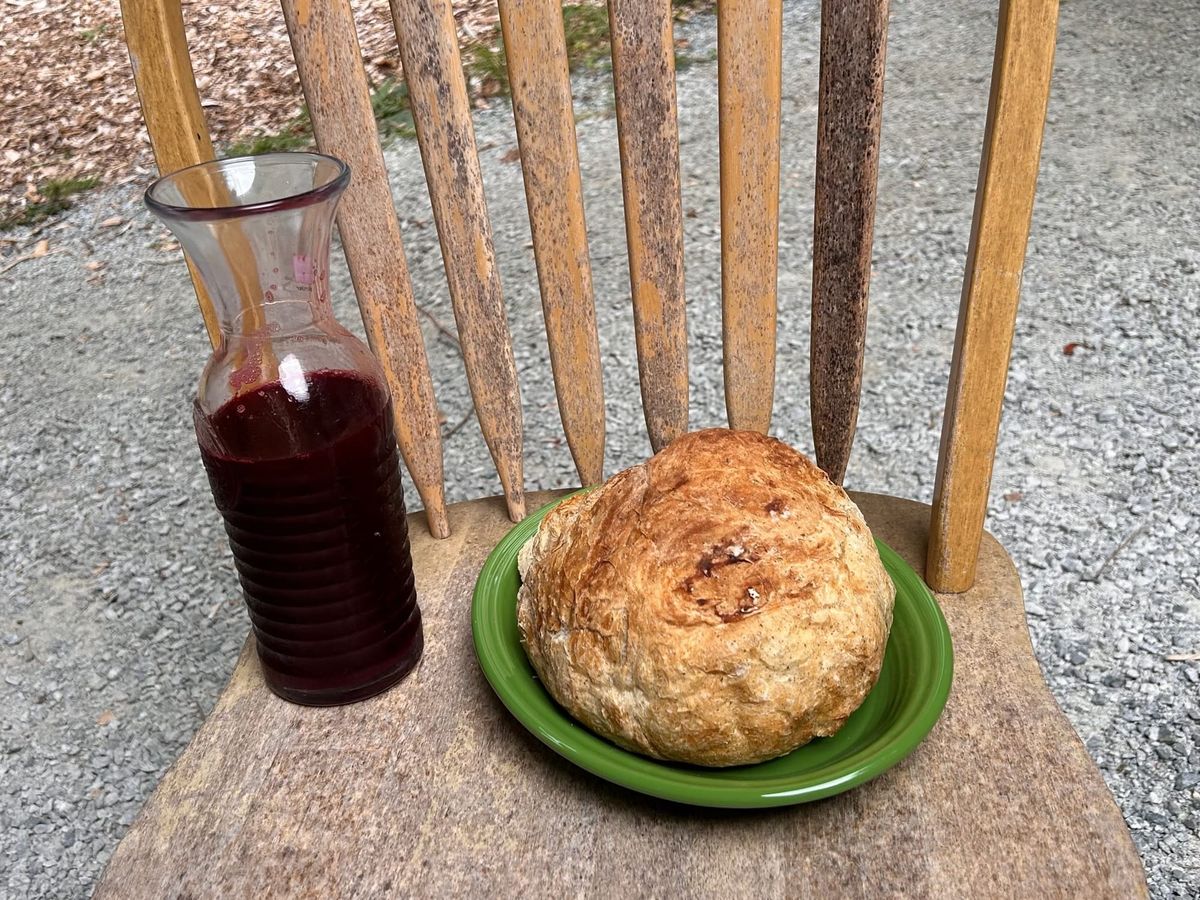
Considering the aversion to nettles I formed that first day, it feels profound that I found myself consuming fresh bread, dotted with the flakes of this very plant, in my final days at Circlewood. The plant that tortured me each day, came to be the source of not just my nourishment and joy, but sacramental promise, deeply intertwined with the land beneath my feet.
I have told you the beginning and end of this story—you may be wondering about the middle. When I proposed the idea of writing here in The Ecological Disciple about a more ecological way of doing communion, James and Louise countered with a revolutionary idea: What if I was to actually enact this idea first? Give it a trial run, with no expectations of extreme success, but as an embodied theological, ecological, learning experience for the entire Circlewood team?
Unlike many of my colleagues at Yale Divinity School, I have never worked in a church, nor administered communion to anyone. The only communion experience I was familiar with was plastic cups and stale wafers, an experience that had always felt inadequate to me, when compared to the true “elements of the earth” consumed by Jesus and his disciples. As ill-equipped as I felt for the task at hand, I knew that I needed to explore the possibility of a more honoring, holistic and interconnected way of communing with Jesus through the bread and the cup.
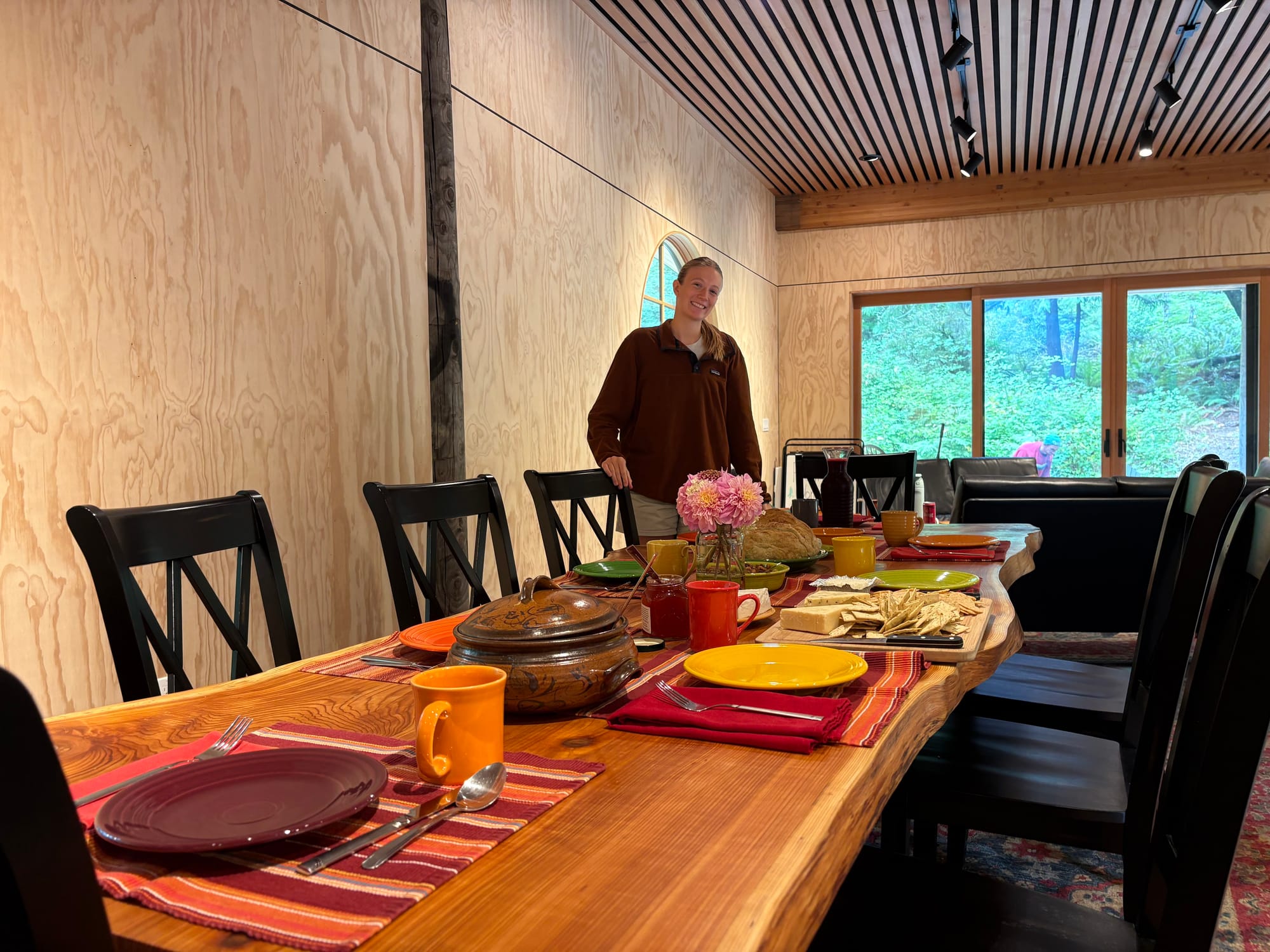
As I contemplated what it would mean to create a communion service that actively involved the life surrounding me, a couple of things seemed non-negotiable. I will explore these ideas next, as we wander into this realm of ecological communion together!
1) From This Land
From the maple to the cedar, from the froglets to the owls, this land had been my teacher and my helper; in this soil I found rest. This said, it only felt right for plants specifically from Circlewood Village to be included in the elements. As I paged through different corners of the internet searching for which local plants were edible and how they were to be consumed, much to my surprise, I found stinging nettle as a top contender! As it turns out, my forest nemesis had been used by indigenous peoples for ages—the seeds, roots, and leaves all viable for nutrition or medicinal use. I read that young nettle leaves were commonly dried, then ground up and made into a powder, providing Vitamin A, C, and K along with minerals like calcium, iron and magnesium. Somewhat begrudgingly, I closed my laptop and pulled out my gardening gloves.
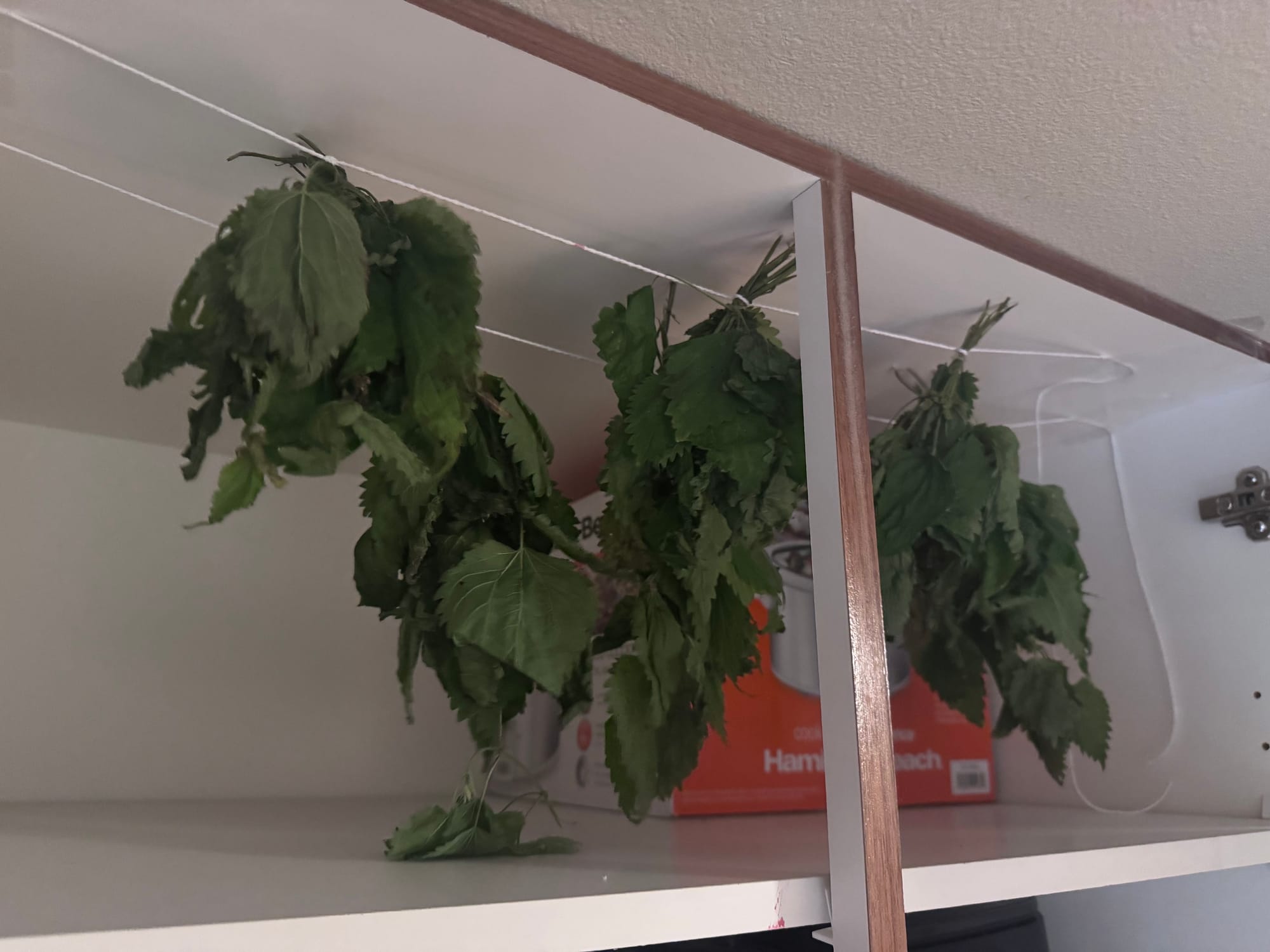
As I scanned the trails, nettle bucket in hand, my eyes searched for baby nettles lining the trail. Mostly my eyes caught them, and sometimes my ankles did too, as I gently broke each of the top leaves off. Back at home, I grouped them in bunches, tying them by the stems to be strung high up in my dark, upper kitchen cabinets. My fiancé watched this process with a concerned curiosity—my red-welted hands dissuading him from my offer to assist.
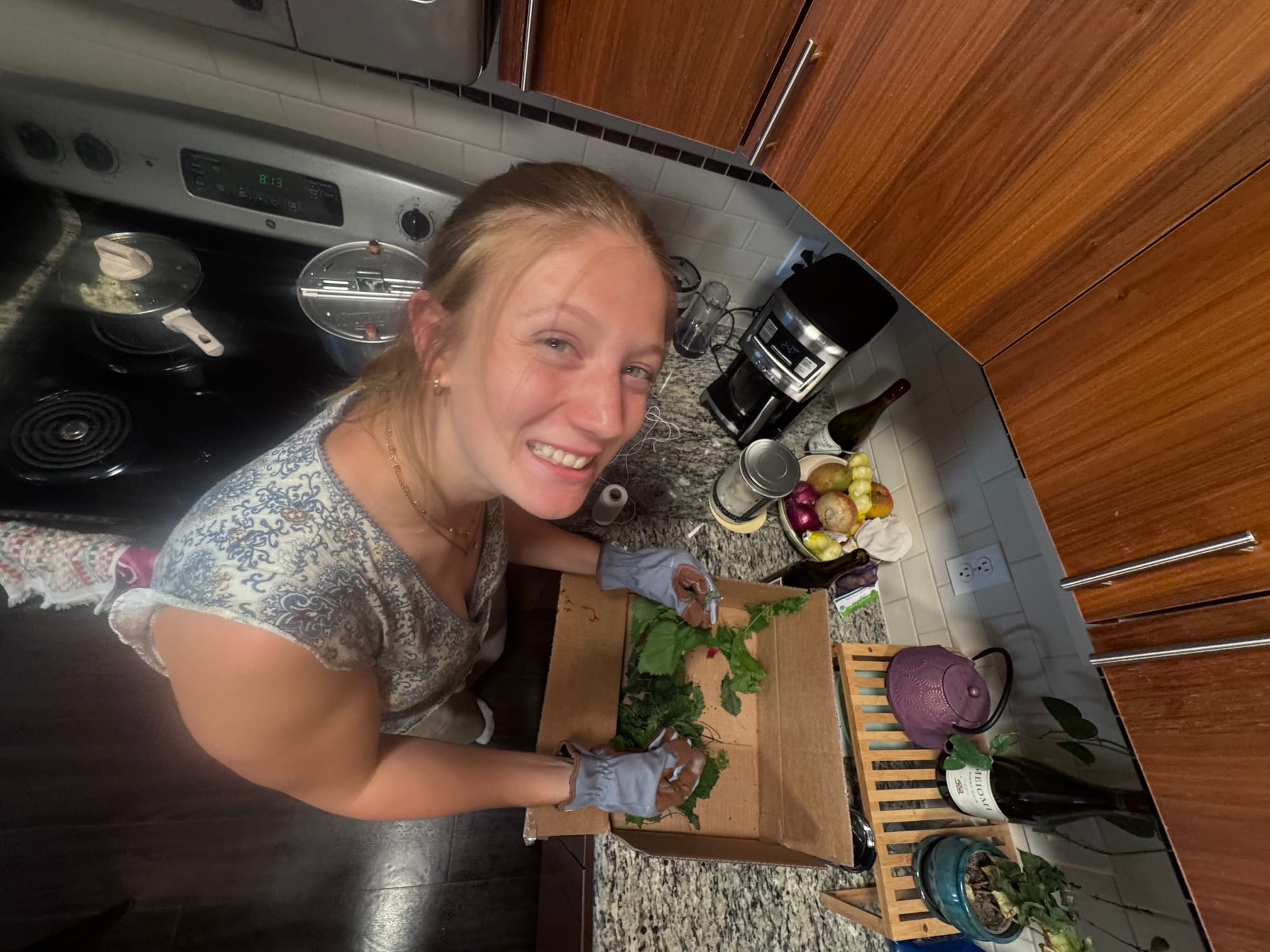
Three weeks later, I stripped the crispy leaves from their stems, grinding them into a fine dust. As I put a pinch of the dark green shards on my tongue, it stuck to the back of my throat: earthly taste with a twinge of sting still remnant.
2) From This Community
As I continued to ponder this project, another necessity became clear. While this land was home, in a sense, so was the entire ecosystem of human and beyond-human here on Camano. These 40 acres were not an ecologically isolated unit, but deeply intermeshed with the lively creation outpouring from this island soil. Supporting others in the community became another tenet of my emerging eco-communion structure, and so I set out on another online journey to find an ingredient to be my “community component.”
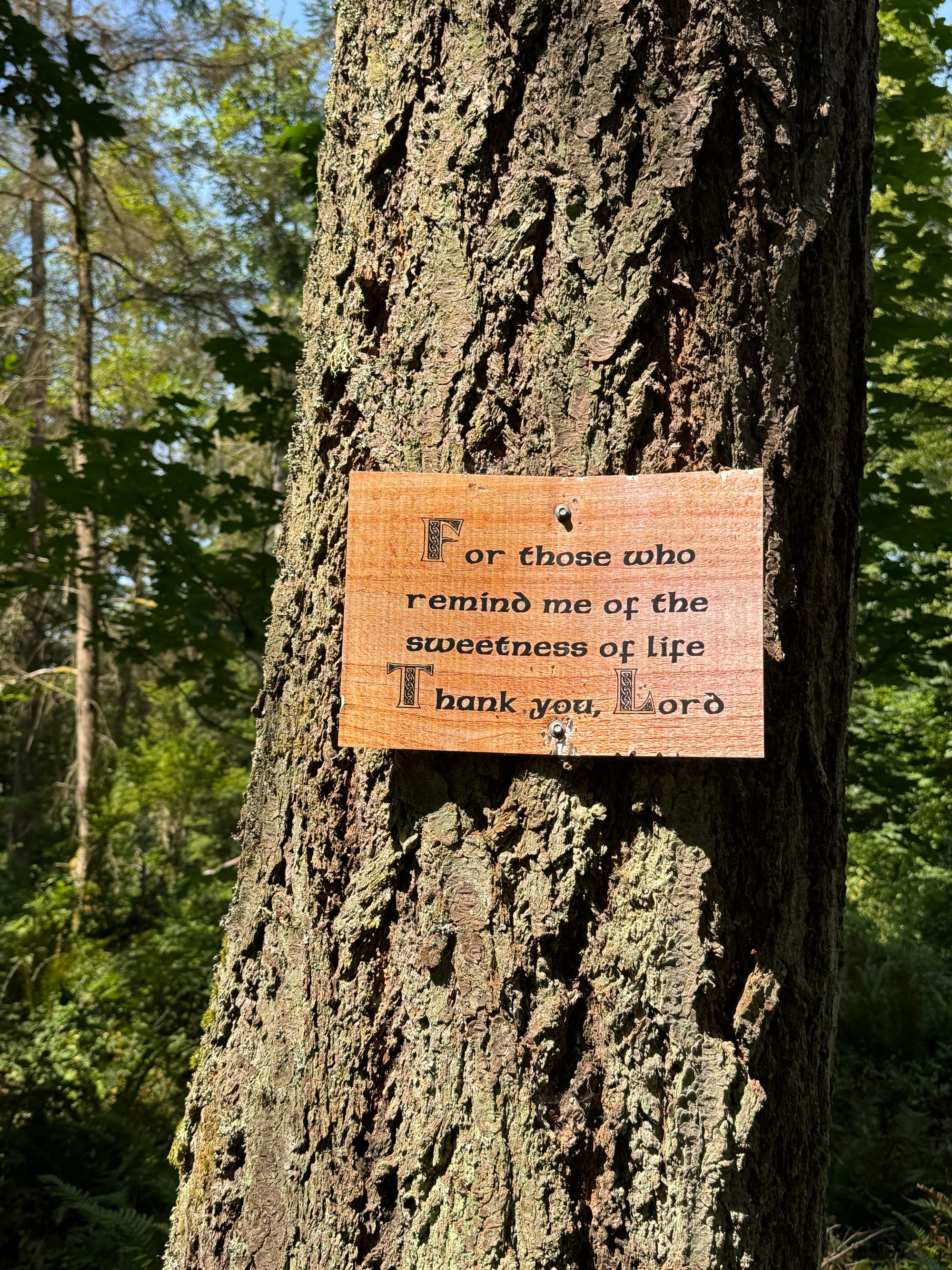
Camano Island Honey ended up at the top of my list. On their website is the following: “We here at Camano Island Honey understand that the environment and its inhabitants are all precious. We could not have such a beautiful and productive world to live in without each and every one of them.” Not only are they local, sustainable producers, but these members of our community also recognize the precious beauty of this wider community that we are only a small part of. I was suddenly reminded of the Celtic retreat signs I found deep in the forest: “For those who remind me of the sweetness of life, Thank You, Lord.” How fitting that Camano’s beekeepers, trusted beholders of creation’s rich nectar, would remind me of the sweetness of life.
3) Beyond the Boundaries of Invasivity
Just as Christ’s body was broken for each of us, His blood was shed for all life on Earth: humans, both righteous and sinners, plants, both native and invasive. As we take this bread into our bodies, we thank you, God, for your goodness and provision of life. We remember each life form that has contributed to the elements in front of us. We honor any lives that have been lost so that we can live ours.
I crafted this liturgy for the service when I realized the third tenet of this eco-communion needed to be. Berries upon berries littered Circlewood’s forest for nearly the entire time I was there. First the native berries: salmonberries, creeping blackberries, and thimbleberries, then, later in the season, the aggressively invasive Himalayan blackberry. As I first set out on this mission, I began collecting only the native berries: symbolic of the restorative recovery that God provides for both human, and beyond-human communities.
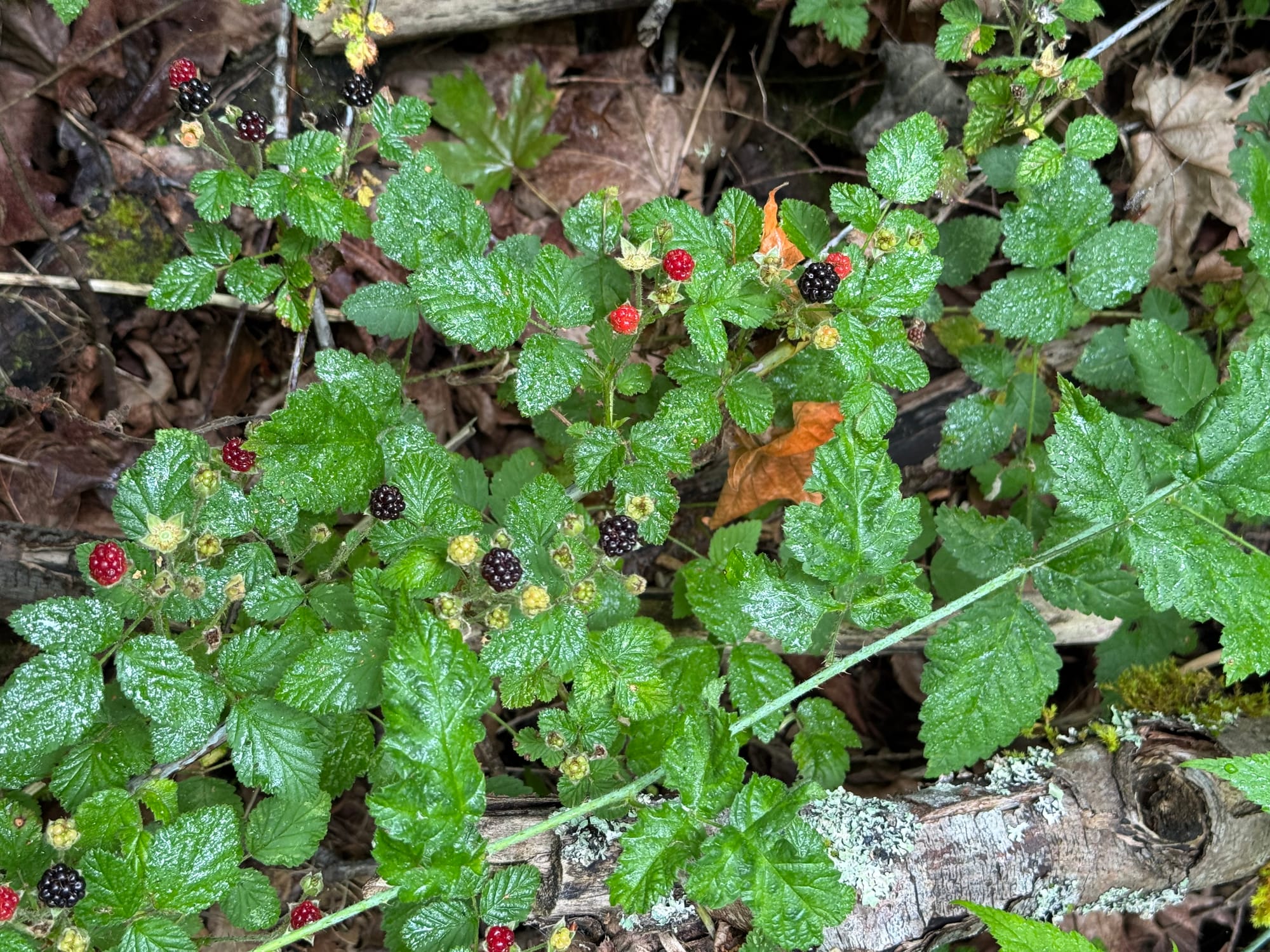
The Spirit nudged me in a new direction the following day, when I discovered that my entire pail was squirming with little worms. On my second try, I collected both native berries and Himalayan blackberries. While these thorny invasives are destructive to the ecosystem around them, this does not disqualify them as God’s creation. Although we will eventually remove them to make room for more native berries to flourish, they are here now一Spirit-filled—producing beautiful, delicious fruits that nourish the many members of this community.
The Bread, Cup, Fire and Earth
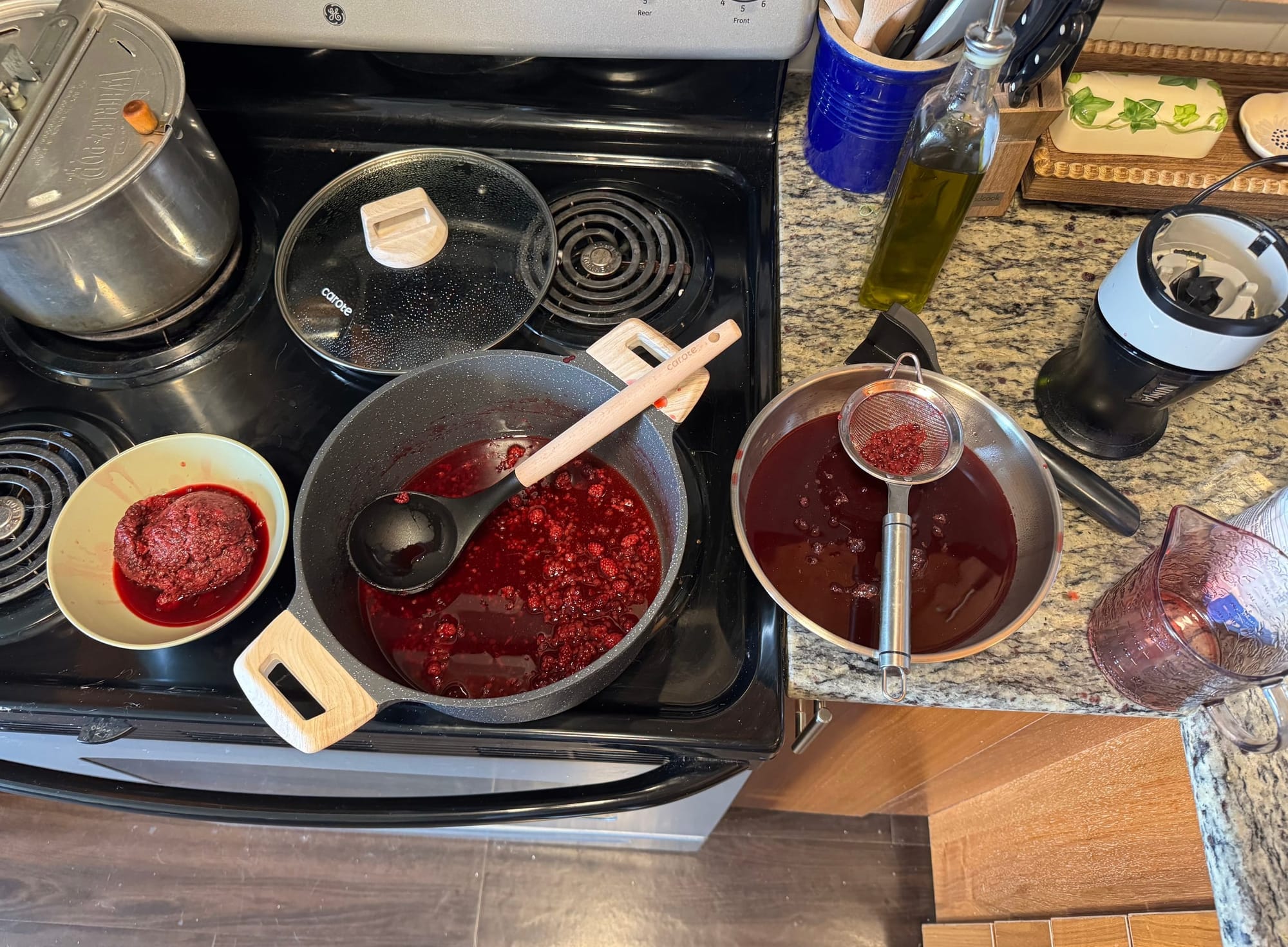
As Eco-communion Eve rolled around, I carefully kneaded the nettle powder into my yeasty dough. I watched the little green specks as the loaf rose, the forces of heat, earth and water moving each speck, like passing stars in the night sky. I boiled the vat of berries, hearing them simmer and pop as the liquid deepened its shade of red. Straining the juice into my container, I mixed in spoonfuls of honey with care, testing for the perfect level of sweetness.
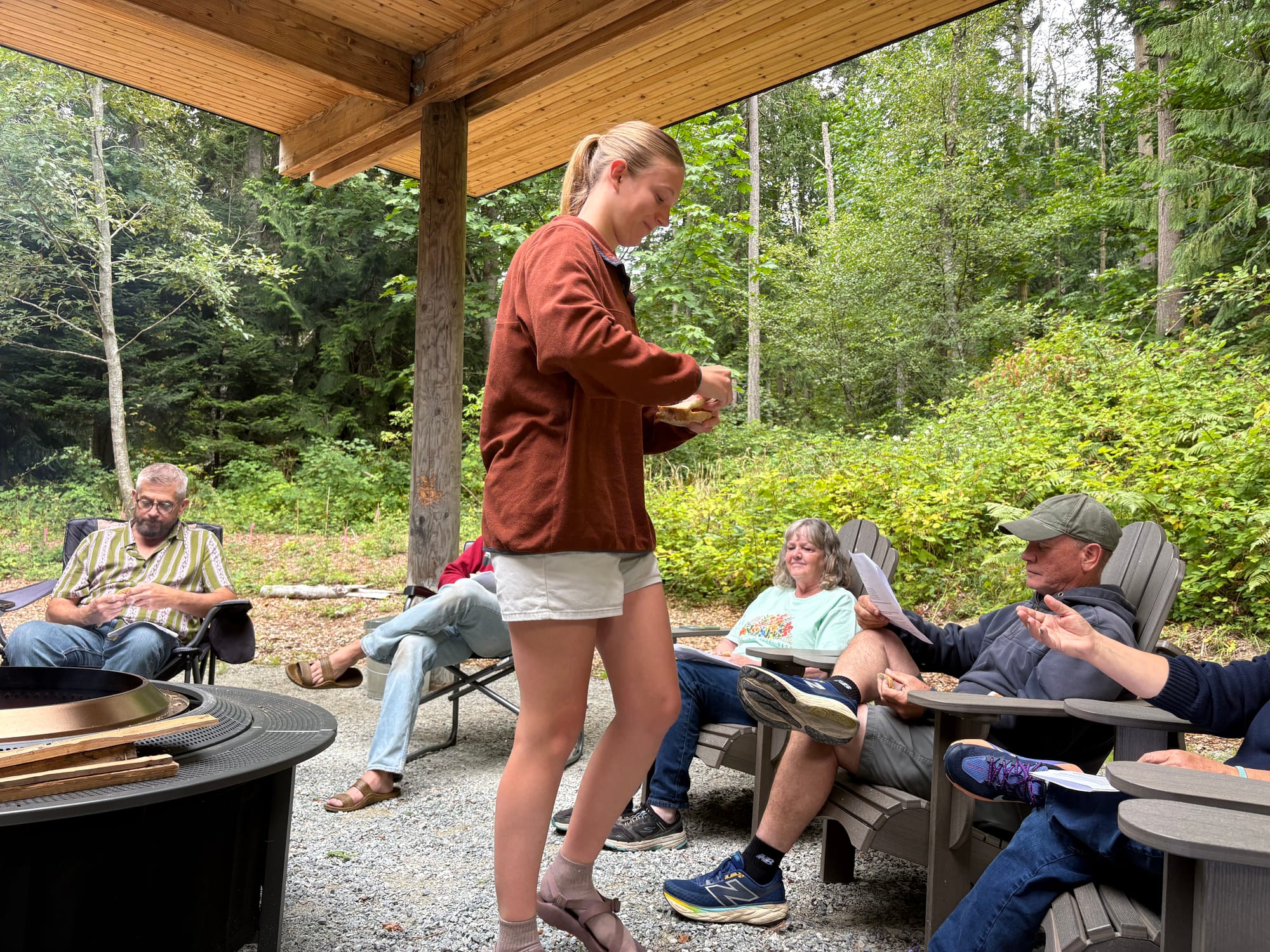
Approximately 12 hours later, the bread had baked, juice had chilled, and the time had come to commune together. As the service began, the team and neighborhood friends gathered around a crackling fire, outside the Sine Center. We communed in song, thanksgiving, blessing, and finally, the beloved bread and cup. As I read the eco-liturgy I’d crafted, all worries of my inadequacy to arrange such a service melted away. This was not about me, it was about the horizons of communion breaking open in front of us. The birds, bugs, and maples joined our chorus, the ground became soil once again, and the sky poured down brilliant light, illuminating each life, each word, each prayer. Communion was finally about community—impartially and holistically.
I left Circlewood that last day with the same, familiar twinge of stinging nettle, except this time, it had engulfed me whole. In communing with the nettle, we were no longer nemeses, but friends, fellow neighbors beloved by the same God, included in the same promise for restoration. We were kin, different parts of one whole, interconnected world. I do not know if we did eco-communion the “right” way, but I do know that something was revealed in that moment, as we consumed the elements. Perhaps it was a revelation of new possibility, of hope for a world where each creature is brought into the framework of sacramental promise. This may be a far-fetched dream, but I know that now every time I find myself with another plastic cup and stale wafer, my heart will cling to this hope.
What does the term “ecological communion” mean to you? Are there ways you could implement a more earth-honoring way of doing communion in your own tradition?
Comment below or email me directly at allygilmeister (at) gmail.com.
Allison
IF YOU LIKED THIS, LISTEN TO THIS EARTHKEEPERS PODCAST WITH ALLISON:


A NOTE FROM CIRCLEWOOD, OUR PARENT ORGANIZATION...
We are looking for a full-time Associate Director to guide Circlewood's operations and prepare Circlewood for the next phase of growth. If you are interested, or know someone who might be, visit our our employment page here for more information and to submit a preliminary application, which will be reviewed in mid-November. The job involves on-site duties.
Comments ()