
Practical Earthkeeping: A Summer of Encounter
A Circlewood intern's takeaways from a summer on Camano.
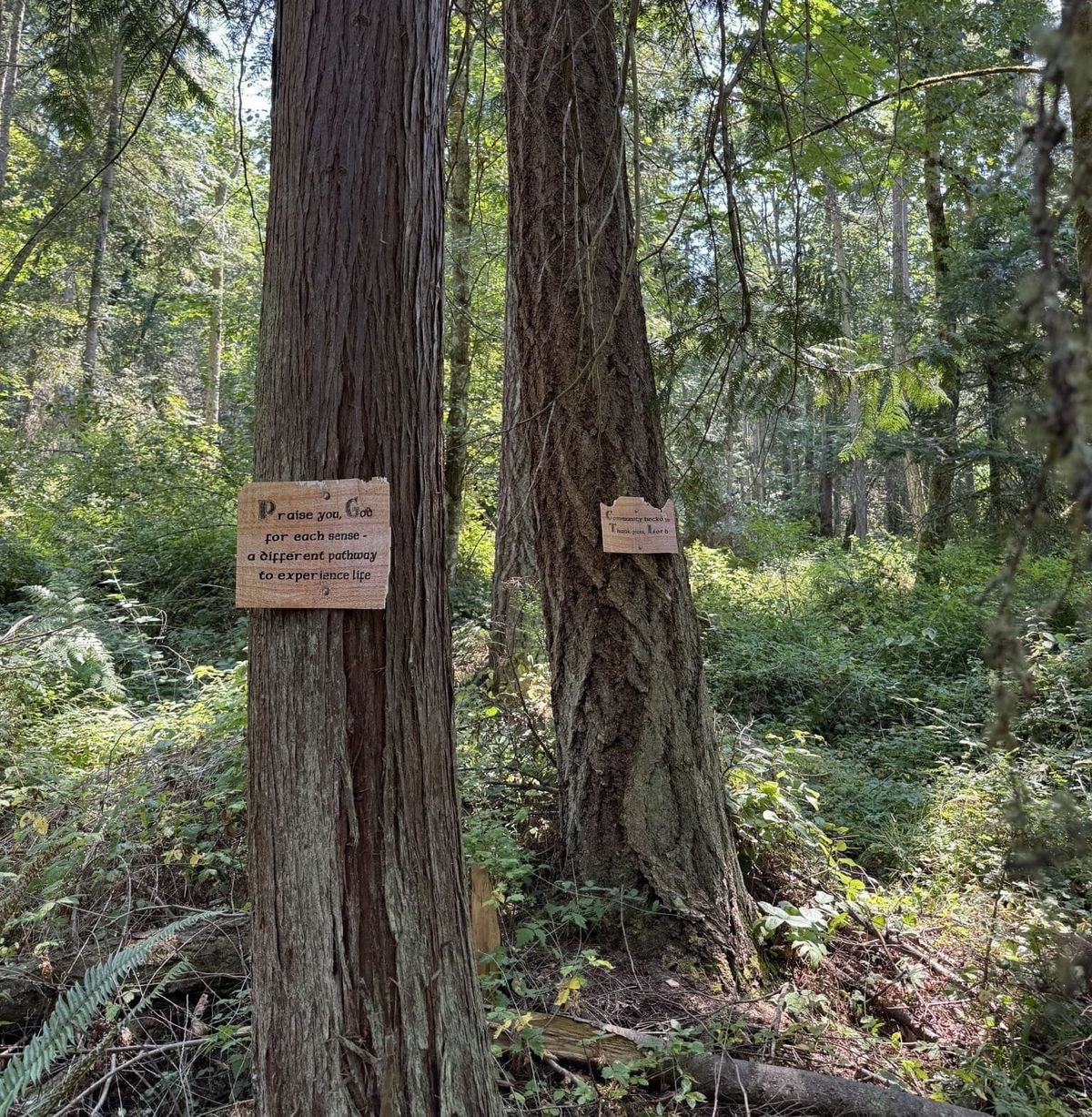
Today we share a second post from Allison Gilmeister, Circlewood's 2026 Ecology and Faith intern. Allison is pursuing a Master of Arts in Religion and Ecology at Yale Divinity School, where she explores the intersection of environmentalism and Christianity.
The flutter of grayish-brown feathers was enough to quickly draw all eyes out the window. Each of our heads turned to watch as the barred owl ruffled her way through the swaying maple leaves, barely visible, now, from our seats indoors. Like clockwork, everyone stood up and began to wander outside, halting our meeting for the time being. Confused but intrigued, I followed suit as we all gathered in a semicircle around the tree. My mind puzzled in wonder looking up at the owl, listening to the rich cadence of her call.
My first day as a Circlewood intern set the tone for the rest of the summer in ways I did not comprehend at the time. In this first meeting, I received a surplus of information about Circlewood, the people here, and my responsibilities for the summer. Most of the specifics from that meeting escape me now, but that 10-minute break, dictated solely by the more-than-human members of Circlewood Village, stays with me. That moment was the first of many instances where I began to see that Circlewood is a place that welcomes interruptions with open arms, seeing these moments not as burdens, but open doors to new wisdom.
I know I am not alone in that stopping to listen, see, and learn in news ways does not always come easily for me. And so, being thrown into a culture where this is not just encouraged, but a vital part of organizational vision, came as quite a shock at first. I had never worked somewhere where “non-performative breaks” or “sabbath practices” were actually added onto my task list, and sitting and observing an owl is just as valued as completing this week’s marketing initiatives.
Entering into this new approach to work has been a gradual, ebb and flow process. On flow days, where I’ve felt simply vibrant and filled with energy from the life around me, I’ve come to see certain ideas with more clarity, or in a different light than before. Chief among these ideas is 1) a recognition of resilience, and 2) a reconceptualization of how I view my time. I’d like to share more about both of these “lessons from the land,” as I’ve found them significantly shaping how I see my work going forward.
Resilience Right Under Your Feet
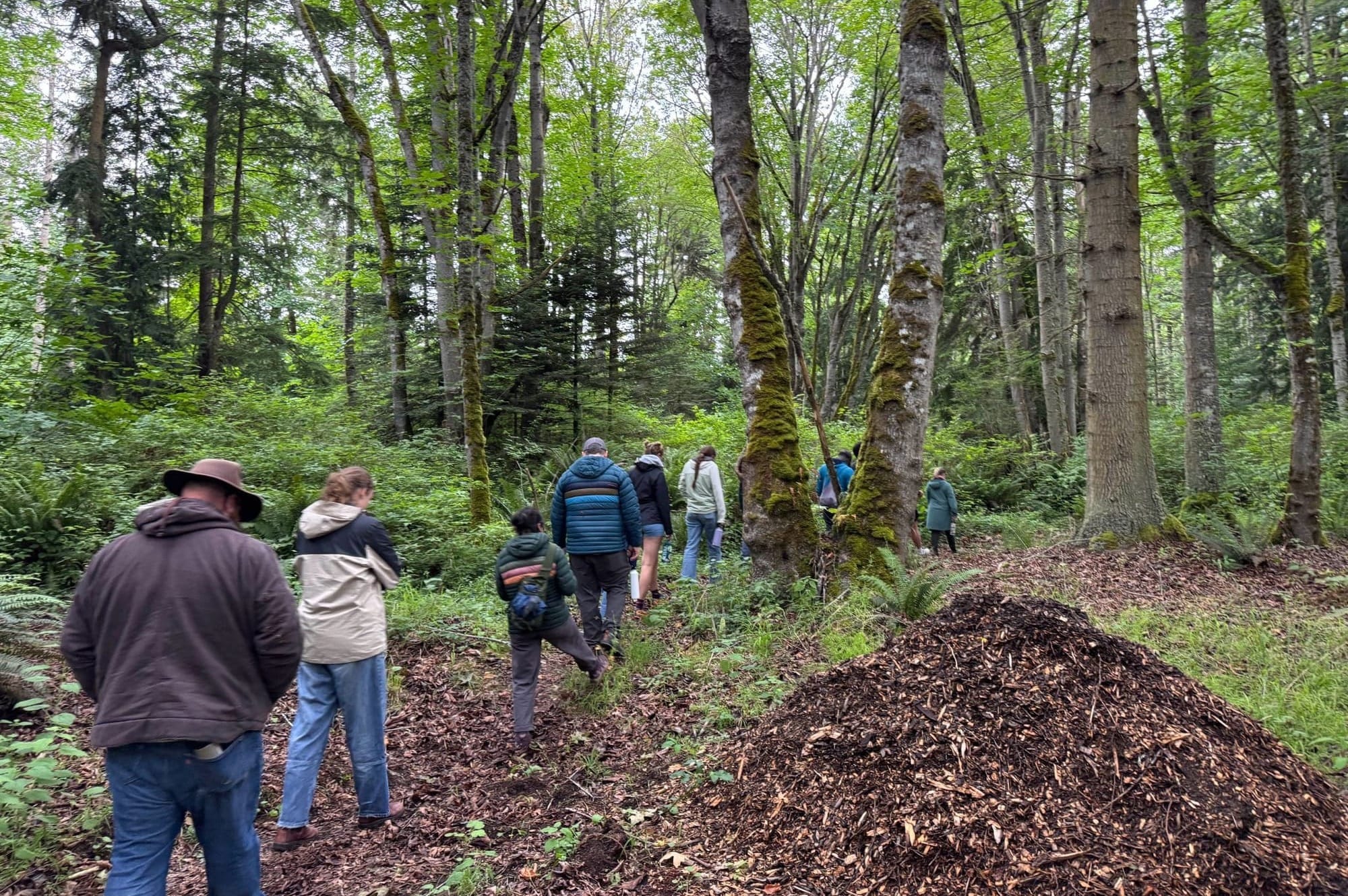
In ecological conversations, we often hear a lot about the earth’s scarcity. The earth’s resources are finite. We cannot continue using and using without limits. We are depleting the earth. This is fully true. And yet, I’ve come to find that this truth needs to be held hand in hand with knowledge that the Earth is resilient and adaptable, always finding a way for life to continue. Leaving this piece out limits our conversations to commodification and commercial value, rather than engaging with the earth’s abundance as a form of reliance against forces of destruction.
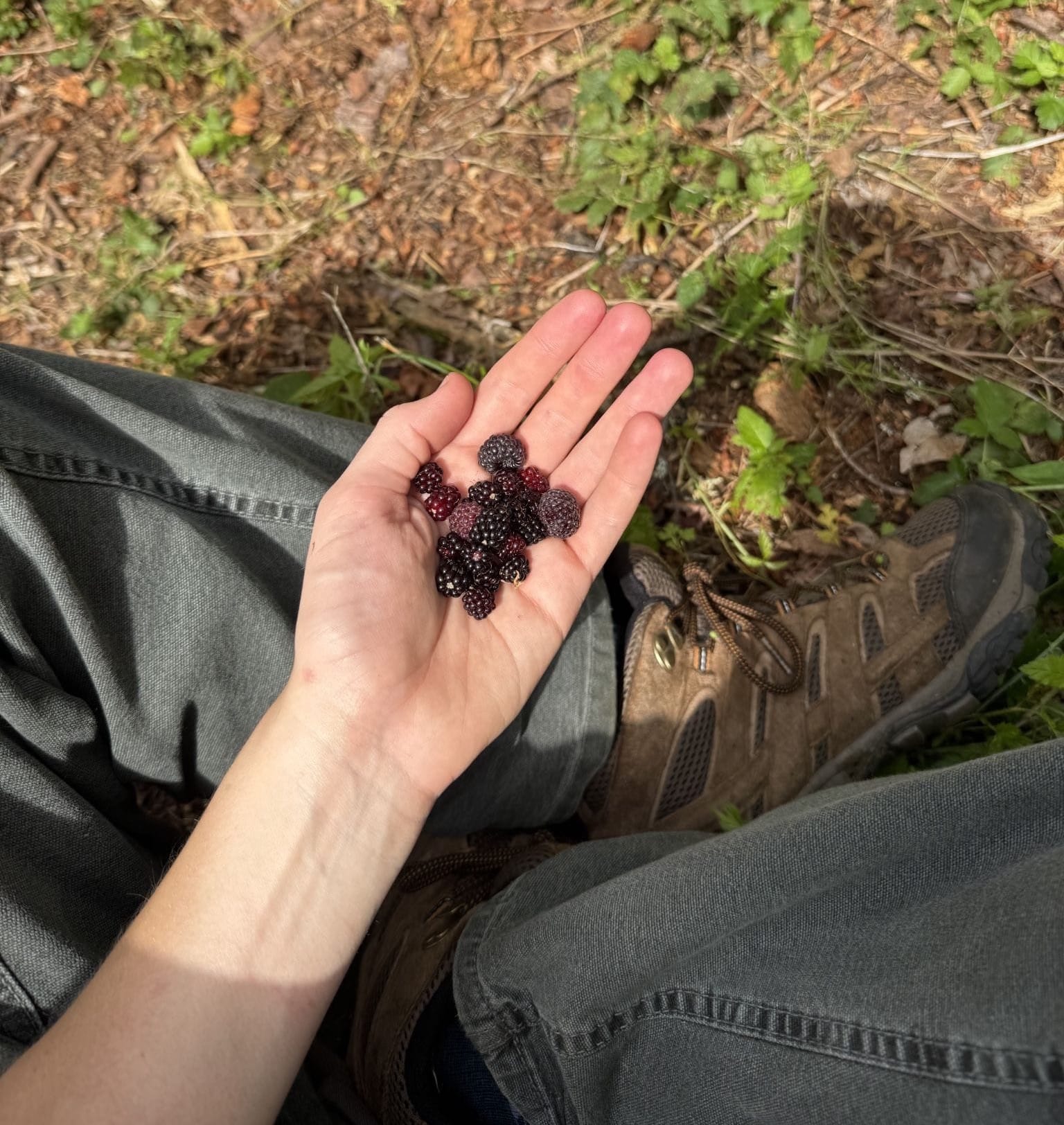
Resilience came alive for me at Circlewood through an unexpected vehicle: little round, juicy fruits that’ll stain your hands red for the day. Circlewood is blessed to be home to a vast variety of native wild berries such as thimbleberries, salmonberries, creeping blackberries, and blackcap raspberries. During a portion of my invasive removal work, I discovered a whole canopy of ripe deliciousness, creeping beneath the layer of vetch that once darkened their world. I felt guilty eating them; couldn't they be eaten by an animal, or picked for this year’s harvest of Circlewood jam? But as I continued to weed, hundreds more appeared from under the thicket. The land was truly, unexpectedly, abundant with sweet fruit—a resilient abundance that resists the forces of invasive disruption.
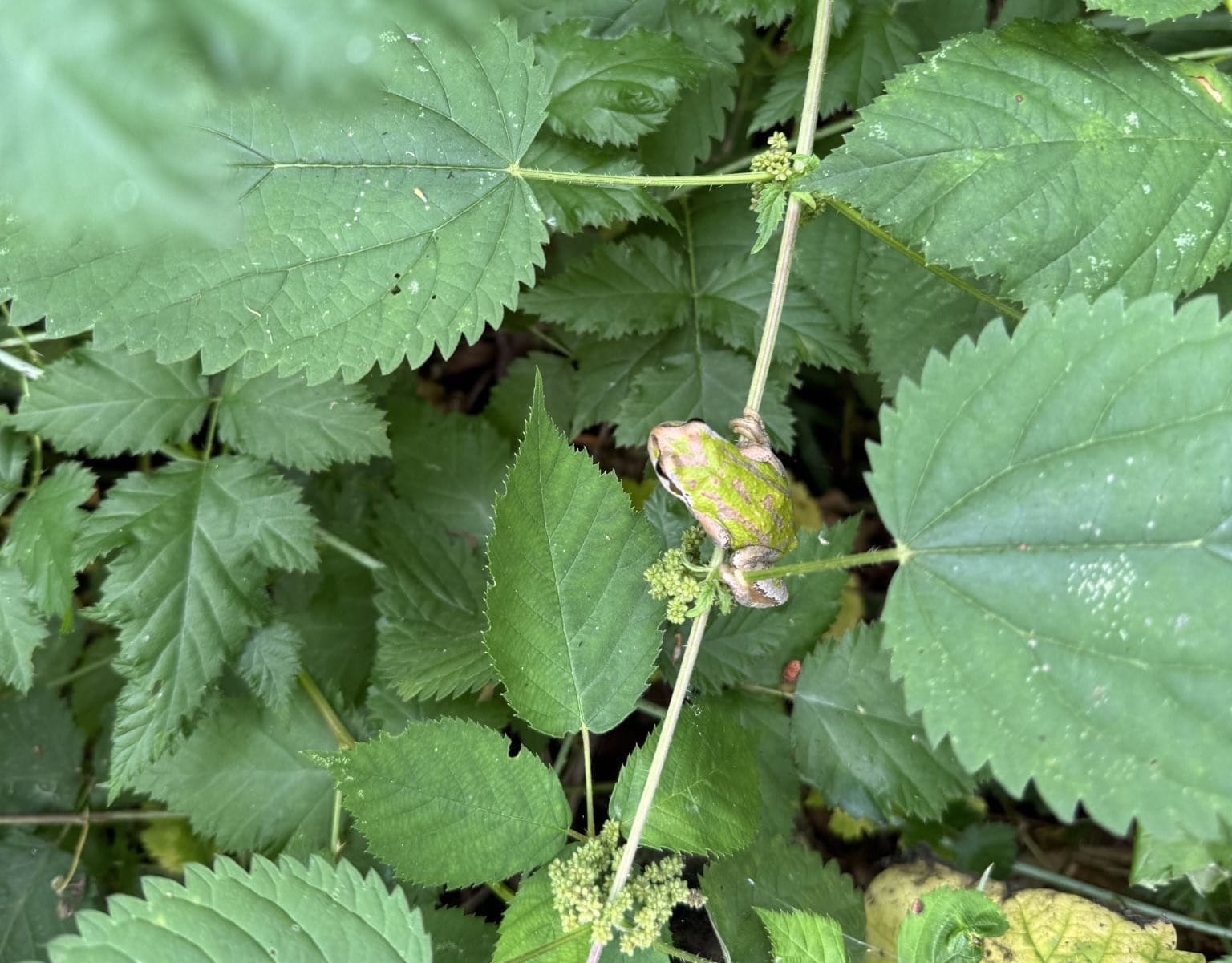
I witnessed hundreds of frogs budding in the pond. I watched dormant seedlings sprout in the meadow despite poor soil, unpredictable water, and the weight of passing critters. I even found admiration for these plants we call weeds, popping up in the middle of manicured pathways. Simply stopping to notice opened my eyes to the abundance of life, irrepressible and adaptable, that fills each corner of these 40 acres at Circlewood Village.
There are, of course, “counter-examples” to this idea. Climate change and other forms of human disruption have removed certain lifeforms from their homes, pushing them to foreign lands, or even eradicating them completely. The Western Red Cedar is an example, here, that lands close to my heart. With hotter temperatures hitting each summer in Western Washington, cedars are slowly dying as the species migrates north. These examples, however, make an appreciation of the abundance and resilience of individual places all the more necessary and powerful. Circlewood’s ethereal cedar stand exists as a symbol of strength and astonishing abundance despite the forces of climate change. And we have more in common with them than we may think. Like us, these cedars are finite beings that are vulnerable to unpredictable patterns of wind, heat, and rain. Like us, they will be gone someday. But their presence now, and our attentive presence with them in collective resilience, is one of the most powerful forces of resistance I’ve come to know.
Time: Limited, But Not Scarce
This past year at Yale, I often found my days flying by amid my dynamic trio of reading, writing and rushing to my next class. Transitioning into my Circlewood summer, I started this internship with my typical sense of urgency. I quickly realized there was so much wisdom here—in the staff, the land, the students—but my time was limited. I needed to make the most of every moment, absorb every tidbit of knowledge and carefully analyze its application to my work going forward. When the world is burning on a ticking time clock, who am I to waste time with frivolities?
As the summer continued, I found that rather than memorizing and categorizing everything I was learning, my job was simply to be: to be present, to be humble, and to position myself in a posture that let wisdom encounter me. By this, I mean that I had to relinquish control over my time, and the most perceptively "productive" ways to use it. I had to allow the present moment surrounding me to infiltrate my usual patterns of anxious urgency.
When I began to embrace this reconceptualization of time, time was still limited, but it was no longer scarce. I knew I would soon be headed back to school, but that the time I spent at Circlewood would hold a meaning that surpassed the completed projects or added information for use in future writing and research. This time was valuable in a way that transcends words, and maybe that was the point of it all: to be fully present in the moments that refuse to be defined by words. Maybe, holding them in my memory, and in my body, is more powerful than somehow attempting to record or explain them.
The Work We Set Out To Do
One of my last tasks this summer was spending time with students from the Au Sable Institute of Environmental Studies. At the end of the trip, their professor instructed the students to thank us for taking time out of our valuable work days to be with them. We told him that no thanks were necessary, as this is the work we set out to do. As I think more about my first day at Circlewood, I believe watching that owl fell into this same category. This is the work we set out to do. Learning from the land is not merely a side effect of being a place-based organization, it’s a central part of the missional goal: to be restored by the land through our restoration efforts, to be transformed as we witness the transformation of a pond, meadow, or stand.
As I enter the last year of my Religion and Ecology Masters degree, I will be satisfied if the work I do is not only essays and conferences, but also standing in resistance—like a cedar or a blackcap raspberry. I will remain hopeful if I can keep seeking knowledge that does not always fit neatly in my notebook, but fills me with the strength and resilience of the people and places I encounter. My time at Circlewood has shown me that something as simple as attentive presence may be the transformative power this world needs.
Comment below or email me directly at allygilmeister (at) gmail.com.
Allison
Comments ()